
Matinicus: A Solo RIB Trip to Maine’s Far-Out Island
Facebook sent me to Matinicus.
When former Soundings editor-in-chief Mary South posted a stunning photo of the island she sometimes calls home, I impulsively told her I might run my RIB out for lunch. I should have done more homework first. I knew Matinicus lay well offshore, but a closer look at the chart was a wake-up call.
The straight-line distance from my homeport in New Harbor, Maine, to Matinicus is roughly 27 nautical miles in exposed ocean. My 16-foot Zodiac, Bob, can hit 30 knots in calm seas, but not in a stiff chop or short swell. With Matinicus about 20 miles from the mainland, I wondered if I was pushing the limits. Earlier that summer I had already met some challenging weather while exploring inner islands of Muscongus Bay. Was “far out island” really one island too far for a solo day trip?
Still, the draw of seeing Mary and visiting one of the East Coast’s most remote inhabited islands proved irresistible. The next day’s marine forecast called for 2- to 5-mph winds and 2-foot seas, so I committed to the run.
To avoid the open ocean for as long as possible, I chose a slightly longer inside route that threaded between islands. Zodiacs can handle swells, but with only one engine, losing power far from shore would be a serious concern.
I went over the boat carefully. The built-in 12-gallon tank gave me the theoretical range, but I loaded four 5-gallon cans for a large reserve and to add weight low in the bow. Bob is light and tends to fly off waves when light; the extra fuel helped settle and trim the boat. The engine had a recent service and a new fuel pump, and I carried a fresh starter battery plus a back-up. I felt confident in my 12-year-old RIB’s condition.
Although GPS is my primary navigator, I still like paper charts. When I realized one chart panel covered the first half of the run across Muscongus Bay and the other panel covered the second half to Matinicus, it felt like a good omen.
Early the next morning I triple-checked gear: handheld GPS with fresh batteries and spares, a fully charged VHF and phone with portable power packs, a spotlight, a PLB, flares and a strobe. Other than the single 50-hp Yamaha outboard, I’d backed up everything else.
Loaded with bananas, hard-boiled eggs, apples and plenty of water—just in case—I towed Bob to the ramp. Conditions exceeded the forecast: flat water, almost no wind or swell, and great visibility. By 10:30 a.m. I was plane-on across Muscongus Bay at 30 knots.
The opening leg was straightforward, but after I passed between Franklin Island Light and Harbor Island the route became unfamiliar and dotted with lobster buoys. I slowed to check my GPS and confirm my track. I’d filed a float plan with family and wanted to stick to it.
Lobstermen worked the bay, hauling pots out of Muscongus—an Abenaki name that translates either as “fishing place” or “many rock ledges.” Both meanings fit. South of Davis Island I glimpsed the clapboard and cedar-shake buildings on Allen and Benner Islands—scenes that look like Wyeth paintings. Benner is owned by Betsy Wyeth and Allen by her son Jamie, who allows seasonal fishermen and academic groups to use the island.
As I neared Metinic Island the water erupted with life: a seal leapt and a harbor porpoise surfaced, and I realized a school of fish was being driven from both ends. My wife called from our New Jersey condo about kitchen counter details—proof that even far offshore, cell service can be surprisingly reliable. I answered quickly and got back to the run.
Crossing the last stretch, Matinicus rose as a low, dark line on the horizon. A cloud cast a shadow over the island, lending it an ominous silhouette. For a stretch there was no sign of boats, birds or people—just the hum of the Yamaha and that vast, placid ocean. Instead of fear, I felt a rush of euphoria at being so utterly detached from the mainland.
About 90 minutes after leaving New Harbor, I eased into Burgess Cove where Mary was waiting on the beach. I set two stern anchors and a third on shore, but my standard anchors—grapnel, Bruce and Danforth—struggled to bite. The tide was coming in and there was no wind, so I monitored Bob’s position and made a mental note to buy stronger anchoring gear for future trips.
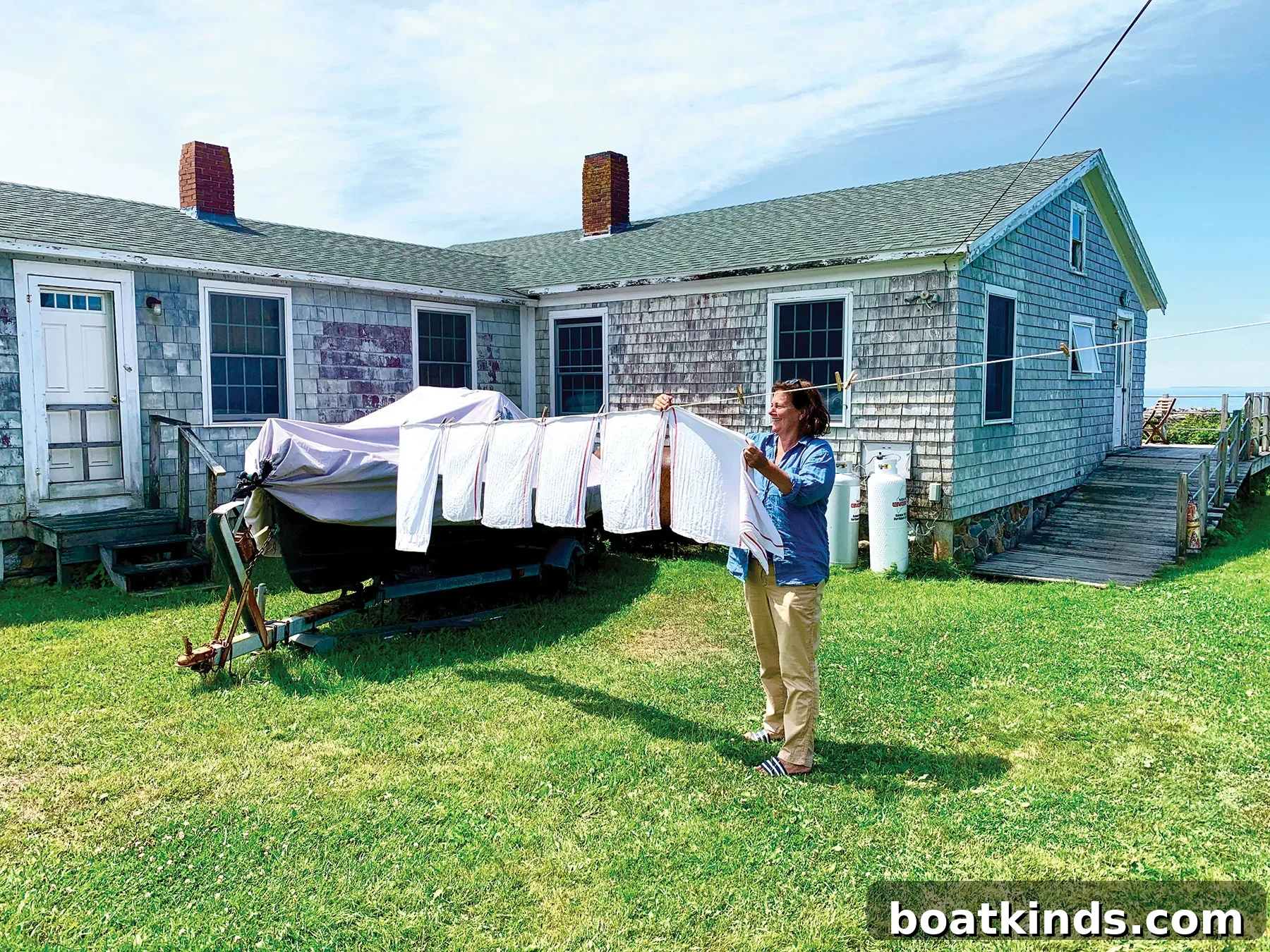
Mary led me up the rocks and through dense island vegetation to her family’s cottages. An old-fashioned scene unfolded as she plucked cloth napkins from a clothesline. Timelessness is Matinicus’s defining characteristic: the island population swells from around 20 in winter to roughly 100 in summer, when seasonal residents arrive to slow the passage of time.
Her cedar-shingled cottage, swallowed by giant beach roses, was simple and comfortable—one bath, two bedrooms, a modest kitchen and a living room, all tastefully arranged. We caught up over sandwiches; it had been nearly two years since we’d seen each other, and oddly, during the pandemic we were meeting on one of the country’s most remote inhabited islands.
After lunch we piled into Mary’s father’s 1980s GMC Sierra—dents, rust and a yellow rope holding up the tailgate—an archetypal Maine island truck. The island is just two miles long and about a mile wide, and with a top speed of 12 mph we kicked up a small dust cloud. Matinicus encourages a slower pace: most homes are modest and gardens few. Apple trees are everywhere, and the island preserves a number of old varieties that may no longer exist on the mainland. Residents hope experts will someday identify the apple types.
Cell service is spotty; the only reliable internet comes from a renovated utility shed that serves as the Matinicus Island Library. Open year-round on the honor system and staffed by volunteers, the tiny library isn’t part of the state system because it lacks a bathroom. In fact, there are no public bathrooms on the island. Power comes from a shed of diesel generators, and with no streetlights Matinicus offers excellent stargazing.
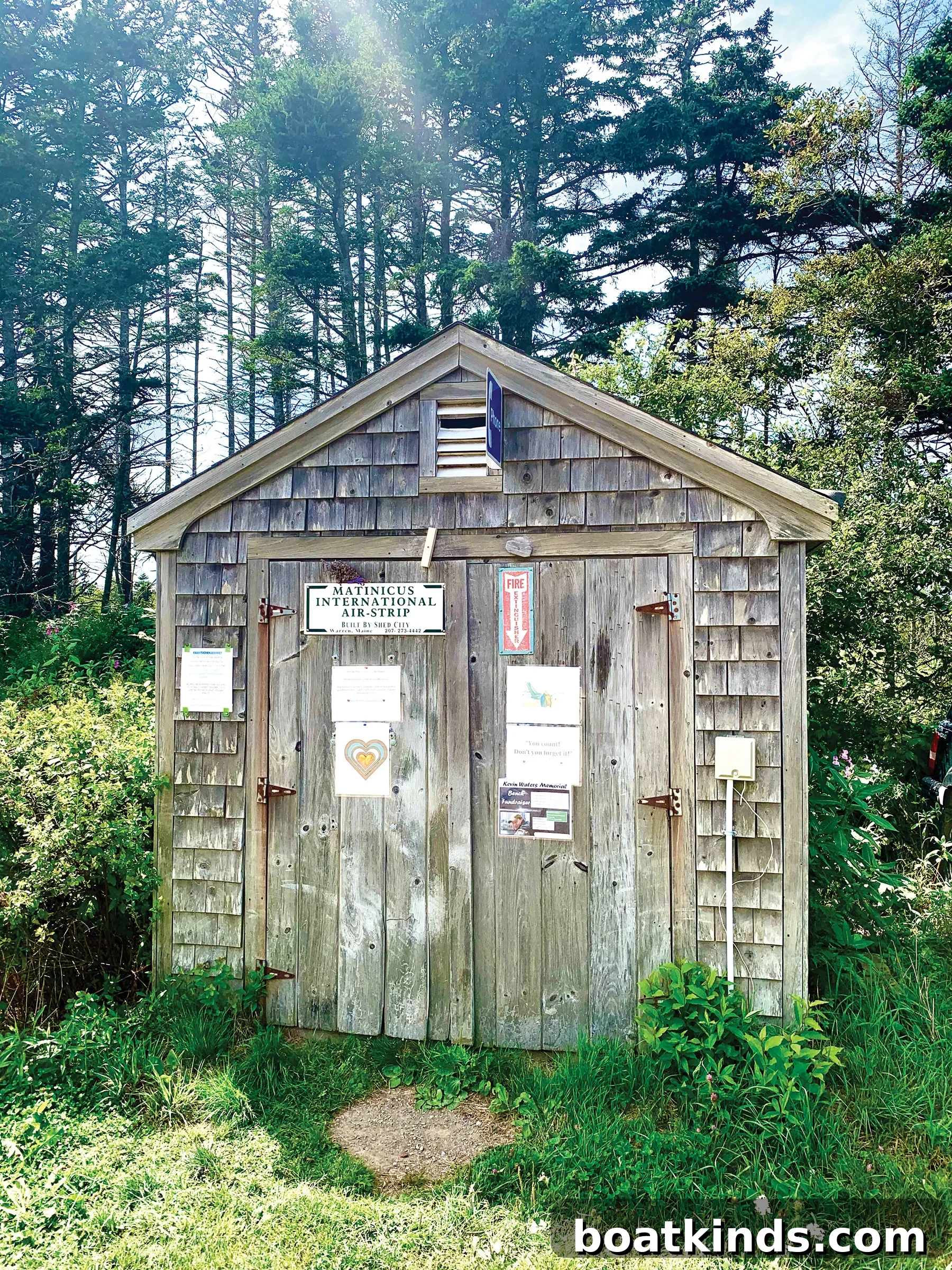
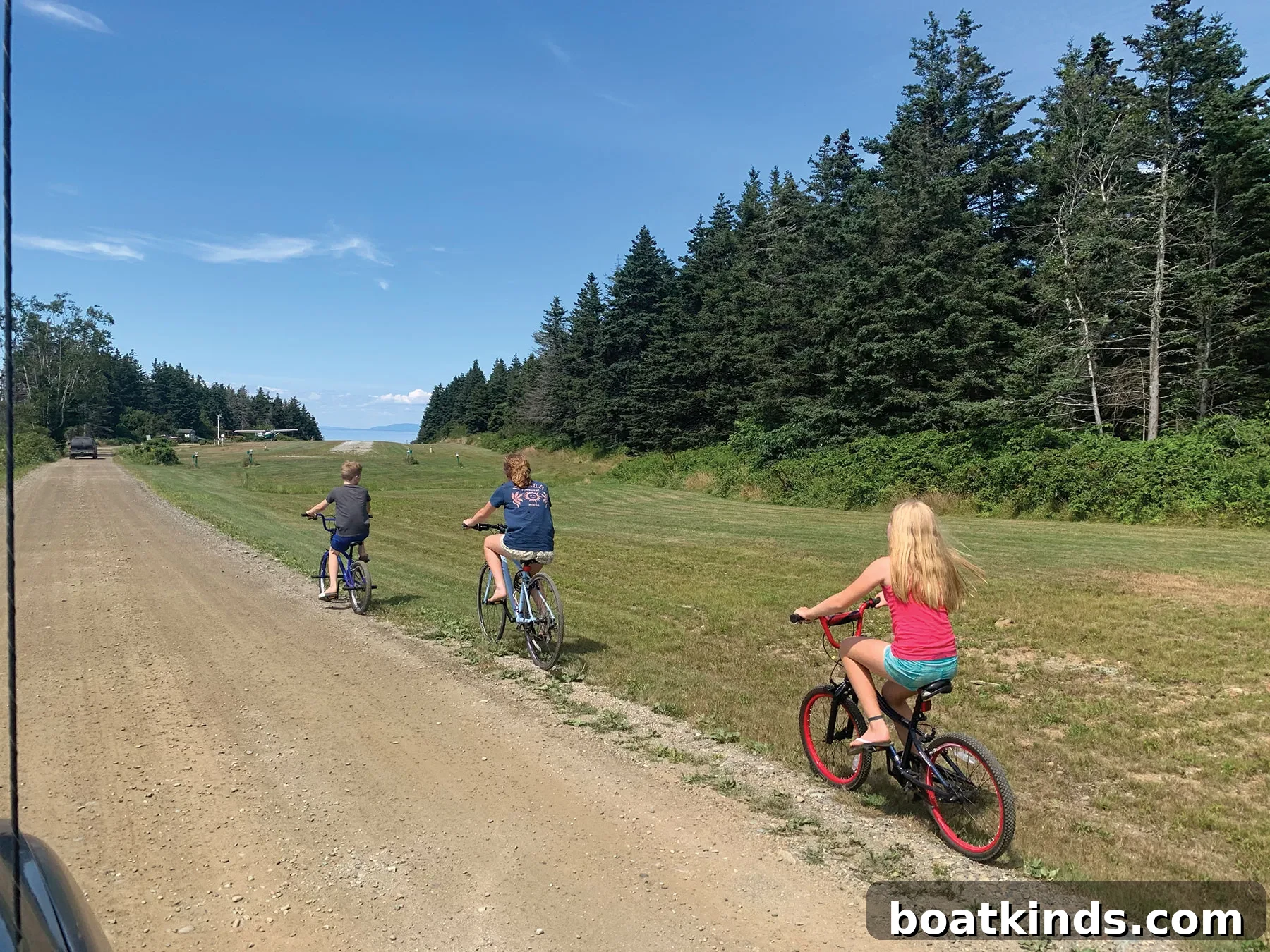
Near the small airstrip we passed kids on bikes watching a tiny plane take off. The “Matinicus International Air-Strip” sign hangs on a wooden shed—there’s no control tower. Most goods arrive by air: mail, groceries, packages, medications, even pets. The state-run ferry from Rockland runs infrequently and can be a rough, weather-dependent two-hour trip; consequently, many residents rely on private water taxis or air service for supplies.
Matinicus was formally organized as a plantation in 1840, a Maine-specific designation between an unincorporated area and a town. Historically maritime, the island’s economy once focused on cod, mackerel and herring; today lobster fishing is dominant.
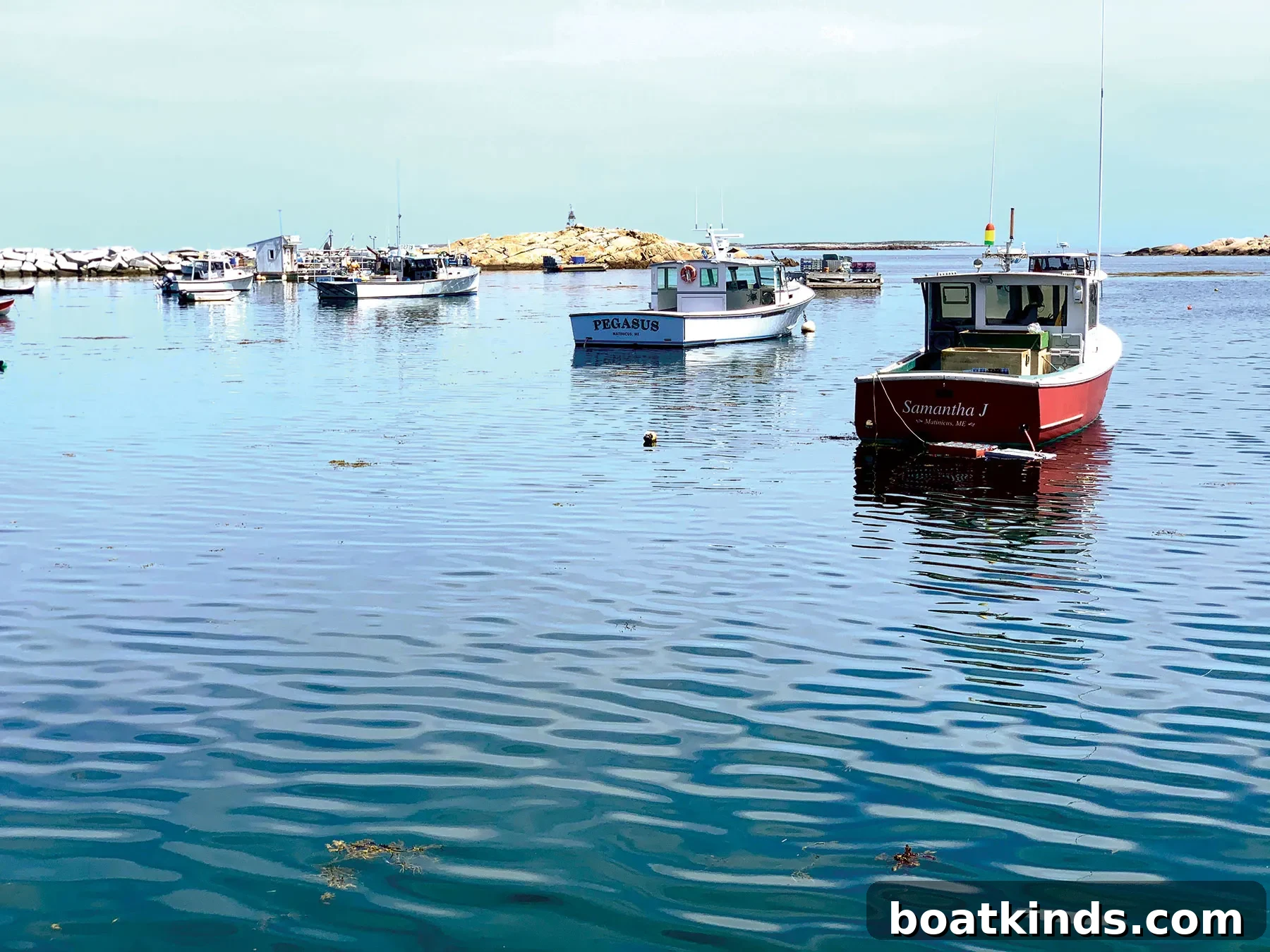
Mary drove me back to the harbor where lobsterboats rested like reflections in glass and traps were stacked beside pickup trucks. After a final chat with locals it was time to go. I said my goodbyes on the beach, topped off Bob’s fuel, and motored out of Burgess Cove.
The water remained mirror-flat. An hour later I was back in New Harbor, surprised at how close Matinicus now felt. As I pulled the boat from the water, the day’s quiet and the island’s slow rhythm lingered with me—along with the question that kept smirking in my head: what’s Mary serving for lunch tomorrow?
This article was originally published in the August 2021 issue.