
John and Jennifer Scanlon live in Sturgeon Bay, Wisconsin, and have enjoyed freshwater boating on Green Bay and Lake Michigan for most of their lives. Both born and raised in the Midwest, their passion for being on the water only deepened after they met and married in 1990.
For several years a Chaparral 2350 met their needs, but when they began crossing open water the limits of that boat became clear. “We took a vacation across Lake Michigan one summer and got caught in some good-sized waves,” Jennifer recalled. “We made the crossing safely, but it was quickly obvious that, with a growing family and a desire to cross open waters, we needed a larger, more capable boat.”
Their choice was a used 1969 Chris-Craft 35 Commander with a sport bridge—one of more than 164 produced between 1969 and 1972. The Scanlons bought their Commander from the boat’s second owner on Lake St. Clair, Michigan, and have owned it for 17 years.
To bring the boat home to Green Bay they ran up the eastern shore of Michigan’s Lower Peninsula, passed through the Straits of Mackinac and crossed the upper reaches of Lake Michigan. That initial cruise confirmed that the Commander was the right vessel for their ambitions, but it also revealed opportunities for improvements and updates.
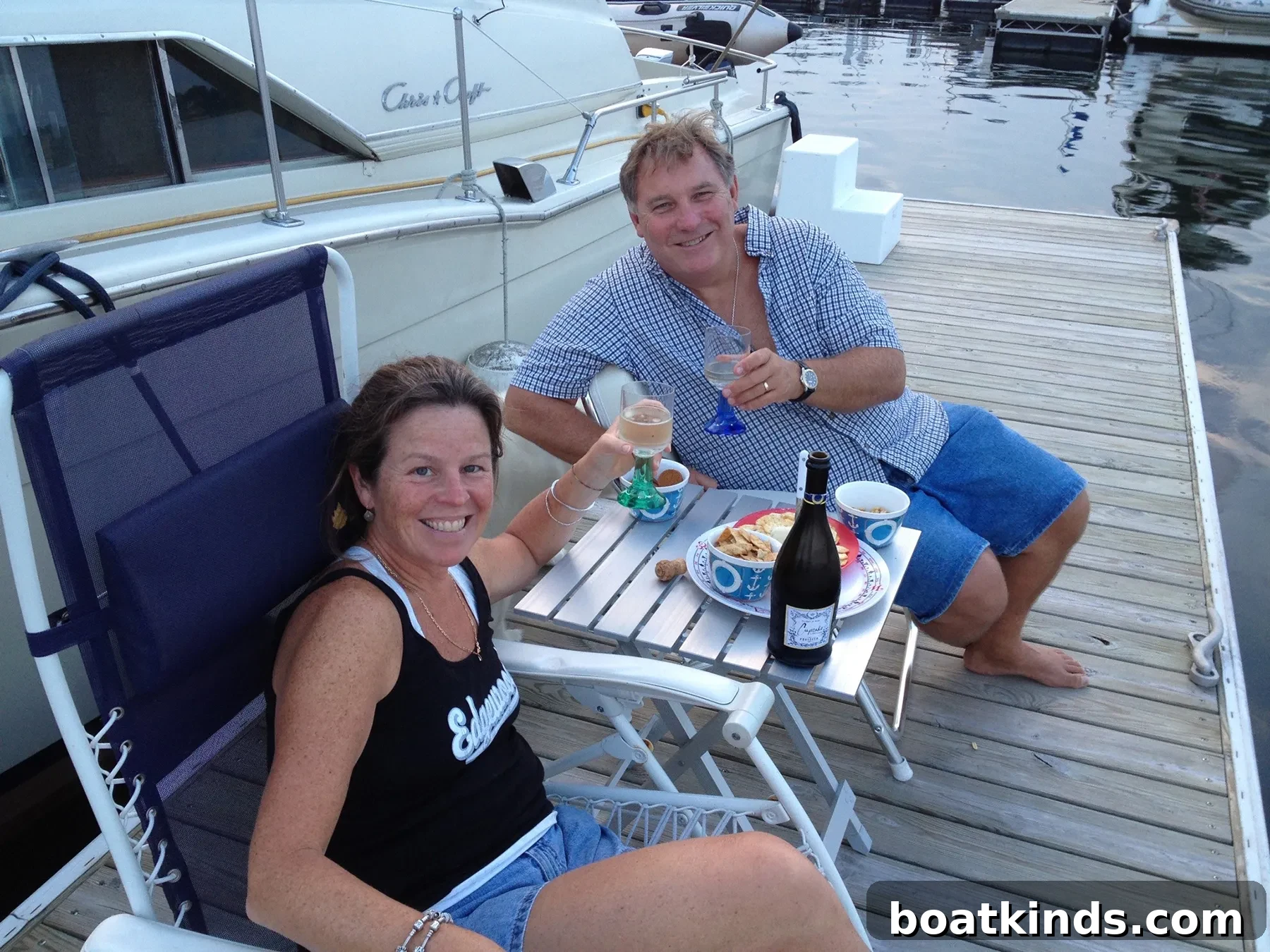
Early projects focused on electrical and systems reliability. John replaced the AC power wiring and installed a new Blue Seas breaker panel. He also ran NMEA 2000 network cabling, fitted a modern radar and added a Fox Marine engine monitoring system. During those upgrades they replaced the marine head and completed a long list of small but important maintenance tasks—part and parcel of owning a classic vessel.
The Scanlons invested in comfort and aesthetics as well, reupholstering every seat and replacing foam cushions and berths that had long since lost their comfort. “They looked dated with the typical multi-colored plaid coverings from the late 1960s and early 1970s,” Jennifer said, so new upholstery both refreshed the interior and made cruising more enjoyable for family and guests.
Originally the 35 Commander came with twin 230-hp GM/Chris-Craft V-8 gasoline engines. Those engines ran well but felt underpowered when conditions got rough or when the Scanlons wanted to cruise faster. John had recently installed new cylinder heads and converted both engines to electronic ignition when an unexpected opportunity arose: a neighboring boat in a local marina burned and, while the craft itself was beyond repair, its 2007-built 425-hp Crusader engines were intact and available.
After installing the higher-power engines, the boat initially handled differently—its bow tended to lift and wander, especially in following seas. Through conversations with other Commander owners online John learned that the hull includes a built-in trim-tab-style lip along the transom edge that can push the bow down and cause steering issues under changed power and weight distributions. Working with technicians at SkipperBuds’ Quarterdeck Marina in Sturgeon Bay, they had that lip ground down and the result was immediate: improved tracking and more predictable handling.
Today the Scanlons typically cruise locally on Green Bay and make occasional trips to nearby ports like Milwaukee. For many years they explored Michigan’s collection of harbors of refuge along both peninsulas—small inlets, towns and protected harbors ideal for island hopping and short passages. With their children grown and now retired, they are planning longer voyages. “The Great Lakes offer some of the best cruising in this country, and we’ve just started to explore them,” John said. This summer they intend to cruise the North Channel, following the Canadian shoreline of Lake Huron behind Manitoulin Island, a long-anticipated trip on their cruising bucket list.
WALKTHROUGH
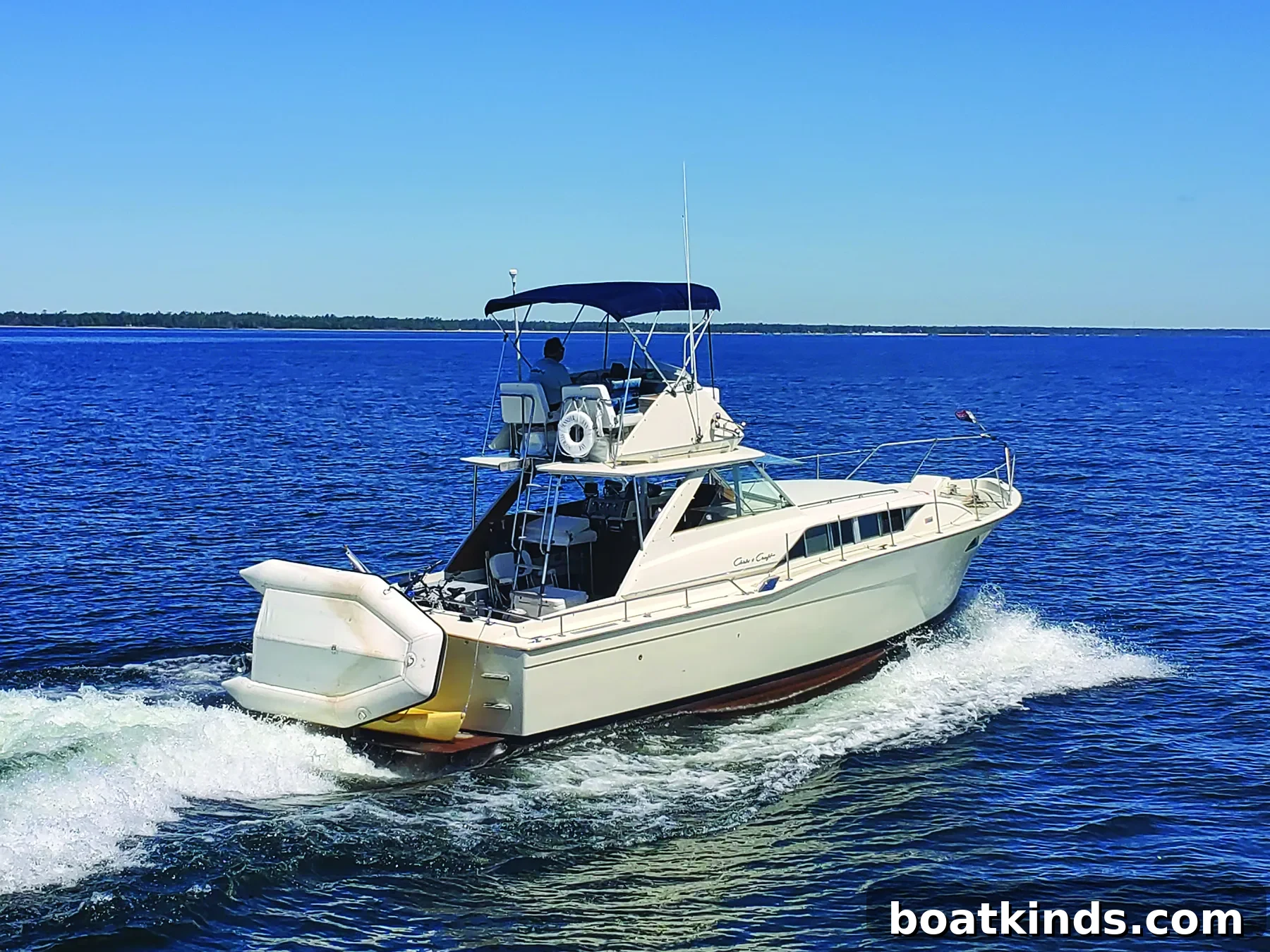
Boarding the Chris-Craft Commander 35 is straightforward from either the starboard or port side via coaming steps and inboard ladders. Those coamings open onto walkable side decks with sturdy handholds along the deckhouse, providing secure passage forward. The aft deck is spacious—about 10 feet wide—and can be enclosed with canvas, creating a comfortable cockpit space for socializing or relaxing in folding chairs. That space sits level with the bridgedeck beneath a hardtop.
On the bridgedeck the lower helm is located to port with a companion bench to starboard, and a centerline ladder rises to the flybridge where a secondary helm sits to port. A centerline companionway door leads down into the main cabin, which benefits from large sliding windows that let in plenty of light and ventilation.
The cabin layout is functional and family-friendly: to port a dinette for four converts into a double berth, while the lounge to starboard transforms into upper and lower bunks. Forward on the port side is a head with sink and shower, and opposite that the galley occupies an L-shaped footprint with an electric stove, oven, sink and refrigerator, offering the essentials for extended cruising. A privacy door opens to the owner’s cabin, which features a V-berth, a wardrobe to port and a locker to starboard, providing convenient storage and a comfortable private berth for longer passages.
BACKGROUND
Christopher Columbus Smith built his first wooden punt, or duck-hunting boat, in 1874 at age 13. His attention to craftsmanship and affordable design led him and his brother Hank to begin producing small boats full-time in Algonac, Michigan, in 1881. By the early 1920s their mahogany speedboats were highly sought after, and in the late 1920s they shifted toward mass-produced wooden boats for middle-class owners, founding the company Chris-Craft Boats. In 1955 the company was an early adopter of fiberglass construction. Over more than a century and a half the brand has changed hands several times, yet it remains one of boating’s most iconic names, known for blending style, quality and a strong legacy in American recreational boating.
This article was originally published in the April 2023 issue.