
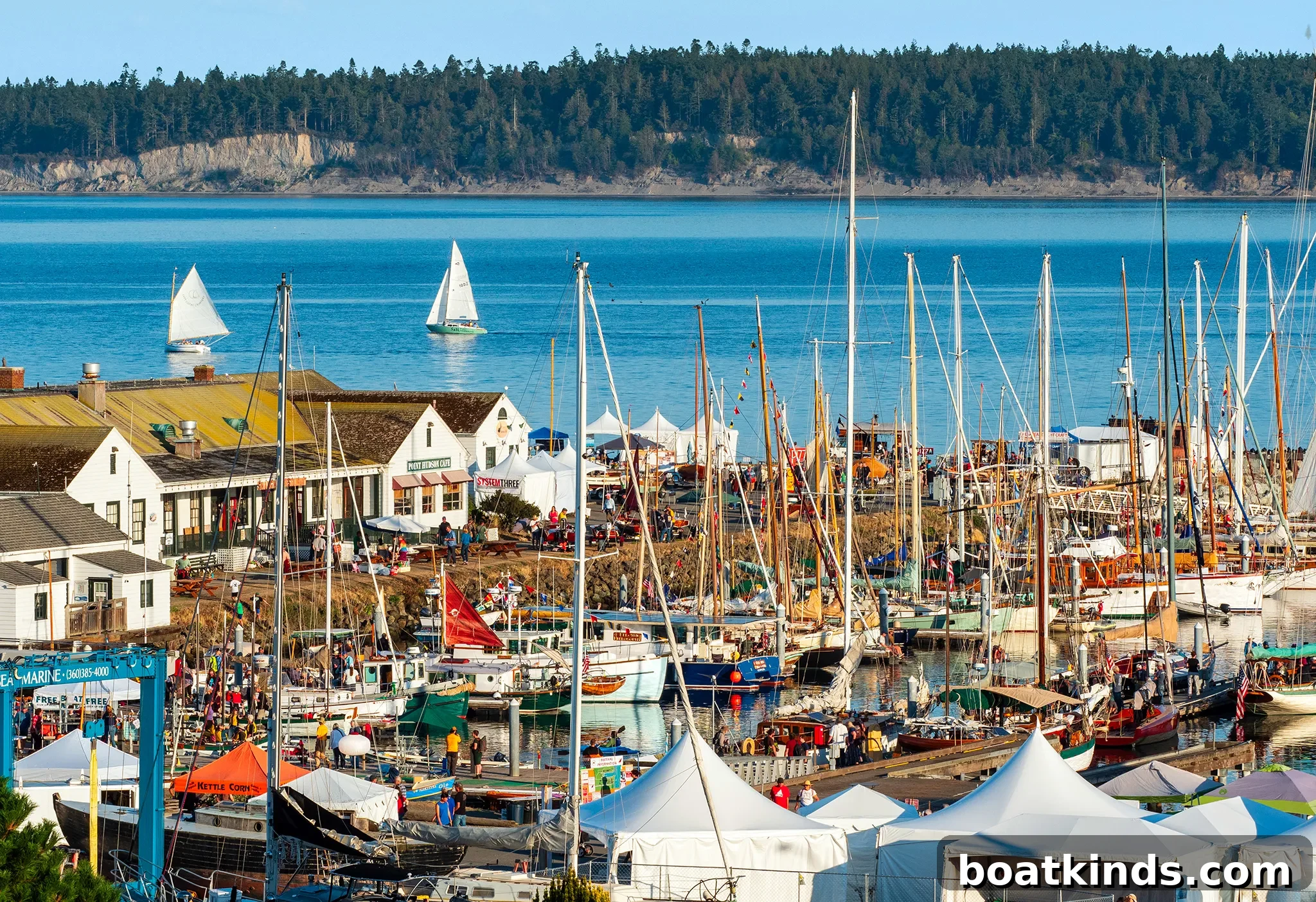
Arriving from the west on Highway 20, visitors descend a hill to a breathtaking panorama of Victorian homes, the blue water, snowcapped peaks and dozens of boats scattered across the bay. For many who drift here—from California, the East Coast or distant countries—this is the eureka moment that makes Port Townsend feel like a discovered paradise. No matter how you arrive—by old car, by boat or in more fanciful imagination—once you fall into Port Townsend’s orbit it’s hard to leave.
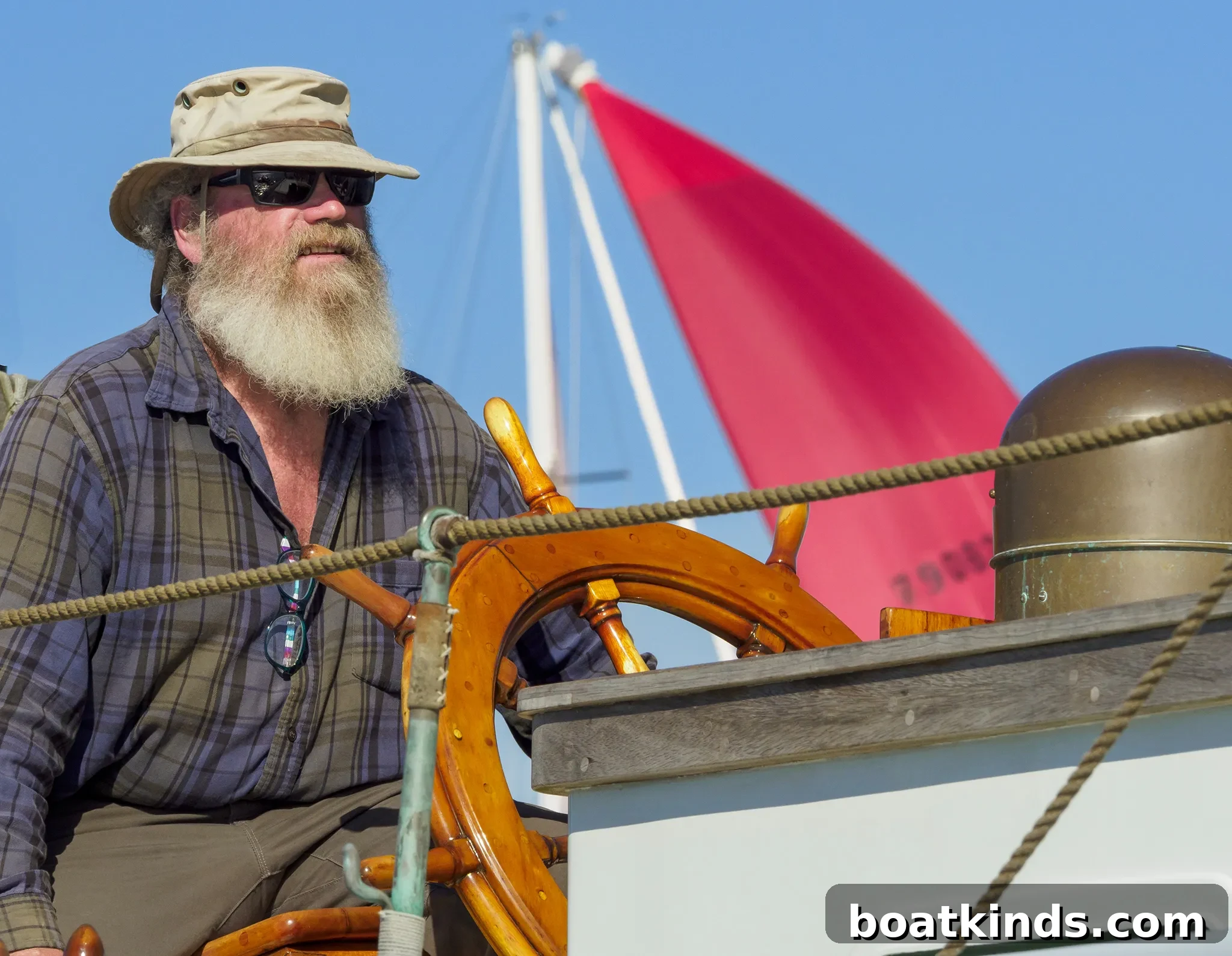
Part of the town’s pull is its calendar of celebrations: jazz, blues, farm, film, fiddle tunes, rhododendron, steampunk gatherings, writers’ events and the eccentric Kinetic Skulpture Race. All have loyal followings, but none are more central than the Port Townsend Wooden Boat Festival, held on the second weekend in September. For 47 years it has been a pilgrimage for wooden-boat enthusiasts and newcomers alike. The festival welcomes a wide range of visitors while maintaining a clear focus: to entertain, educate and celebrate wooden boat craft and culture.
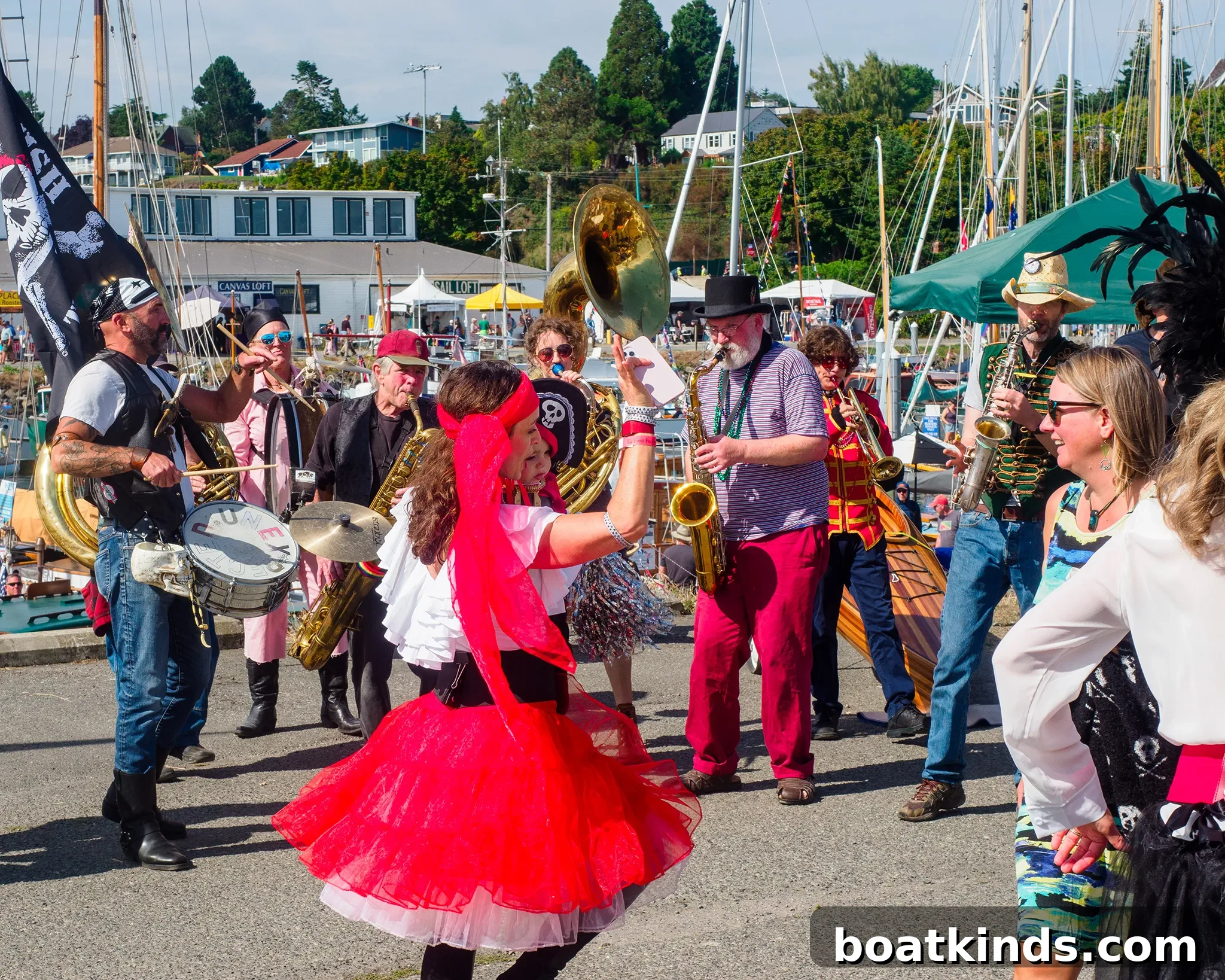
This year’s festival hosted more than 200 wooden vessels and welcomed 12,000 ticket holders, supported by 420 volunteers who typically worked multiple shifts. Volunteering and helping others are part of the town’s fabric—Port Townsend, with roughly 10,000 residents, prides itself on a strong community and a working waterfront where marine trades account for about 20 percent of Jefferson County’s tax revenue. While some worry that rising costs could make participation exclusive, the festival’s spirit remains inclusive: “Come as you are, bring what you’ve got, and be ready to dance when the band plays.”
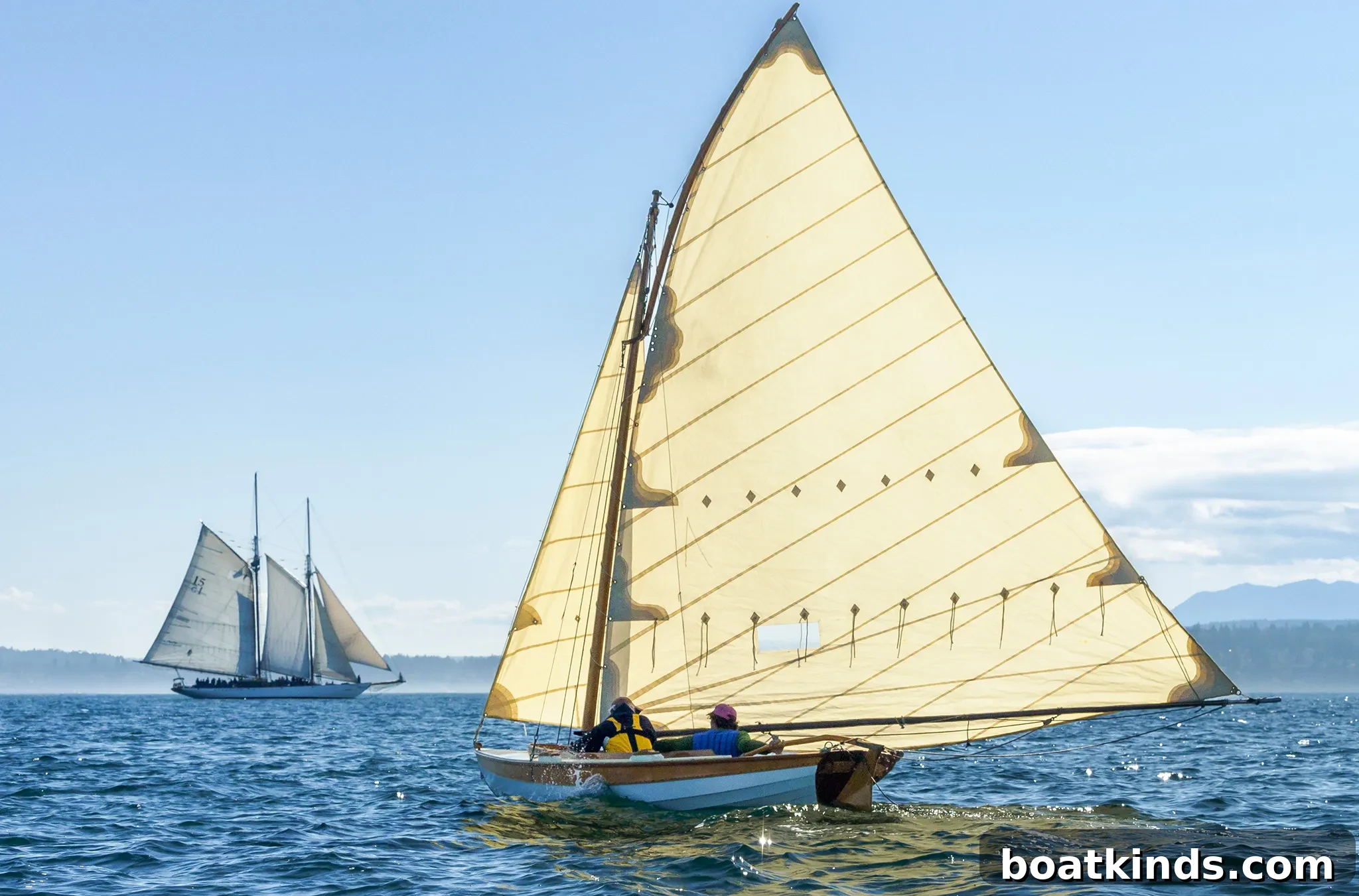
The Wooden Boat Festival welcomes almost any wooden craft that floats: stand-up paddleboards, rowing shells, kids’ paddle boats, Spidsgatters, Folkboats, Thunderbirds, runabouts, steamboats, schooners, cutters, sloops and classic motor yachts. On Sunday, these boats form a parade for a final sail-by. The policy is straightforward—if it’s made of wood, it’s welcomed; years ago a bundle of driftwood lashed to a pallet with an outboard showed up and was cheerfully accepted.
This year’s highlights included the newly launched replica of Tally Ho, a project by Leo Goolden that attracted a large YouTube following, and longtime favorites like the William Hand–designed 161-foot schooner Zodiac, celebrating a century in the water. A trio of B.B. Crowninshield schooners also drew attention: the 133-foot Adventuress, the 84-foot Martha, and the 45-foot Fame, the designer’s personal 1910 boat that Dennis Conner restored for its centennial. The festival’s small-boat races and the Schooner Cup welcome a variety of rig types, underscoring how the event celebrates diversity of design as much as craftsmanship.
The festival traces its roots to 1977, a different cultural moment in the wake of Watergate, Vietnam and the countercultural movements of the 1960s and ’70s. Carol Hasse, who arrived in Port Townsend in 1975 as a young sailmaker and later became a Port of Port Townsend commissioner, was among the early organizers. Like many others drawn to the town then, Hasse found a community where hands-on maritime work and a DIY ethos fit naturally. She and others helped found the Wooden Boat Foundation, which organized the first festival.
Hasse had previously lived in a commune in Bellingham where members built a Skookum 47 and later helped construct a 40-foot ferrocement boat on the coast. She and Sam Connor eventually settled in Port Townsend—he opened a boat shop in Point Hudson, she established a sail loft—and both played key roles in launching the festival.
Another founder, Tim Snider, grew up in Connecticut and learned boatbuilding early, helping his father build a Blue Jay dinghy. Snider worked as a magazine writer and co-founded WoodenBoat magazine with Jon Wilson. Looking for a West Coast venue where novices could meet wooden-boat devotees and see craft emerging from hidden sheds and shops, Snider toured the region and was persuaded by Connor to visit Port Townsend. After disembarking at the old dock and exploring Quincy Street and Point Hudson, he recognized the town’s potential for a wooden-boat gathering.
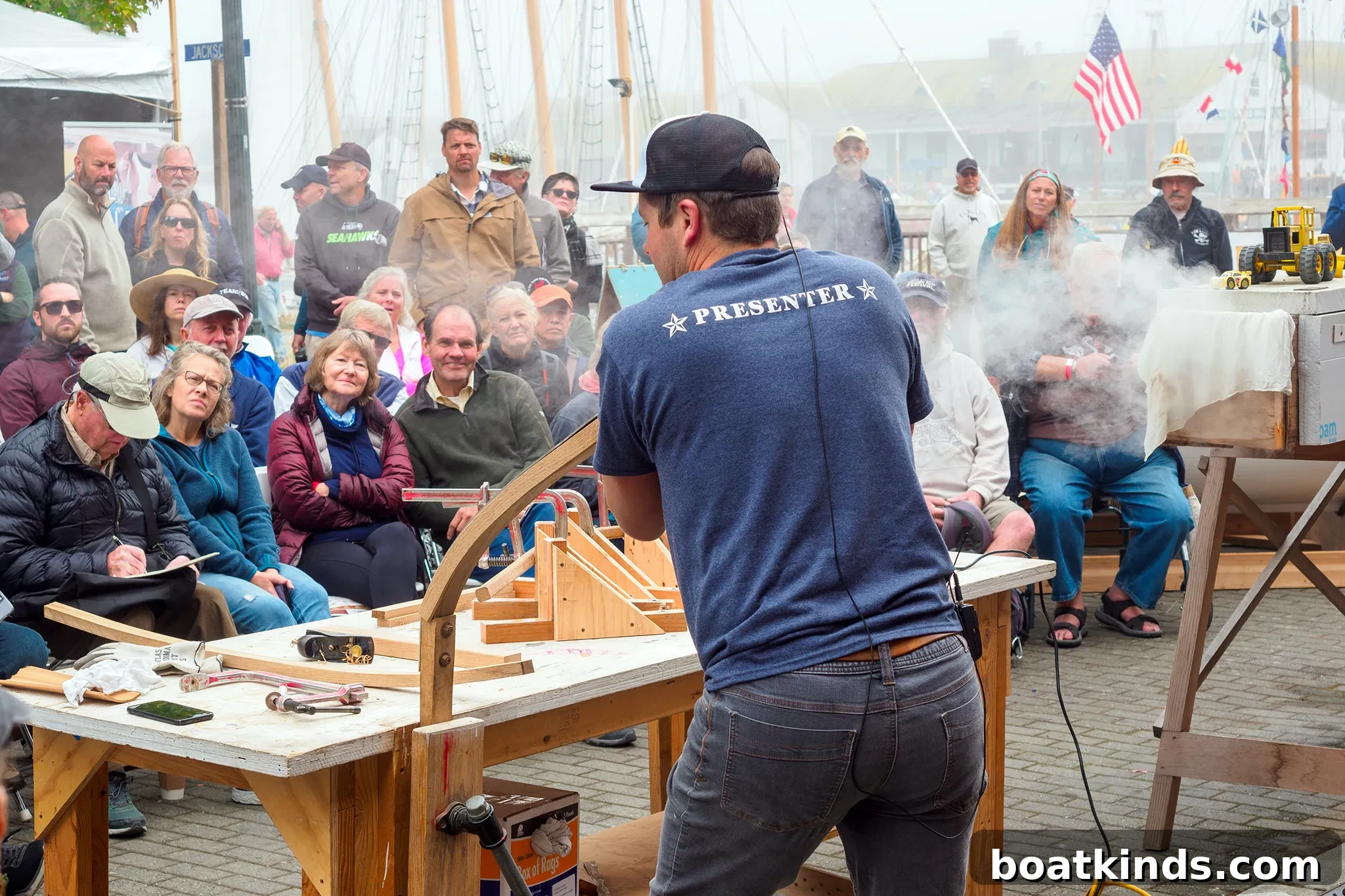
Beyond boats on the water, the festival’s programming is extensive. In 2024 it offered 115 talks and demonstrations covering subjects from phytoplankton monitoring and heavy-weather seamanship to dirtbag sailing and profiles of maritime matriarchs. Hands-on tents teach woodworking skills like making cheeseboards, shaping tiller handles, steam-bending planks, chopping rabbets, varnishing, electrical troubleshooting and traditional rope making—practical instruction that helps preserve craft skills.
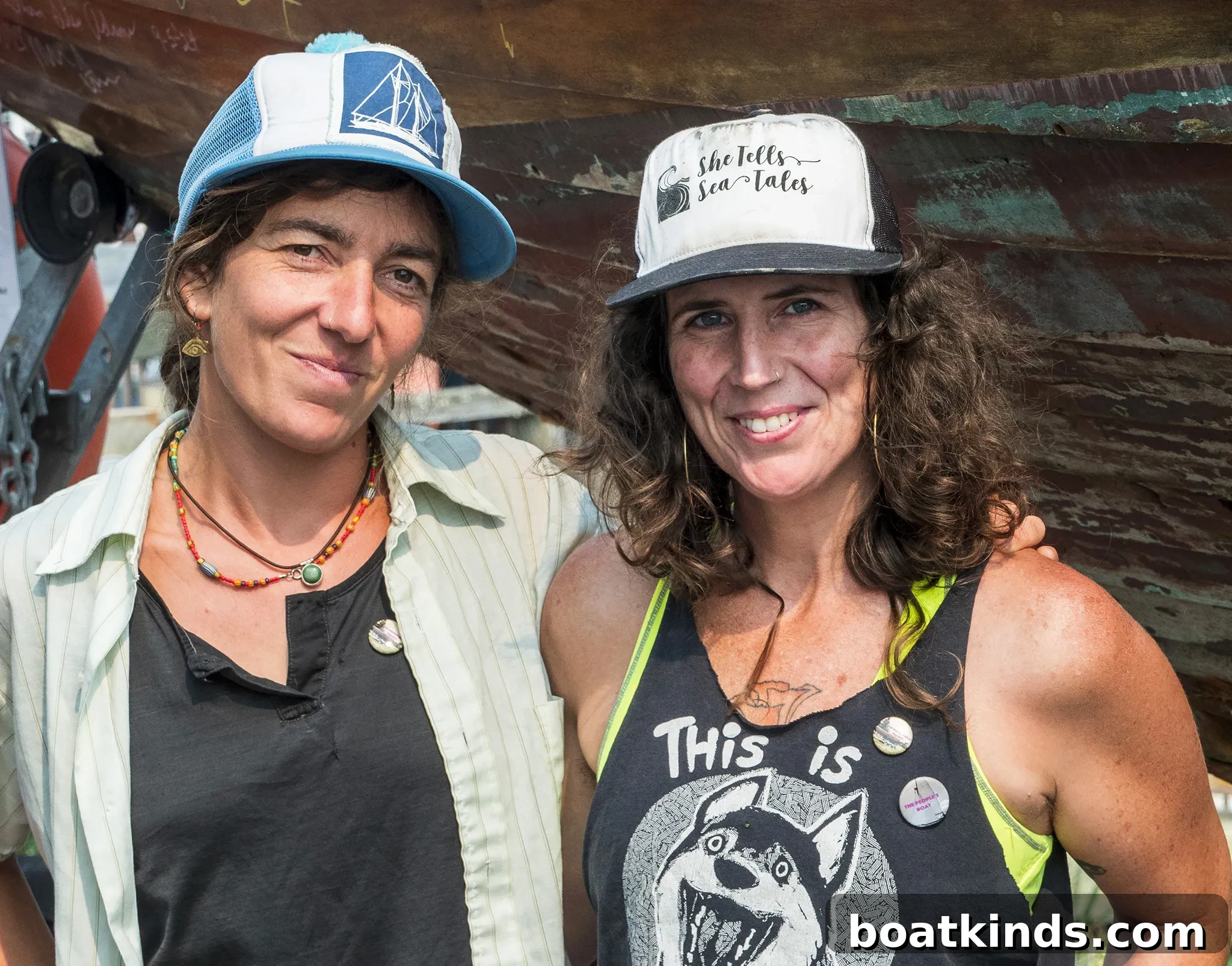
The festival also spotlighted women builders and international connections. A European group of female boatbuilders was invited this year, and local figures like Diana Talley—who built a career in yard work and ran her own shop—helped inspire younger builders such as Emma Gunn and Ginny Wilson, who displayed a potential project: a Nordic Folkboat once sailed across the Pacific by Sharon Sites Adams in 1965.
Academic presentations expanded the festival’s historical reach. Caroline Collins, an assistant professor at UC San Diego, presented the Black Pacific Project and an exhibit she curated, “Take Me to the Water: Histories of the Black Pacific,” which traces Black connections to maritime work and water-based leisure on the Pacific Coast and highlights stories often overlooked in mainstream accounts.
Indigenous maritime traditions were also central. A delegation from the Haida Nation spoke about carving ocean-going canoes from old-growth cedar and reviving traditional sailmaking using natural materials such as cedar bark—the first traditional Haida sail made in over a century. “We’re fortunate our leadership fought to protect these large trees,” said Jaalen Edenshaw, a Haida artist and canoe carver, noting that while such trees are rarer today, they can still be responsibly harvested.
Challenges remain: engaging young people in the craft, making time for paddling and finding funds for construction, storage and maintenance to keep these boats alive for future generations. “With those big wooden sailboats, you can almost feel the spirit and the love that’s gone into building them,” Edenshaw said. Even if visitors don’t frame it spiritually, many sense the reverence and care baked into the vessels.
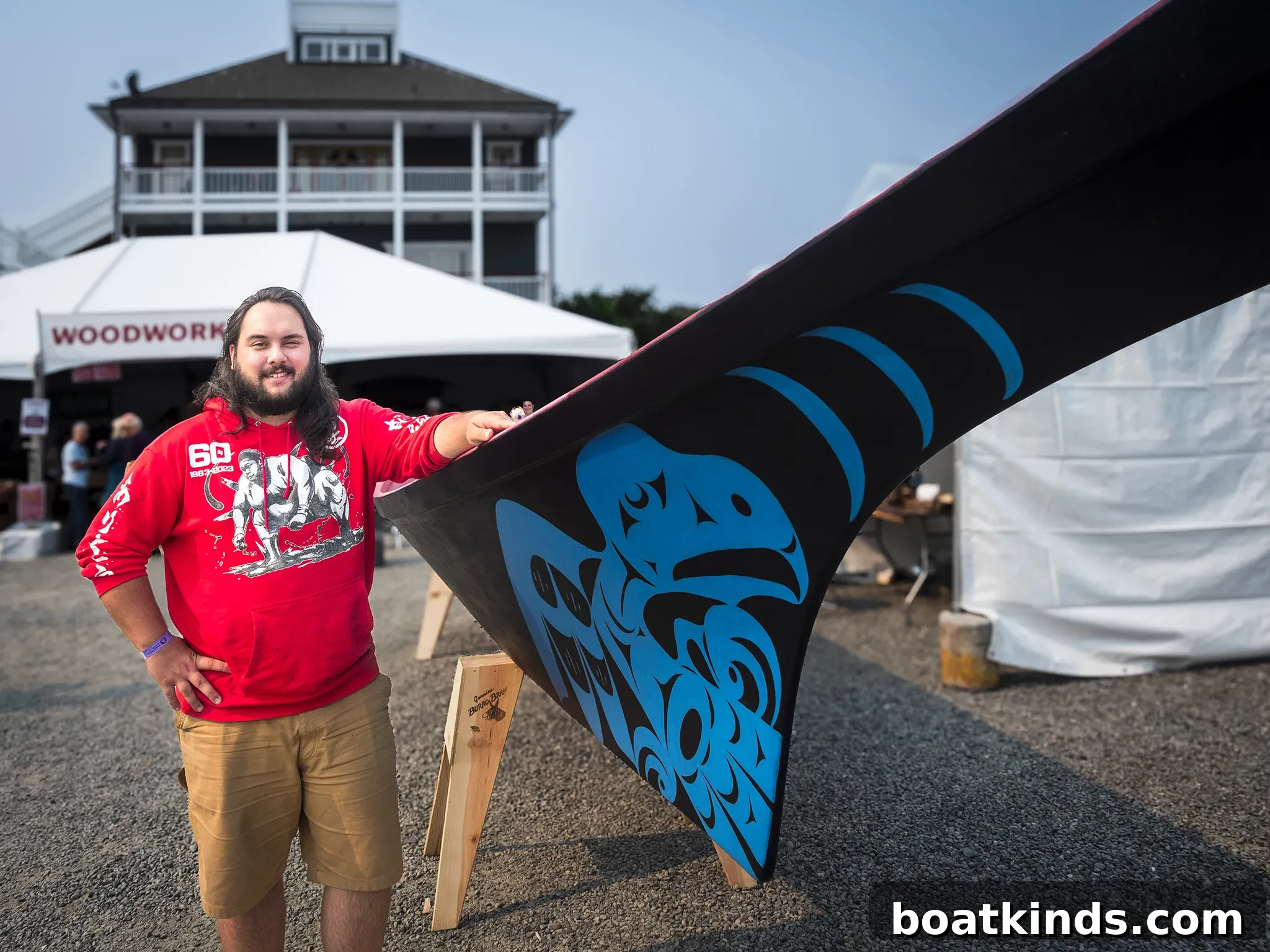
Also on display was a 28-foot Salish canoe built by Nathan Tatro of the Stillaguamish tribe. The canoe began as a kit modeled at Turnpoint Design and was constructed using stitch-and-glue methods under supervision from Devlin Designing Boatbuilders in Olympia, Washington, demonstrating contemporary collaboration between designers, builders and tribal artisans.
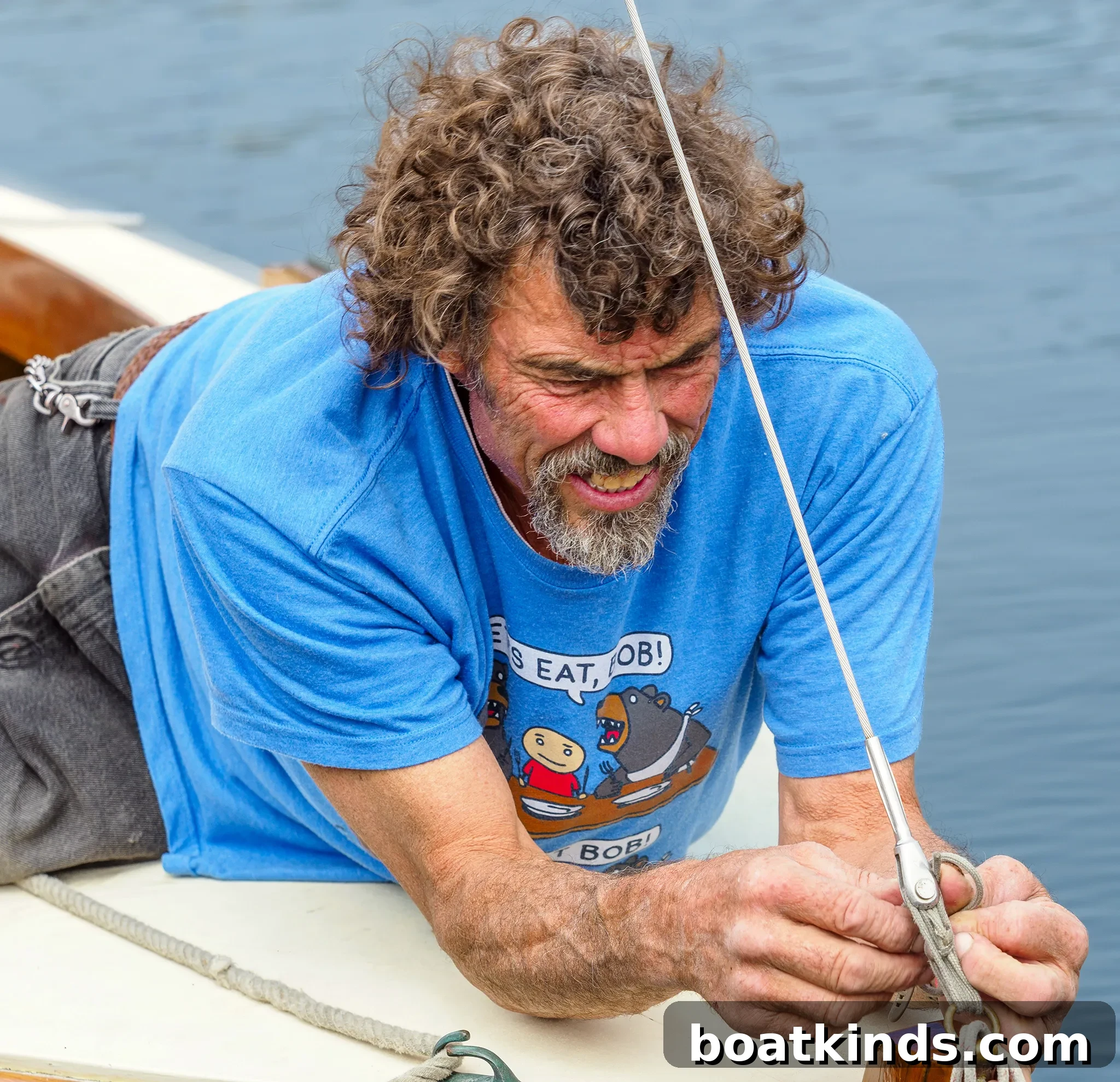
The festival endures because it adapts without abandoning its founding principles. Port Townsend’s geography and community make growth in place difficult—Point Hudson has limited room—but leaving is not an attractive option. Instead, organizers focus on leveraging the town’s unique setting and character. As local boatbuilder Russell Brown puts it, people who have seen other wooden-boat festivals often say there is nothing quite like Port Townsend.
Making it Happen
The festival’s headquarters is the 26,000-square-foot Northwest Maritime Center at Point Hudson, a waterfront location made possible by a $12.8-million capital campaign completed about 15 years ago. That campaign combined many small donations with larger gifts, including a $1-million naming gift from the Chandler family and significant contributions from First Federal and the Gates Foundation. Now known as Northwest Maritime (NWM), the organization has expanded its operations, acquiring a hotel, a magazine and a fleet of about 50 boats.
In addition to the Wooden Boat Festival, NWM organizes events such as the Race to Alaska, the Tacoma-to-Port Townsend 70/48 race, and the WA 360, and it partners with schools throughout the region to introduce students to marine trades and maritime careers. CEO Jake Beattie, a former leader at Bike Works and the Deputy Director of the Seattle Center for Wooden Boats, emphasizes the festival’s role as an entry point. “Whoever you are, whatever your level of interest, expertise or age,” he says, “there’s a way to connect more deeply with the sea and the craft, and it starts here in Port Townsend.”
December 2024