Boat Insurance Shortages in Florida Are Stalling Sales
Curtis Stokes, a Fort Lauderdale broker, spends a lot of time politely delivering unwelcome news to prospective buyers. Many callers begin conversations eager to purchase a boat, but shift quickly to frustration when told the first step is securing insurance pre-approval. “People hang up on me. They think I don’t want to sell them the boat,” he says. “That’s not the case at all.”
According to brokers and industry specialists, the most significant barrier to buying a boat today isn’t inflation, higher interest rates, or limited inventory following the pandemic buying boom. It’s the difficulty of obtaining insurance—especially for boats kept or cruised in Florida, which has more registered vessels than any other state.
“I tell all our salespeople: As soon as you have a guy sniffing around a boat, the first call he has to make is to the insurance people,” says Tim Derrico, director of sales for HMY Yachts in West Palm Beach. Where once an agent could bind coverage the same day, the process now takes time and planning.
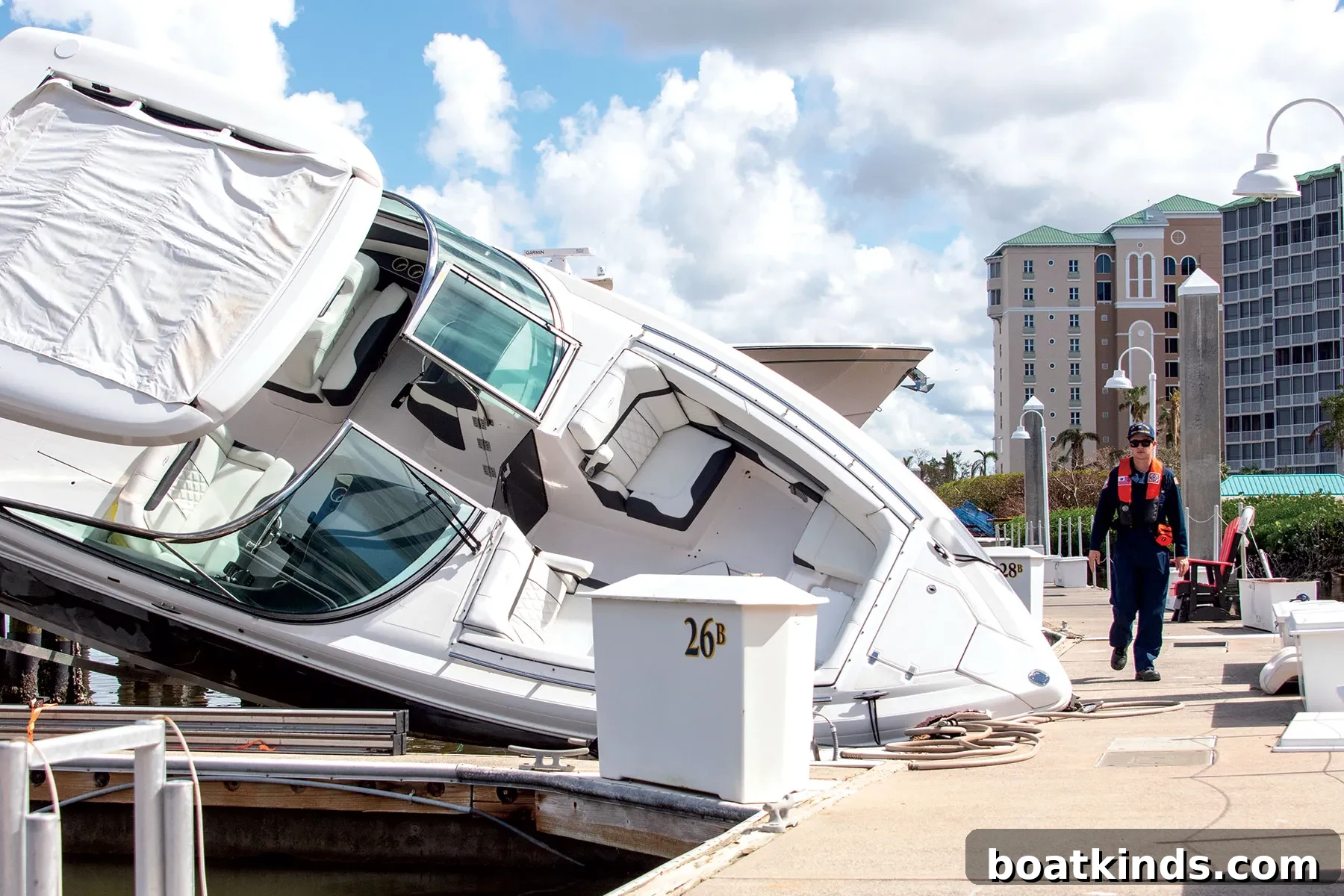
The squeeze on availability and rates has been building for years. Insurers tightened underwriting after Superstorm Sandy in 2012, and subsequent major storms—Hurricane Irma in 2017, Michael in 2018, and Ian in 2022—have reinforced that trend. With each large loss event, carriers have narrowed their appetite for risk, tightening criteria and raising premiums. “In some cases, rates have doubled in the past few years,” says broker Jimmy Rogers of OneWater Yacht Group in Dunedin, Florida.
A hull-and-liability specialty agent who assists clients across multiple carriers and requested anonymity reports even steeper increases in parts of Florida: some customers are paying four to five times previous rates. “None of the standard carriers want to write a policy south of Georgia,” he says.
Multiple marine insurers were contacted for comment but did not respond. Still, brokers fear the market could become unworkable for many buyers if a major storm like Hurricane Ian were to strike Southeast Florida. “If that kind of storm came through Fort Lauderdale or Palm Beach, I don’t think any companies would be underwriting policies right now,” Derrico says.
Underwriters Focus on Size, Age and Location
Insurers are concentrating on three underwriting factors: a boat’s size, its age and where it will be used. Regarding size, carriers tend to be cautious when a buyer wants a vessel substantially larger than those shown on their prior applications. That’s particularly true for absentee owners—people who live out of state but keep their boats in Florida. “It’s especially true with absentee owners,” Rogers notes.
Stokes says many callers overstate past experience or assume prior ownership of small recreational boats will translate easily into coverage for much larger yachts. His routine advice is to secure insurance pre-approval before investing time in showings. He suggests buyers test the market by asking for a pre-approval on a boat that is slightly older, slightly larger and slightly more valuable than the one they intend to buy; that way they learn what an insurer requires up front.
To satisfy underwriters when a buyer moves up in size, insurers increasingly require formal training. Some buyers must complete a specified number of hours with a licensed captain; that captain can then vouch for the buyer’s competence, allowing coverage to be issued. “I have a client who used to drive 20-foot boats in Mississippi, and he wanted to buy a 54-foot Riviera,” Rogers explains. “He needs 50 hours of captain training. At the end of the time period, if the captain feels confident, he can write the letter and the insurance company will sign off.”
In other situations, the only way to obtain coverage is to employ a professional full-time captain—sometimes at annual costs exceeding $100,000. “We have guys who want to go from a 33-foot Sea Ray Sundancer to a 70-foot Ferretti,” says the specialty agent. “The insurers are like, ‘No way, you’re not operating this boat on your own.’”
Age Drives Premiums and Limits Options
Carriers are also redefining what qualifies as an “older” boat. Stokes describes the shifting thresholds: “First, they said they didn’t want any boats 40 years and older. Then it became 30 years. Then it became 20 years.” That narrowing pool of willing insurers makes coverage for older vessels available only at higher prices or through specialty markets.
The specialty agent highlights a particular vulnerability for boats from the early 2000s: aging engines and powerplants. Insurers worry about expensive mechanical failures and, in many cases, will either charge higher premiums or exclude mechanical breakdown coverage entirely. “If you’re getting insured by a standard carrier, you’re paying $2,500 in a new boat but double that for an older boat,” he says.
Location Matters: Hurricane Zones Increase Scrutiny
Where a boat will be used or berthed is a critical factor. Boats based or cruising in areas prone to hurricanes face much stricter underwriting than those in calmer regions such as the Great Lakes. Derrico expects underwriters to increasingly limit the number of policies for boats kept in hurricane zones and to require ironclad plans for hauling and storing vessels when storms approach.
He advises buyers to arrange a hurricane haul-out plan and secure insurance pre-approval before shopping. Reserving a documented haul-out location that satisfies the carrier can be costly—$3,000 to $5,000 or more per event—but it may be a condition of coverage. “What you’re going to see happening next is that if you don’t abide by your plan, you’re done,” Derrico warns.
HMY Yachts is preparing for that demand by exploring property purchases to provide additional haul-out capacity. “It’s going to be a requirement from underwriters, so if you own a piece of property that can haul a lot of boats, everybody is going to need it,” he says.
Rogers urges buyers to be realistic about cruising plans and seasonal limitations. During hurricane season, from June through November, scheduling long passages or relying on waivers for early departures is no longer a reliable option. “It used to be that you could get an insurance-company waiver to head south before the end of hurricane season,” he says. “But you just can’t get that anymore.”
This article was originally published in the January 2023 issue.