

A Bubbly Solution to Rust
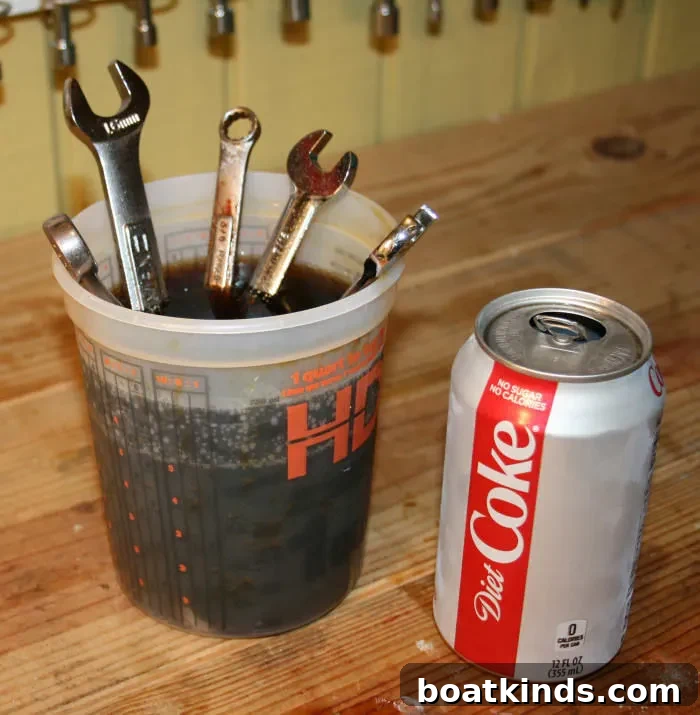
If you keep chrome-plated box-end wrenches and other hand tools aboard, you know how quickly salt, humidity and a stray splash of seawater can leave them looking ugly with rust and discoloration. Before you toss a set of otherwise serviceable tools or hide them away out of embarrassment, try a simple, inexpensive method: soaking them in a carbonated cola. With a little time and basic care, you can restore the chrome finish, remove corrosion, and get your tools back into usable, presentable condition.
Why cola works
Many cola drinks contain phosphoric acid and carbonic acid from carbonation. These acids help dissolve iron oxide (rust) on chrome-plated surfaces without aggressive scrubbing. Using a diet cola is preferable for cleaning because it lacks sugar that can leave sticky residue. Diet products still contain the acids responsible for rust removal, but won’t add unnecessary stickiness to the job.
Step-by-step restoration process
1. Choose a stout plastic container large enough to fully immerse the tools. A plastic tub or bin works well—glass is fine too, but avoid anything that can be easily damaged in a salty shop environment.
2. Pour enough Diet Coke to cover the rusted areas. If the container is shallow, you can periodically flip the tools end-for-end so all surfaces get treated.
3. Place the container where temperatures are moderate and out of the way. Avoid direct sunlight or freezing conditions; room temperature produces the most consistent results.
4. Wait. Depending on how heavy the rust is, you may need to soak tools for a day or two, or in some cases several days. Check them every 24–48 hours. When a tool looks clean, remove it from the bath.
5. Rinse thoroughly with fresh water to remove any remaining cola residue. Dry the tool completely with a clean rag or cloth. Finally, protect the metal by applying a light coating of lubricant or corrosion inhibitor such as WD‑40 or a dedicated tool oil, then wipe off the excess and store the tool dry.
Practical tips and precautions
– Wear gloves and eye protection when handling corroded metal and acids, even mild ones from cola. Work in a well-ventilated area.
– If rust is severe or the chrome plating is badly pitted, soaking will improve appearance but may not restore the surface to like-new condition. For heavily compromised tools, professional re-plating or replacement may be necessary.
– Avoid using sugary colas; they can leave a sticky film that requires additional cleaning. Diet colas clean just as well without added sugars.
– After extracting tools from the cola bath, rinse and neutralize if desired. A light rinse with a solution of water and a pinch of baking soda will neutralize any residual acidity, followed by a fresh water rinse and thorough drying.
– Store restored tools in a dry, protected place. Consider silica gel packs in tool chests or a rust-inhibiting drawer liner to reduce future corrosion.
Alternatives and when to use them
Cola is a convenient, low-cost option for light to moderate rust on chrome-plated tools. Other household alternatives include white vinegar (acetic acid) which can also dissolve rust but may require longer soak times, and commercial rust removers that contain stronger active ingredients for more stubborn corrosion. When using any chemical treatment, follow the manufacturer’s safety recommendations and test on an inconspicuous area first.
This easy, low-tech approach has saved many sets of tools from being discarded. With patience and routine maintenance—cleaning, drying and lubricating—you can keep your chrome tools looking and performing their best for years.
This advice previously ran in Power & Motoryacht magazine.