
How Whale Songs Are Helping Scientists Map the Seafloor
Concerns about noise in the oceans are widespread: shipping traffic, military sonar and seismic air-gun surveys have long been known to affect marine life. These human-made sounds can disturb animals, alter behavior and complicate efforts to study the marine environment. Yet recent research reveals a surprising reversal of roles — some natural ocean sounds, specifically whale songs, may be useful tools for scientific investigation of the seafloor.
In 2019 a Czech seismologist, while working at Oregon State University, discovered that the powerful calls of fin whales can travel not only through the water column but also into and through the seafloor. These low-frequency, booming calls were found to provide information about sediment layers and the volcanic rock beneath, reaching depths equivalent to roughly 8,200 feet (about 2,500 meters) below the seafloor. This finding suggests that whale vocalizations could complement or, in some cases, reduce the need for conventional seismic sources used to probe beneath the ocean crust.
Traditional marine seismic exploration typically relies on air guns fired from survey vessels to generate controlled seismic waves. Those artificial sources are effective but costly and controversial because they produce intense noise that can disturb marine animals over large areas. The idea that natural biological sounds could serve as an incidental seismic source opens a different path: using passive listening to harvest useful geophysical data without producing additional noise of human origin.
Seismologists have historically treated whale songs as interference when monitoring earthquake activity and other tectonic signals. These biological sounds can mask or complicate the seismic records that researchers want to analyze. However, the 2019 observation prompted scientists to consider flipping that problem into an opportunity. Instead of always filtering out whale calls, researchers can analyze the calls themselves as energy sources, using their arrivals and reflections to infer subsurface structures and properties.
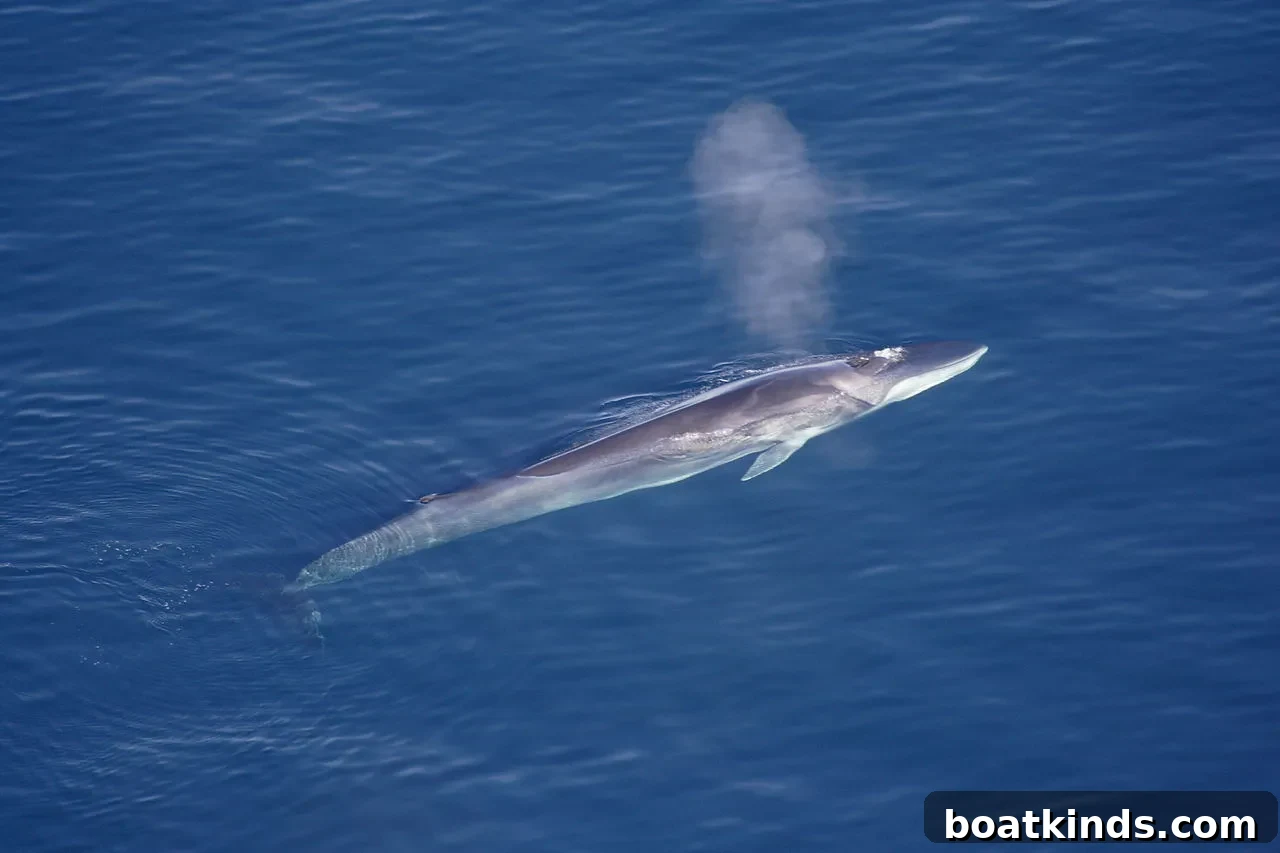
Fin whales, the species observed in this research, emit very loud, low-frequency chirps — measured in the study at around 189 decibels at the source. Those calls can propagate long distances through the ocean and couple into the seabed, generating seismic waves that travel through sediments and into the underlying bedrock. Because these sounds are naturally produced and persistent in many regions of the ocean, they offer a continuous, passive signal that can be recorded by seafloor and coastal seismic networks.
Prominent seismologists and volcanologists have noted the broader significance of repurposing environmental noise as scientific data. Using natural signals that the planet already provides reduces reliance on disruptive artificial techniques, and it highlights an inventive way to integrate biological and geophysical observations. The approach does not replace targeted seismic surveys in all contexts, but it can supplement them, help validate models and provide cost-effective baseline information over broad areas.
There are important caveats and practical challenges. Whale calls are intermittent and not uniformly distributed in space or time. Extracting reliable subsurface images from biological sources requires careful analysis, long-term monitoring and sophisticated signal-processing methods to separate useful seismic energy from other ambient noise. Ethical and conservation considerations also remain paramount: researchers must ensure that any new techniques do not encourage disturbance of animals or exploitation of their behavior.
Despite these limitations, the concept has clear potential. Passive acoustic monitoring that leverages whale vocalizations could improve mapping of sediment thickness, fault zones and volcanic structures in marine settings where deploying active sources is impractical or undesirable. In addition to scientific gains, such methods could support environmental assessments and marine spatial planning by providing complementary geophysical data with a lower acoustic footprint.
The discovery that whale songs can inform seafloor exploration is a reminder that the ocean is an interconnected system in which biological and geological processes interact. By listening more carefully and creatively to the sounds that already exist, scientists can expand their toolkit for studying the seafloor while reducing the environmental impacts associated with conventional seismic methods. Ongoing research will determine how best to integrate whale-derived seismic signals into routine geophysical practice and what new insights this passive approach can reveal about the structure beneath the waves.