
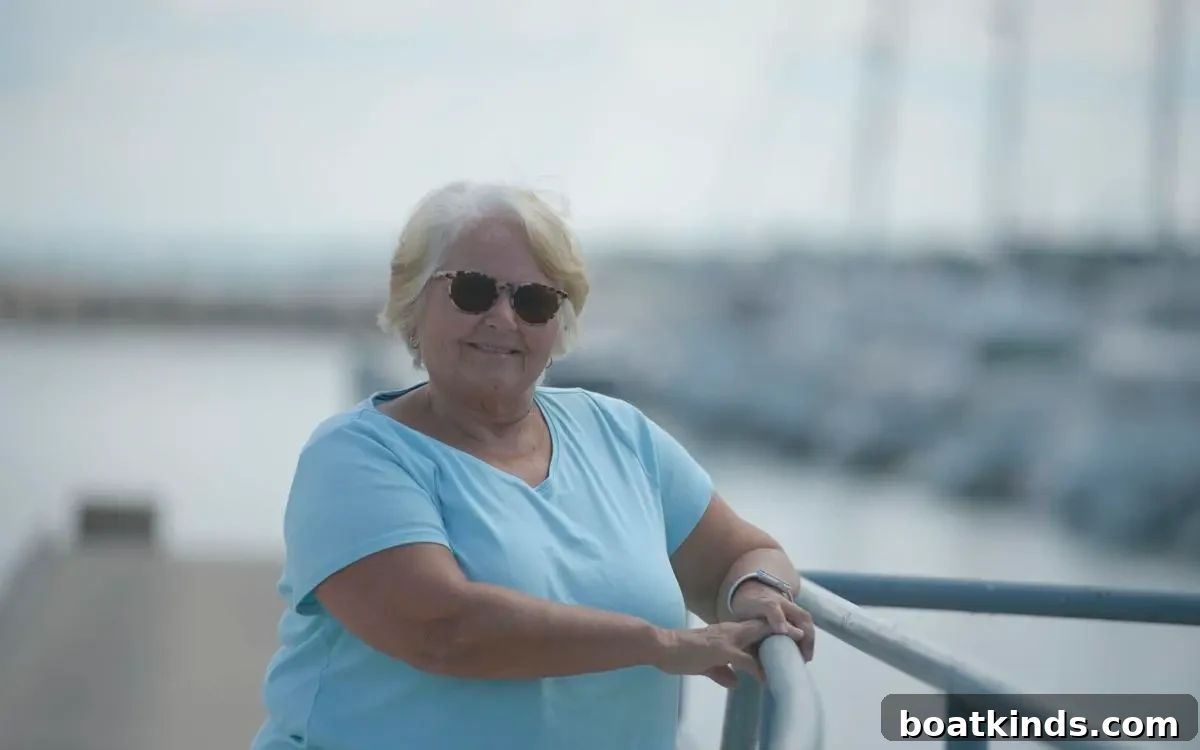
Sailor Rescued After Falling Overboard During Storm on Lake Michigan
Sarah Pederson, a 65-year-old lifelong sailor and veteran of the annual HOOK sailing race, survived a night-time fall overboard during a storm on Lake Michigan in Wisconsin. Pederson, who had completed this race 23 times before, was on a 36-foot sailboat with an experienced eight-person crew when conditions deteriorated on July 18. The crew anticipated rough weather and took safety precautions, including clipping themselves to the boat with six-foot tethers attached to safety harnesses.
When the storm arrived, a sudden wind shift caused the vessel to broach. Crew members on the high side of the boat were thrown backward, and the clip holding Pederson’s harness failed, sending her into the water. One crew member recorded the coordinates of where she went overboard, but darkness, heavy seas and the storm’s intensity quickly separated Pederson from the boat and the rest of the crew. She drifted alone for about an hour while the storm raged around her.
How Preparedness Made the Difference
Pederson’s survival highlights the importance of personal flotation and signaling gear. She was wearing a full life jacket that kept her upright and allowed her to tread water. Attached to that life jacket was a strobe light that provided a visible signal in the darkness and limited visibility, and she also had a whistle that she used to attract attention when she saw searchlights from other boats. Maintaining orientation by sighting distant signal towers and using audible and visual signals helped her remain locatable until weather conditions eased.
As the storm began to subside and visibility improved, Pederson’s crew finally spotted her and transferred her to a U.S. Coast Guard rescue boat. She was then taken to a hospital and treated for hypothermia. Petty Officer German Bahena Cardozo, who led the Coast Guard rescue boat, noted that nighttime water rescues during storms are uncommon and especially hazardous. He emphasized that Pederson’s preparedness — appropriate personal flotation, signaling devices and the training to use them — played a crucial role in her survival.
Key Safety Lessons for Sailors
Pederson’s experience offers clear, practical lessons for anyone who spends time on the water, especially when racing or sailing in conditions where weather can change rapidly:
- Wear an appropriate life jacket at all times while on deck in rough weather. A properly fitted personal flotation device that keeps the wearer’s airway clear is essential.
- Use a safety harness and tether, and regularly inspect clips, harnesses and attachment points for wear, corrosion or failure. Redundancy where possible can increase safety when a single point of failure occurs.
- Carry multiple signaling devices, both visual (strobes, lights) and audible (whistles, horns). These increase the chance of being located in low-visibility or night situations.
- Practice man-overboard drills so that every crew member knows the immediate actions to take, including how to mark coordinates, deploy lights and communicate with searchers.
- Stay oriented and conserve energy while awaiting rescue. Keeping the face above water, minimizing unnecessary movement, and using any buoyant support helps delay hypothermia and exhaustion.
Nighttime rescues in storm conditions present unique risks to both the person overboard and the rescuers, which is why careful preparation, regular maintenance of safety equipment, and crew training are critical. Pederson’s survival underscores how basic safety measures — a life jacket, a strobe light and a whistle — can be the decisive factors in a successful outcome. Her story is a reminder to treat marine safety gear and procedures as indispensable, not optional, parts of every voyage.