
Silent-Yachts Introduces Silent-Resorts: Solar-Powered Floating Villas for Sustainable Luxury Travel
Waterfront resorts remain a top choice for travelers seeking sea views and coastal experiences, but developing traditional land-based properties is often costly, time-consuming and has significant environmental and regulatory hurdles. Silent-Yachts, a recognized builder of solar-powered electric cruising catamarans, is addressing these challenges with a new concept designed to deliver luxury hospitality without the heavy footprint of conventional resort development.
What Silent-Resorts Offers
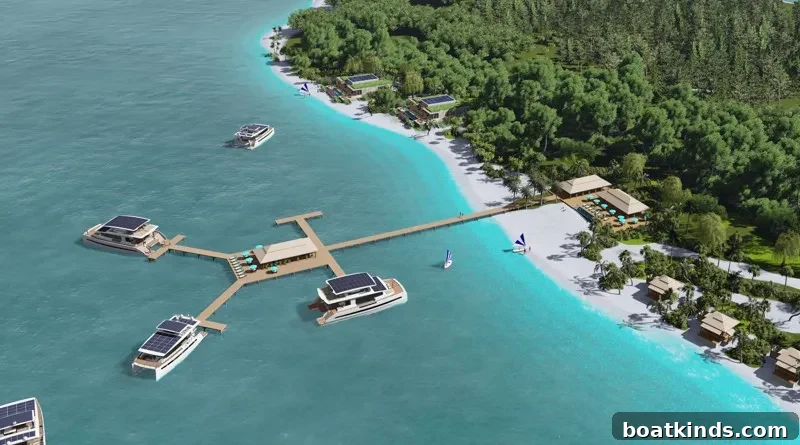
Under its Silent-Resorts division, the company proposes a pre-engineered, modular hospitality solution that centers on a docked hub and a fleet of solar-electric catamarans converted into floating villas. Rather than constructing a large land-based complex, operators can establish a resort composed of moored silent catamarans that serve as private guest accommodations, creating an intimate, mobile and sustainable hospitality product.
The Silent-Resorts concept uses the 60- and 80-foot models from Silent-Yachts as the accommodation units. These solar-powered, electrically driven catamarans are designed for comfort and efficiency, allowing guests to enjoy quiet, low-emissions stays at anchor. Because the components are pre-engineered and the installation is modular, Silent-Resorts aims to streamline development timelines and reduce upfront construction costs compared with building conventional resorts.
Speed of Deployment and Flexibility
Silent-Resorts states the operation can be installed in 18 months or less in many locations worldwide. This relatively short timeline reflects the modular nature of the dock-and-vessel approach: docks and moorings can be prepared or adapted, vessels are either deployed from existing fleet stock or purpose-configured, and on-board amenities are integrated to deliver a hospitality-grade guest experience. The model also offers geographic flexibility, allowing operators to select coastal, island or sheltered bay sites where a floating resort makes sense from both a market and environmental perspective.
Environmental and Economic Advantages
By relying on solar-electric propulsion and on-board energy systems, Silent-Resorts reduces the carbon intensity and local emissions associated with guest stays and daily operations. Electric propulsion produces considerably less noise than diesel engines, enhancing the guest experience while minimizing disturbance to local wildlife and neighboring communities.
From an economic standpoint, a floating-resort model can lower the initial capital investment required for land acquisition, large-scale construction and long-term infrastructure development. The system’s modular design also makes it easier to scale capacity up or down in response to market demand: additional catamarans can be added to the dock hub, or units can be relocated, repurposed or removed with greater agility than permanent hotel structures.
Guest Experience and Amenities
Guests staying aboard converted catamarans can expect a boutique-hotel style experience with private cabins, en-suite facilities, outdoor decks and direct access to the water for swimming, snorkeling and watersports. The quiet operation of solar-electric systems enhances relaxation and allows for unobtrusive cruising between nearby anchorages if the resort model includes short guided excursions.
Operators can customize interiors and service offerings to create distinctive guest experiences—ranging from minimalist, nature-focused retreats to fully serviced luxury villas—while leveraging the inherent maritime appeal of waterfront accommodation.
Operational Considerations
While the concept reduces many land-based challenges, establishing a Silent-Resorts operation requires attention to maritime regulations, local permitting, waste management, wastewater treatment, safety protocols and crew logistics. Successful projects will typically involve collaboration with local authorities and service providers for provisioning, maintenance and hospitality staffing. Shore-side support such as a reception area, dining facilities or excursion services can be integrated at the dock hub to provide a complete resort offering.
Who Benefits
This approach is particularly attractive for resort developers, island operators and destination managers looking for a lower-impact, flexible alternative to traditional hotels. It also appeals to markets where land availability is limited or where minimizing landscape disruption is a priority. For travelers, floating villas offer a unique blend of privacy, water access and an eco-conscious stay experience.
Conclusion
Silent-Resorts presents a compelling option for sustainable, high-end coastal hospitality by combining pre-engineered dock infrastructure with solar-electric catamarans configured as floating villas. With a stated deployment timeline of 18 months or less and reliance on 60- and 80-foot Silent-Yachts models, the concept promises faster, more flexible resort development while reducing many of the environmental and regulatory burdens of traditional shoreline construction. Interested parties should consult official Silent-Yachts materials and local authorities to explore feasibility, permitting and operational planning for potential sites.