
Rick Brawner: Painting Door County’s Tugboats and the Spirit of the Great Lakes
For many marine artists, a deep connection forms between place and practice. Whether drawn to the jagged coast of Maine, the turquoise Caribbean, or the sheltered shallows of Chesapeake Bay, artists often find a singular region that resonates with their eye and heart. For Green Bay native Rick Brawner, that place is Door County, Wisconsin. He describes the experience simply: an early morning in a snug harbor like Sturgeon Bay, the air sharp with Lake Michigan’s breeze, gulls calling overhead, and tugboats lined up like subjects waiting to be painted. That sensory combination—sound, scent, light, and the presence of working vessels—fuels his work.
From Plein Air Study to Finished Canvas
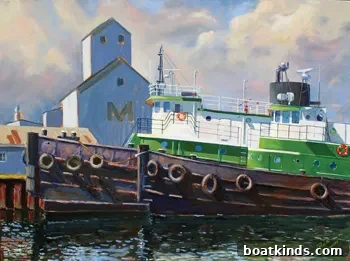
Sturgeon Bay Tugs, a 30-by-40-inch painting, began as a plein air study on location in downtown Sturgeon Bay. Brawner set up outdoors to capture the immediate impression of the scene—the docked tugs, the light on the water, and the textures of the waterfront buildings. Behind the vessels stand the remnants of the old Midwest co-op grain elevator, lending historical weight and architectural interest to the composition. Back in his studio in Fish Creek, Wisconsin, Brawner used that smaller plein air study as the foundation for the larger canvas, refining the composition, deepening values, and bringing out subtleties of color and atmosphere that only studio time allows.
The Appeal of Tugboats as Subjects
Brawner’s attraction to the tugs is rooted in admiration for their design and function. He praises their seaworthiness, power, and a subdued stately elegance that makes them compelling subjects for marine painting. These are not showy pleasure craft; they are vessels shaped by labor and purpose. Their lines, metalwork, and weathered surfaces offer the kind of detail that invites close observation and careful rendering. For a seascape painter working on the Great Lakes, such boats are both visually striking and culturally significant.
Sturgeon Bay: Harbor, History, and Year-Round Work
Sturgeon Bay has a long association with shipping and maritime trade that stretches back into the early 1900s. The harbor remains a working port where tugboats perform a variety of essential tasks: towing barges, assisting larger ships, and maneuvering vessels to and from dry docks along the city channel. In winter, when harbor ice can be heavy, tugs are often called upon to move ships for layup, maintenance, or overhaul. These practical activities shape the harbor’s rhythms and provide the kinds of scenes Brawner seeks to capture.
Sense of Place and Concern for Preservation
Beyond the immediate visual appeal, Brawner paints from a profound sense of place. He says he feels the Great Lakes in a way that makes Door County an ideal home for a seascape artist. The peninsula’s combination of shoreline, harbors, and maritime heritage offers endless subject matter and a living context for his work. At the same time, Brawner expresses concern about coastal development and the potential loss of the historic and scenic qualities that make places like Sturgeon Bay meaningful. He worries that iconic vessels and familiar waterfronts could be displaced by generic development, and he views his paintings in part as a record and celebration of what he hopes will be preserved.
Art That Records and Reminds
By translating the tangible details of tugboats—their weight, patina, and relationship to the harbor—into paint, Brawner provides more than a visual souvenir. His work documents a working maritime landscape that is subject to change. The technique of beginning with plein air studies and expanding into larger studio canvases allows him to combine immediacy with deliberate craftsmanship. The resulting paintings invite viewers to appreciate both the aesthetic qualities of the vessels and the cultural narrative of a region shaped by the Great Lakes.
This article originally appeared in the November 2016 issue.