
Spring has arrived, but it’s still dark when I pull into Billings Diesel and Marine on Moose Island in Stonington, Maine, just before 6 a.m. Two cars park nearby and I ask the drivers where I can find Greg Sanborn. “He’ll be here in a few minutes,” one replies. “He’ll park right there in front of the door.”
At 6 sharp, Sanborn’s Chevrolet Silverado pulls up. He hops out, walks through the 6,000-square-foot shop, greets the crew, drops his bag in the office, checks his email and then walks the floor to talk to the technicians about current jobs and priorities. His approach is direct and hands-on: see what needs doing and make sure it gets done.
I came to Billings because Maine’s boatbuilders all point to this yard for engine work and say Sanborn is the one who makes things happen. People describe him as “salt of the earth,” but he’s no fan of idle distraction. Despite the early-morning surprise, he lets me follow along.
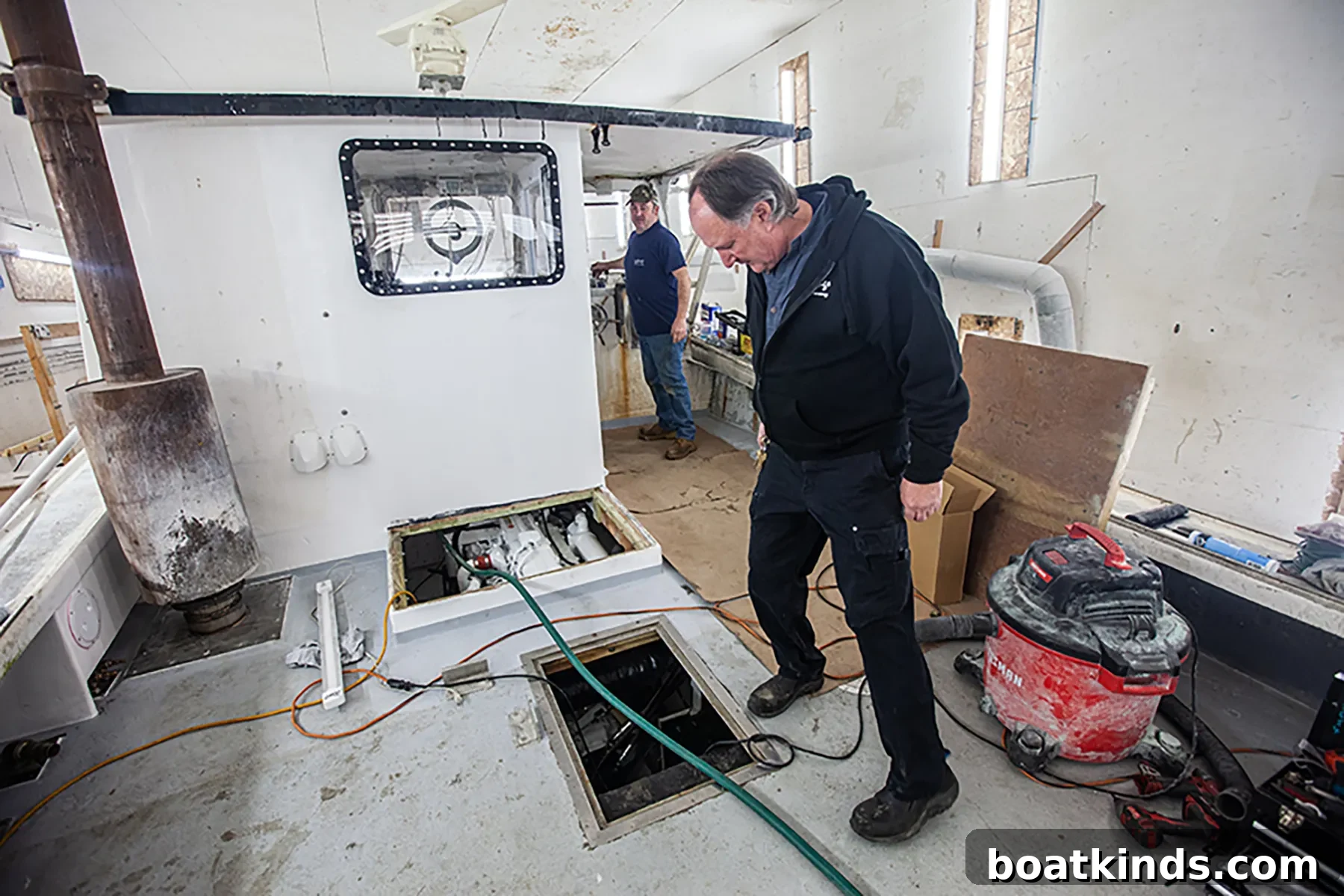
Some mechanics start at 6, others at 7. We pass into a paint bay where Sanborn climbs onto the deck of a well-used 36-foot Novi and checks in with mechanic Robert Hutchinson. The boat recently received a new QSL9 Cummins, a shaft tube, new wiring and propeller—but it’s in the paint bay simply because it was the only indoor space available. The owner needs the boat back on the water to haul traps, and Billings focuses on getting working boats moving.
Billings Diesel earned its reputation by prioritizing repairs and rapid turnarounds. Sanborn arrived at Moose Island in 1980 as a 21-year-old mechanic fresh from Kennebec Valley Vocational Technical Institute and quickly learned the yard’s operating principle: “Get it done and get ’em going,” a phrase coined by Dick Billings when he saved the yard from bankruptcy in the 1960s. That mindset still guides the crew.
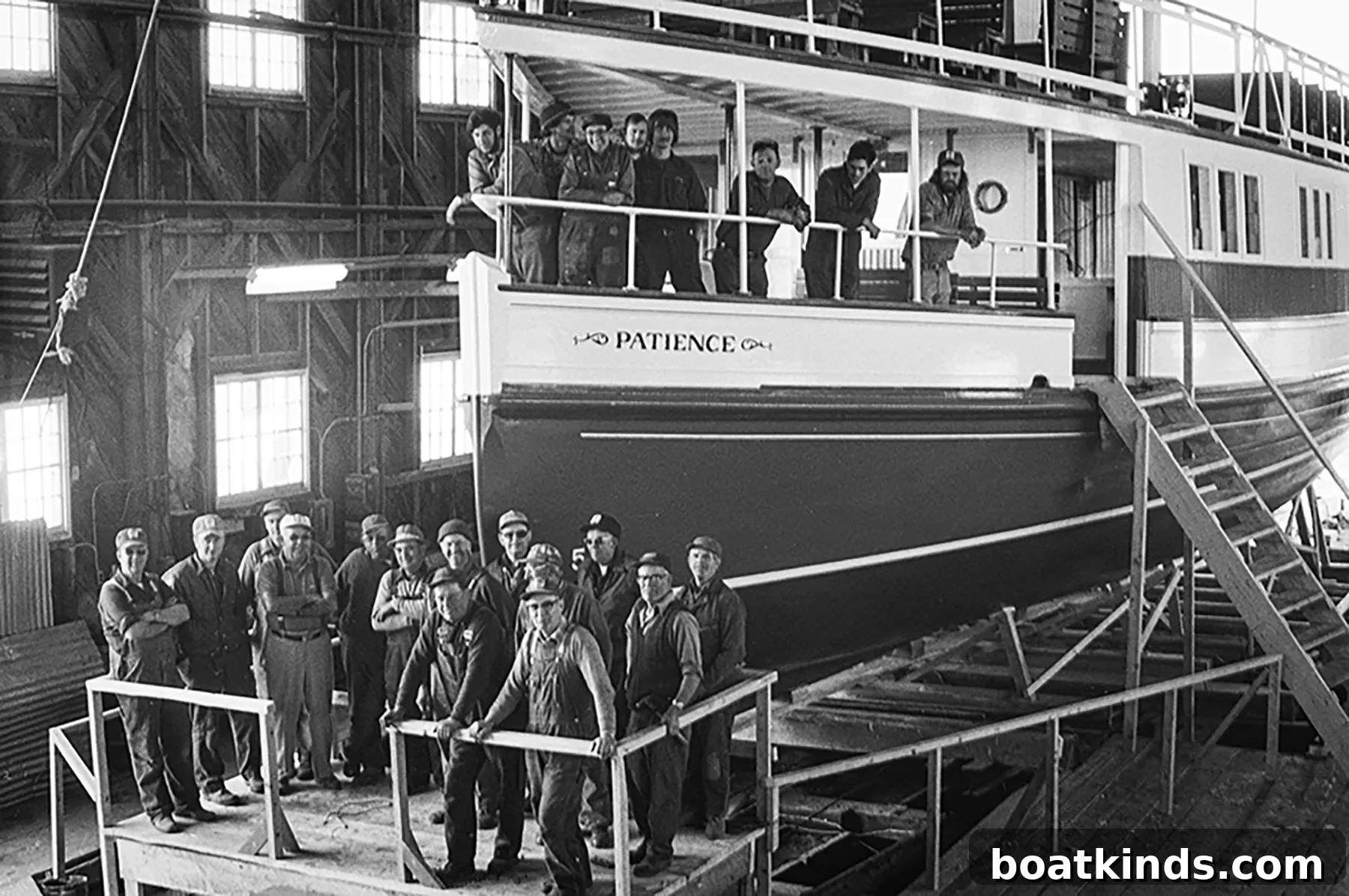
The yard dates to 1928 when Cecil Billings and his brothers began building and maintaining coastal schooners on Little Deer Isle. They moved to Moose Island in the 1930s after buying an abandoned granite quarry. During World War II the yard produced personnel transports, minesweepers and sub chasers, then shifted to wooden draggers and windjammers after the war. By 1966, with wooden boatbuilding in decline and no government contracts, the business faced bankruptcy. Dick Billings bought the yard and pivoted it into a commercial operation that provided local jobs and steady marine services.
Dick expanded the yard’s capabilities with a Travelift and brought his son Harlan into the operation. Harlan hired Sanborn in 1984 after spotting his drive and mechanical aptitude. Sanborn briefly left in 1985 to deliver a 100-foot yacht but returned within a year. Harlan promoted him to shop foreman and later to service and engine sales manager—roles Sanborn still holds, overseeing the machine, fiberglass, carpentry and paint shops and coordinating launches and repairs.
Sanborn checks on Norman & Mary, a 45-foot wooden John’s Bay Boat that received a rebuilt 6140 Lugger, padding and a rubber deck. He moves on to the docks where floats are already filled with lobster boats—some in for winter shore power, others in for service. Stonington is one of Maine’s busiest lobster ports; the town led the state in lobster landings in 2022 with a record haul and supports the largest lobster fleet in Maine, more than 250 boats.
Billings’ marina supports both workboats and pleasure craft, offering showers, laundry, WiFi and moorings for boats up to 50 feet and dockage to 130 feet. Still, commercial and working boats get priority. “The commercial side is the priority,” Sanborn says, and most area boatyards—Rockport Marine, Brooklin Boat Yard, Front Street Shipyard and Lyman-Morse among them—send engine work to Billings.
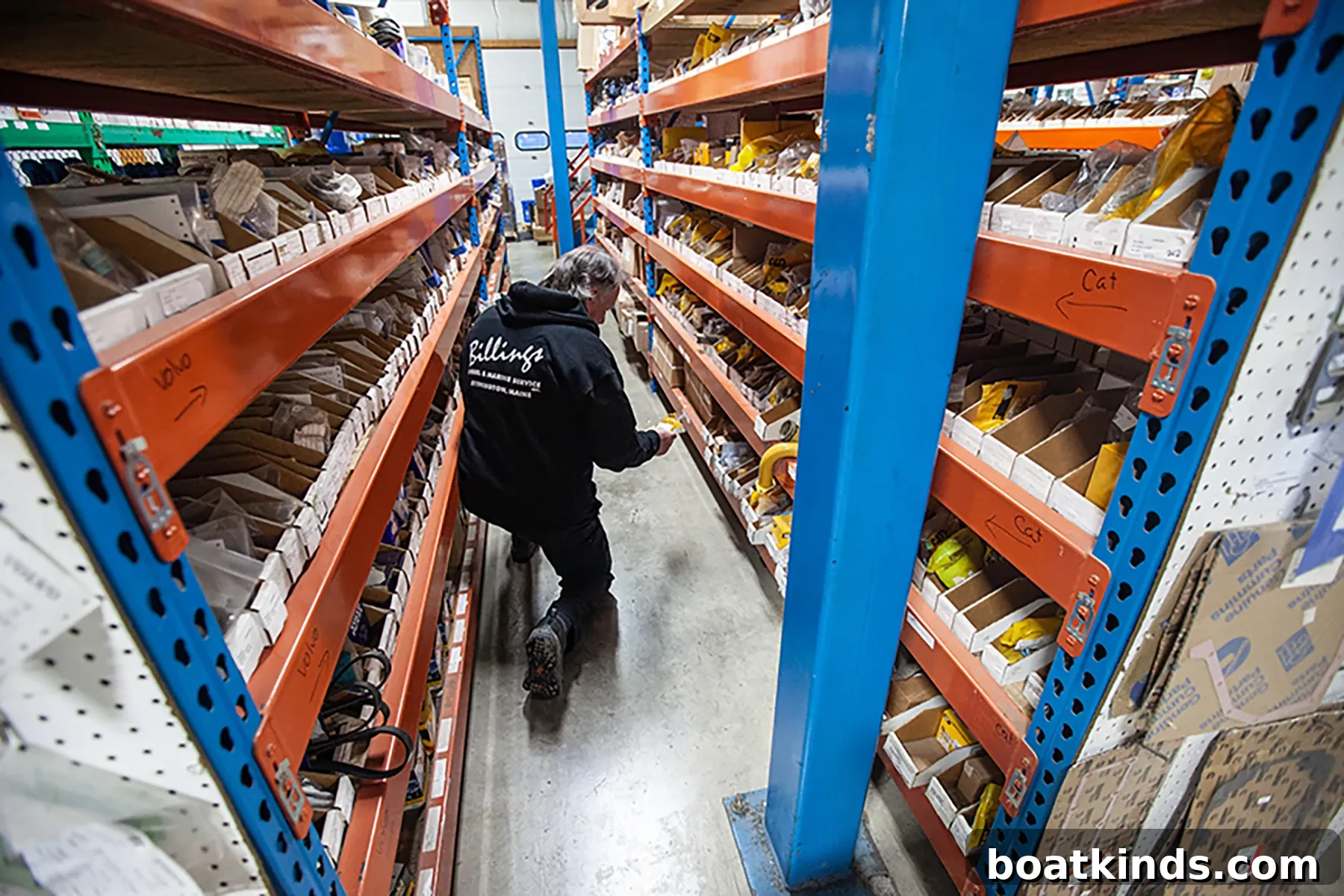
On the docks we visit Brynn Marie, a 46-foot Duffy with a 1,000-hp C18 Caterpillar that’s burning oil. Sanborn and mechanic Jake Shipman discuss fixes, pull parts from the shop’s organized inventory and decide to take the boat out to measure crankcase blowby. Sanborn’s familiarity with parts and systems is evident—he knows where to look, who to ask and how to direct the work.
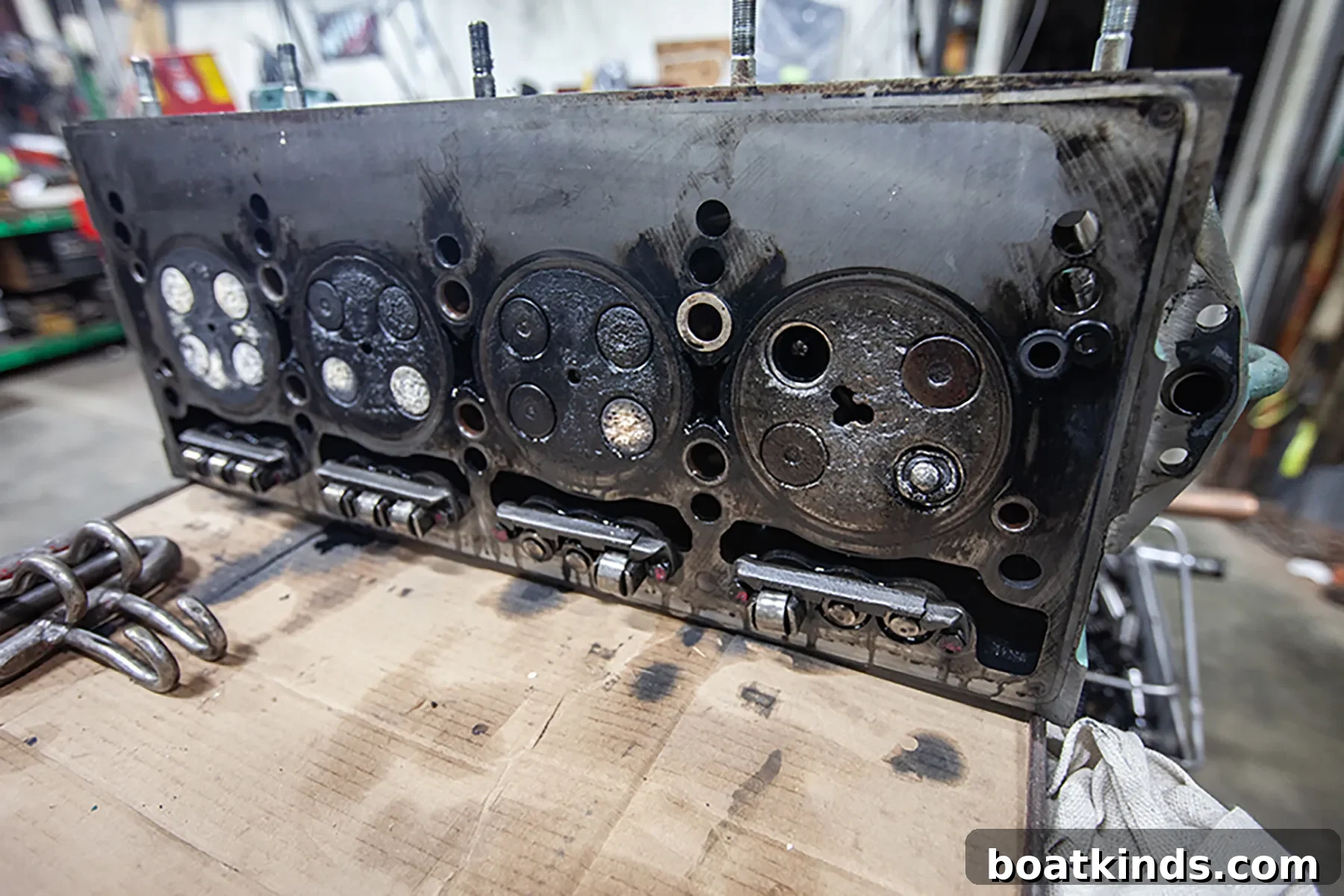
Back in the shops, he reviews a damaged Detroit Diesel 4-71 destined for Matinicus Island, where the cam follower roll failed, damaging the cam, head and pistons. Sanborn recalls the yard’s transition: two-cycle Diesels (the 53, 71, 92 and 149 series) dominated when he arrived, but by the late 1990s emission standards and market shifts brought in Caterpillar and Cummins. Billings now sells and services Cat, Cummins, Volvo, MAN, Yanmar, Scania and MTU.
Engines are Billings’ specialty, though the yard handles everything from carpentry and varnishing to fiberglass, rigging and welding. Sanborn sells roughly 25 new diesels each year and the yard works on hundreds of engines annually. They don’t service outboards—those go to the local outboard shop—but Billings will handle gas engines for certified manufacturers like Volvo.
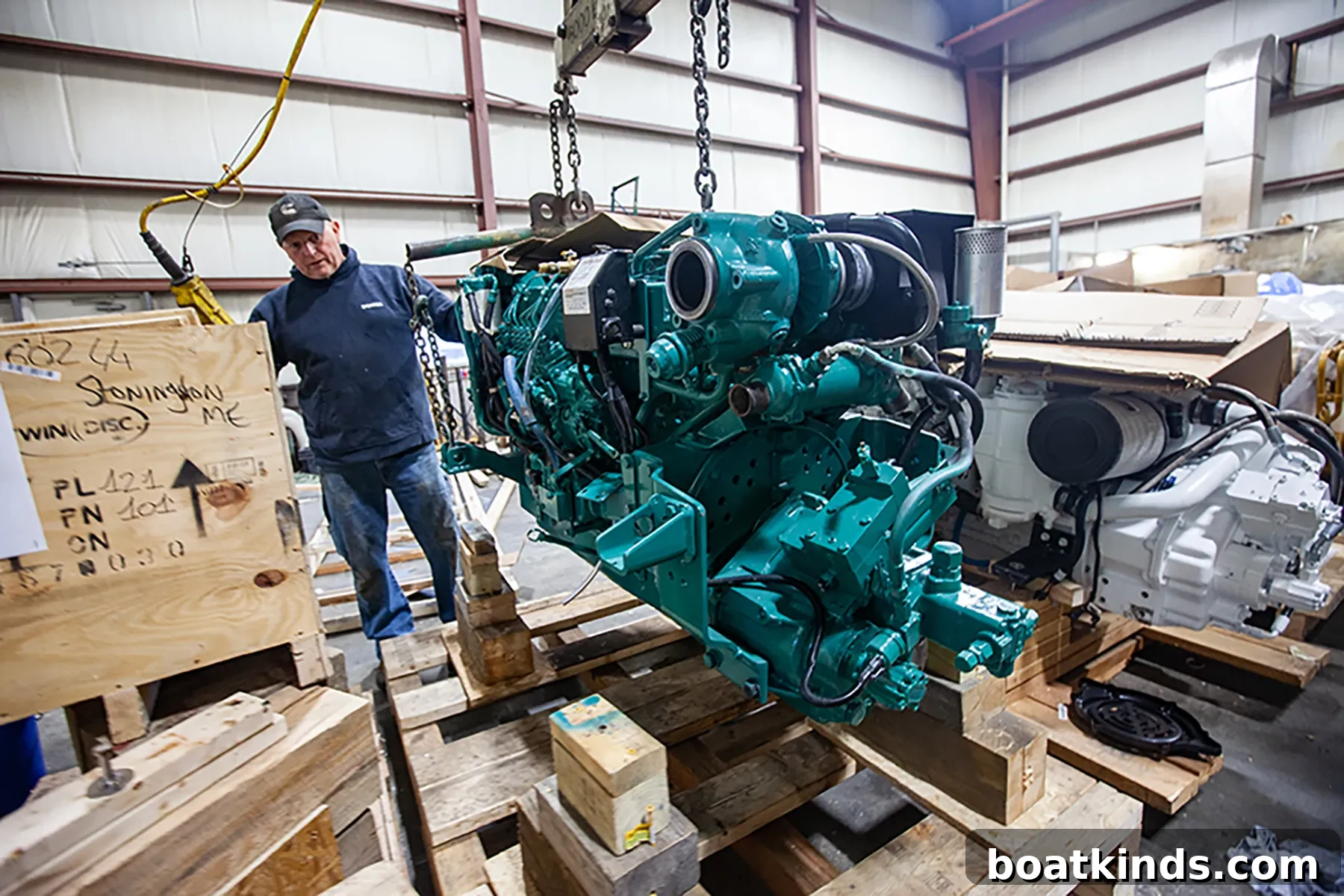
Some jobs aren’t worth rebuilding. Cross Fire, a Young Brothers lobster boat that sank from a stuffing box leak, sits in the machine shop surrounded by engines on pallets. The damage from the sinking means replacement is often more economical than repair; salvageable parts are reclaimed, but full overhauls are rare if parts are prohibitively expensive.
Sanborn’s day is a steady slide of calls, emails, inspections and decisions. He sends mechanics to investigate no-starts, answers questions from boat owners and coordinates parts and labor with shop foremen. He introduces me to Peter Grindle, who, with his wife Suzette (Harlan’s daughter), now owns the yard. “Suzette has worked here longer than I have,” Sanborn says with a laugh. “And she’s eight or nine years younger than me.”
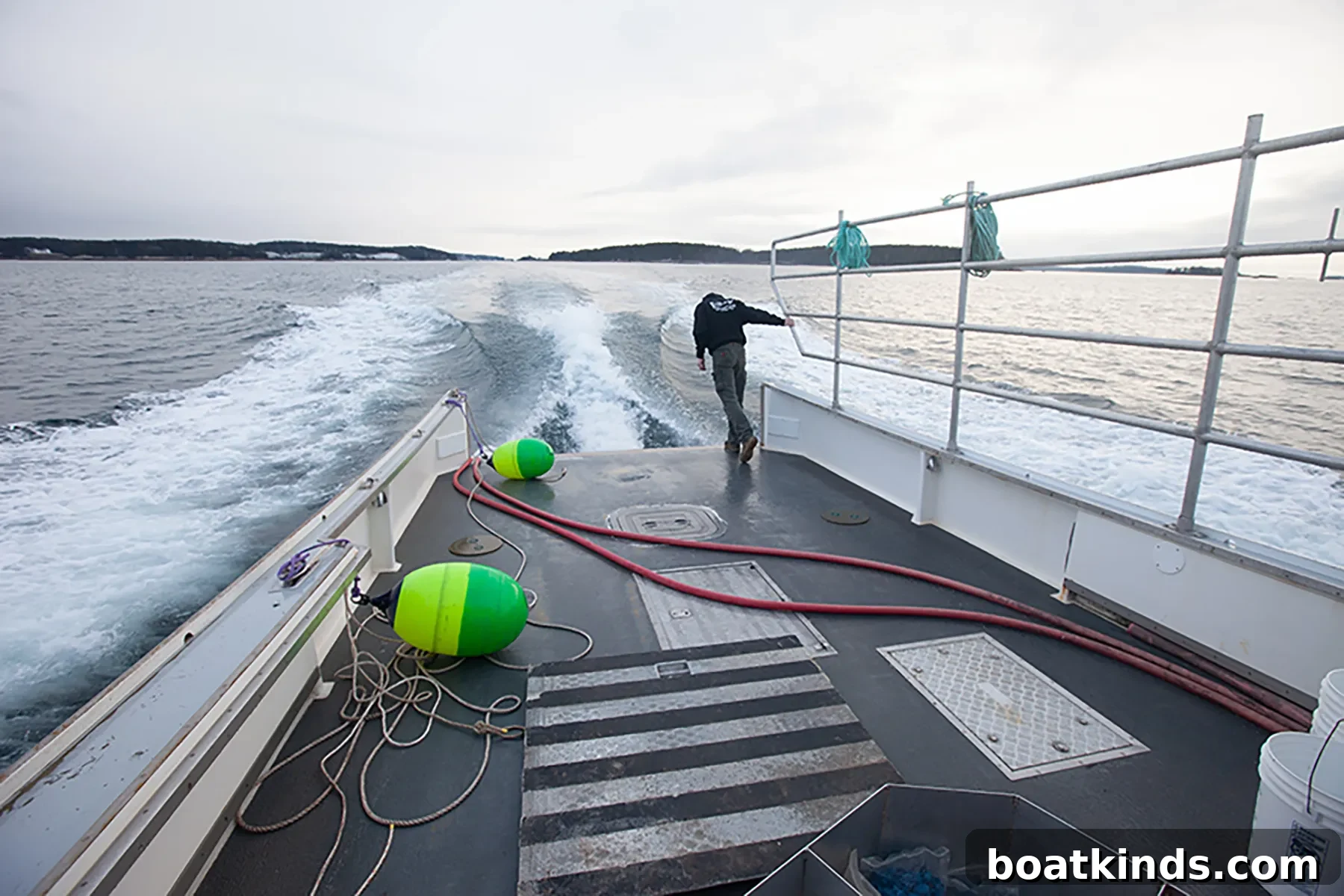
We take Brynn Marie out for a run. With the engine cover removed and the Caterpillar exposed, the wheelhouse fills with smoke at startup, but the test run clears as they bring the engine up to full throttle in Penobscot Bay. The boat roars along with a powerful wake and a spray that rises well above the gunwale. Back at the yard the crew agrees the boat performs well but needs additional work.
Sanborn admits he doesn’t own a boat now—“Wouldn’t want anything to do with it”—but he’s logged plenty of time at sea: long deliveries, the Panama Canal and years racing in the Yarmouth Cup. What keeps him at Billings is the challenge: “I like to drive boats. I like the technical stuff. I hate the estimating, and there was a time I missed the wrenching, but I like the troubleshooting. We’re pretty good at figuring shit out.”
He returns to routine checks: asphalt deck tiles being replaced on a Willis Beal 40 RP, a Boston Whaler with a stubborn seep, and a 1920s William Hand motorsailer that comes in every winter. At the Novi he finds a small leak beneath the keel—someone may have accidentally drilled a hole installing a bilge pump. “Oh yeah,” he says with a knowing grin. “We see everything.”
By midmorning it’s only 9 a.m., though the day feels full: calls answered, employees checked on, docks walked, parts tracked, problems diagnosed and a field test completed. Sanborn typically stays until 4:30 and will add weekend hours when the yard begins launching pleasure craft—about 50 boats to test run in short order.
Before I leave, I ask about the white Chevy truck with the Billings logo. “It belonged to the boss,” he says quietly. Harlan’s death three years earlier is still felt around the yard. More than once Sanborn’s voice trails off when he mentions Harlan. “Harlan was the reason I started, and the reason I stayed so long,” he told me. Harlan once called hiring Sanborn “one of the best things I ever did,” and another interview described Greg as “the glue that holds this place together.”
This article was originally published in the June 2023 issue.