
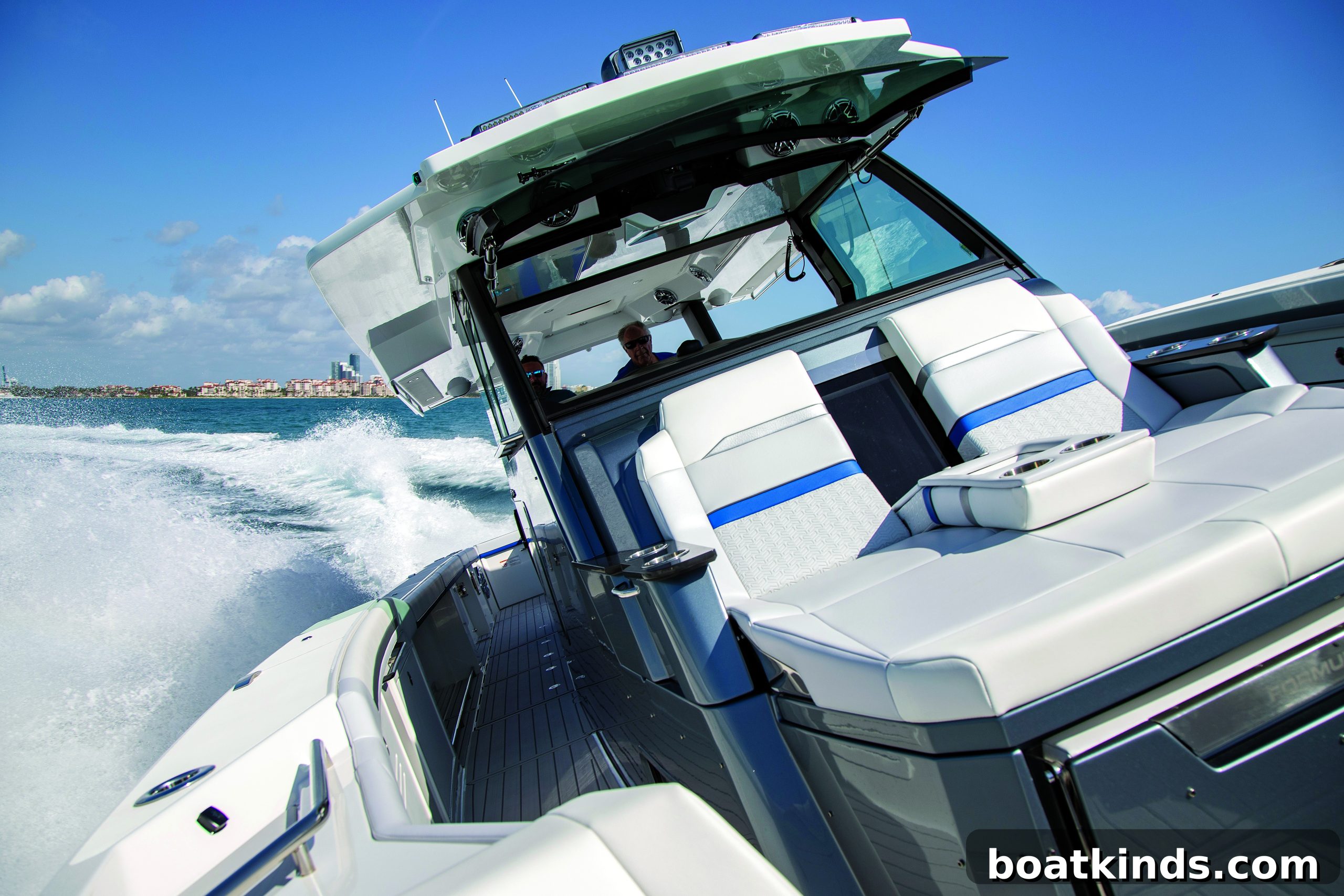
When I first ran the 457 CCS, the boat heeled hard to starboard as 1,800 horsepower pushed us out of the slip. Dire Straits’ 1985 hit Money for Nothing pumped through the JL Audio system, the engines howled, and the metallic-gray hull flashed under the South Florida sun as we closed in on 50 knots — a moment that felt unmistakably Miami. It was the same stretch of offshore water where Formula’s founder Don Aronow tested the company’s original 233 some 62 years earlier. That early Formula, built in Miami, featured a deep-V hull and the kind of performance that earned wins on race courses across the country.
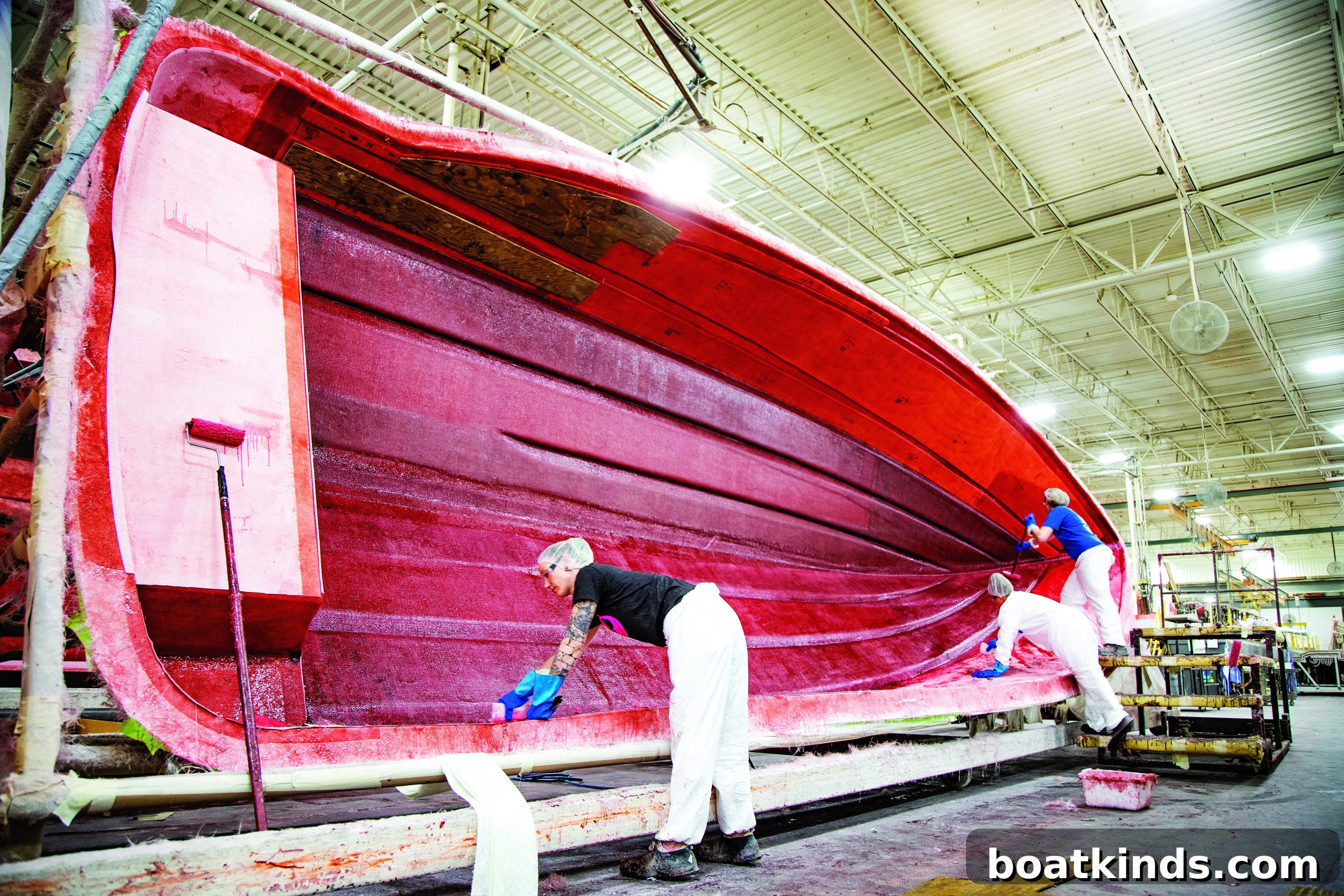
Today, Formulas are no longer built in South Florida. They’re manufactured in Decatur, Indiana, and I recently traveled there to understand how a builder located a thousand miles from saltwater stays so current with what offshore boaters need and want.
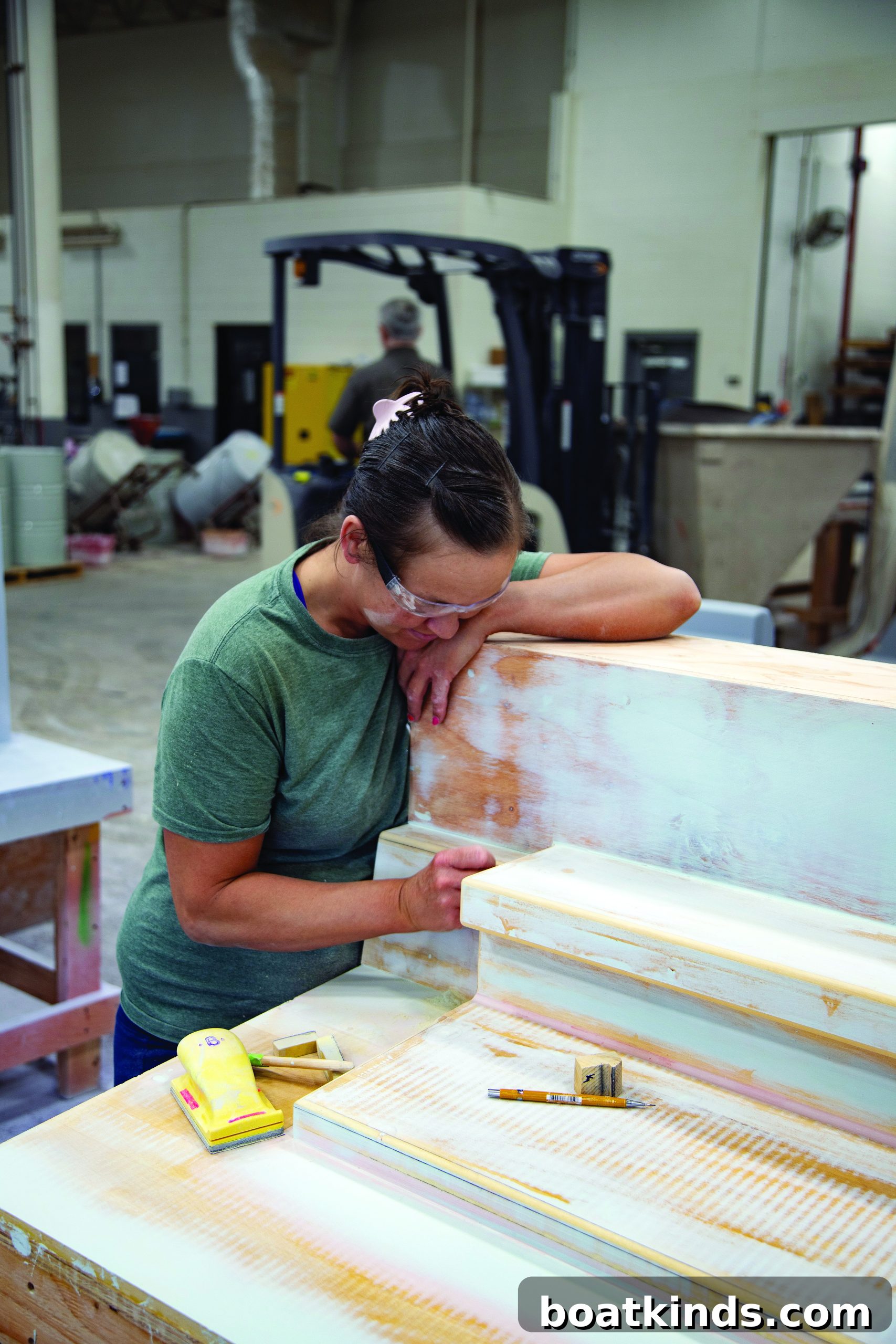
Decatur is a small Midwestern town — a Tractor Supply, a Kroger, a pancake house and Richard’s Restaurant with a diner sign advertising a $7.99 chicken-fried steak special. Beyond quiet suburbs, the 575,000-square-foot Formula facility rises from fields of corn like a modern factory rooted in rural America. About 250 boats are completed there each year and quietly roll down a modest street in the heartland.
My guide through the plant was Product Design Coordinator Ron Gephart, who combined design knowledge and production insight with an intimate familiarity of the workforce: Ron grew up in Decatur. As we walked the floor he greeted employees by name, knew who was new and who was near retirement, and pointed out family connections throughout the shop — a husband who once worked for the company, a bicyclist who delivers materials who’s a second-generation employee. He pointed to a mother and daughter stitching upholstery side by side and two brothers moving in near-perfect sync to set a deckhouse. “Yeah, there are a lot of siblings here,” Ron said.
A few minutes later he stopped to talk about the week’s MLB matchups with another worker and introduced him as “my brother” with a grin. Formula truly operates like a family business.
“We think having family work together is a positive. Plus, how can we deter it when me and my siblings and now the third generation of our family all work here?” Formula president Scott Porter told me. He works alongside siblings Grant, Ted, Jean and Wayne. “Our dad always said you’re kind of tougher on your own family members than you are on your closest friends. So we get really good effort and family values.”
That “dad” was Vic Porter, the late patriarch of the Porter family who became the company’s sole owner in 1979 and shepherded Formula through decades of growth. While Don Aronow founded the brand, Vic’s influence shapes much of the company culture in Decatur.
Enduring Legacy
Vic Porter’s presence is tangible on the factory floor. I passed a workstation where an employee had pinned two photos: one of himself and his wife on vacation, and beside it Vic Porter’s obituary. It struck me — not many employees display that kind of personal connection to a former owner.
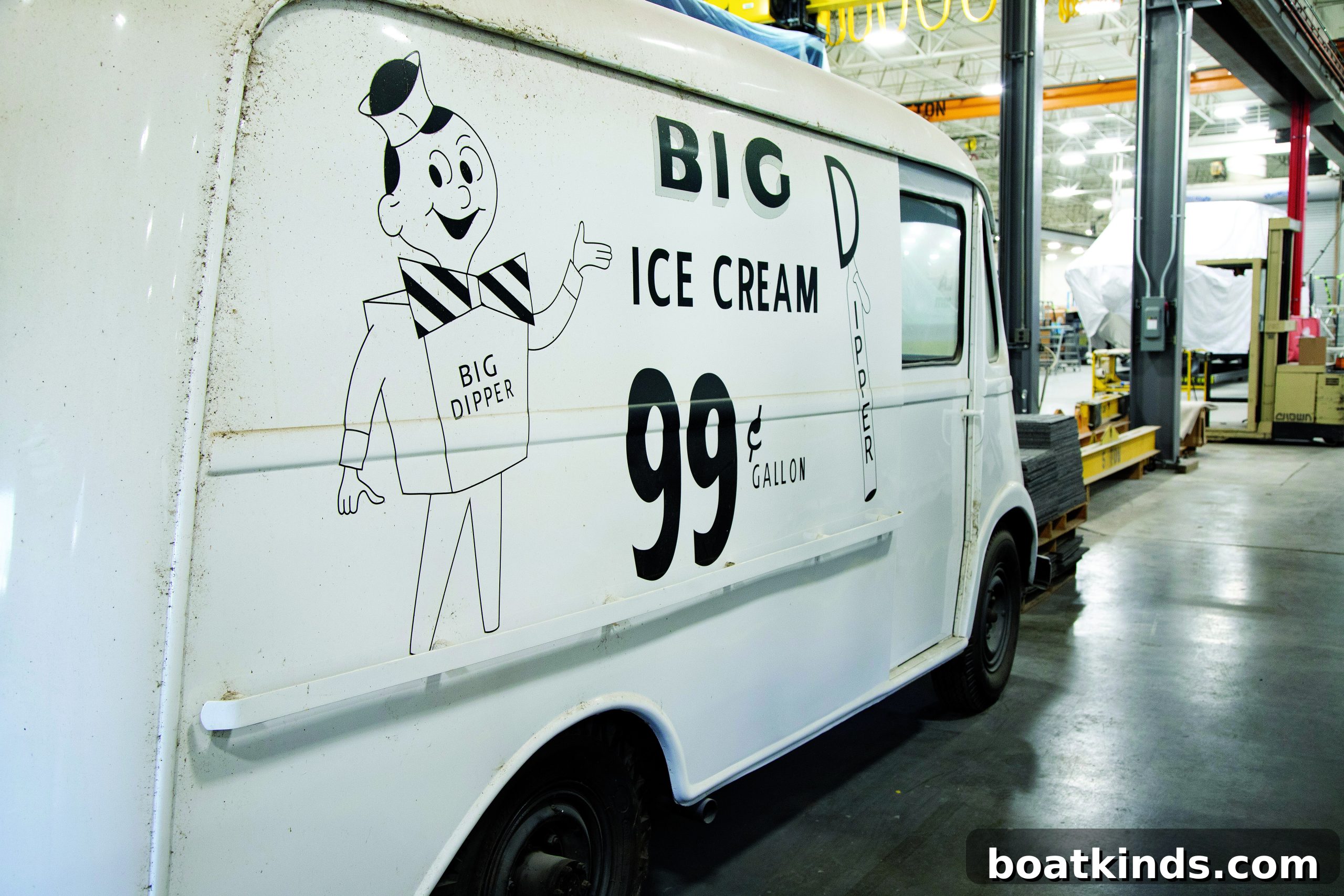
Vic’s path to boatbuilding was not preordained but forged by entrepreneurship and hard work. Born in 1931 and raised in Decatur, he worked a variety of jobs — volunteer firefighter, real estate agent, mobile-home salesman — and even ran an ice cream store and truck. The restored vintage ice cream truck sits inside the factory near a new center console as a gift and a reminder of those humble beginnings.
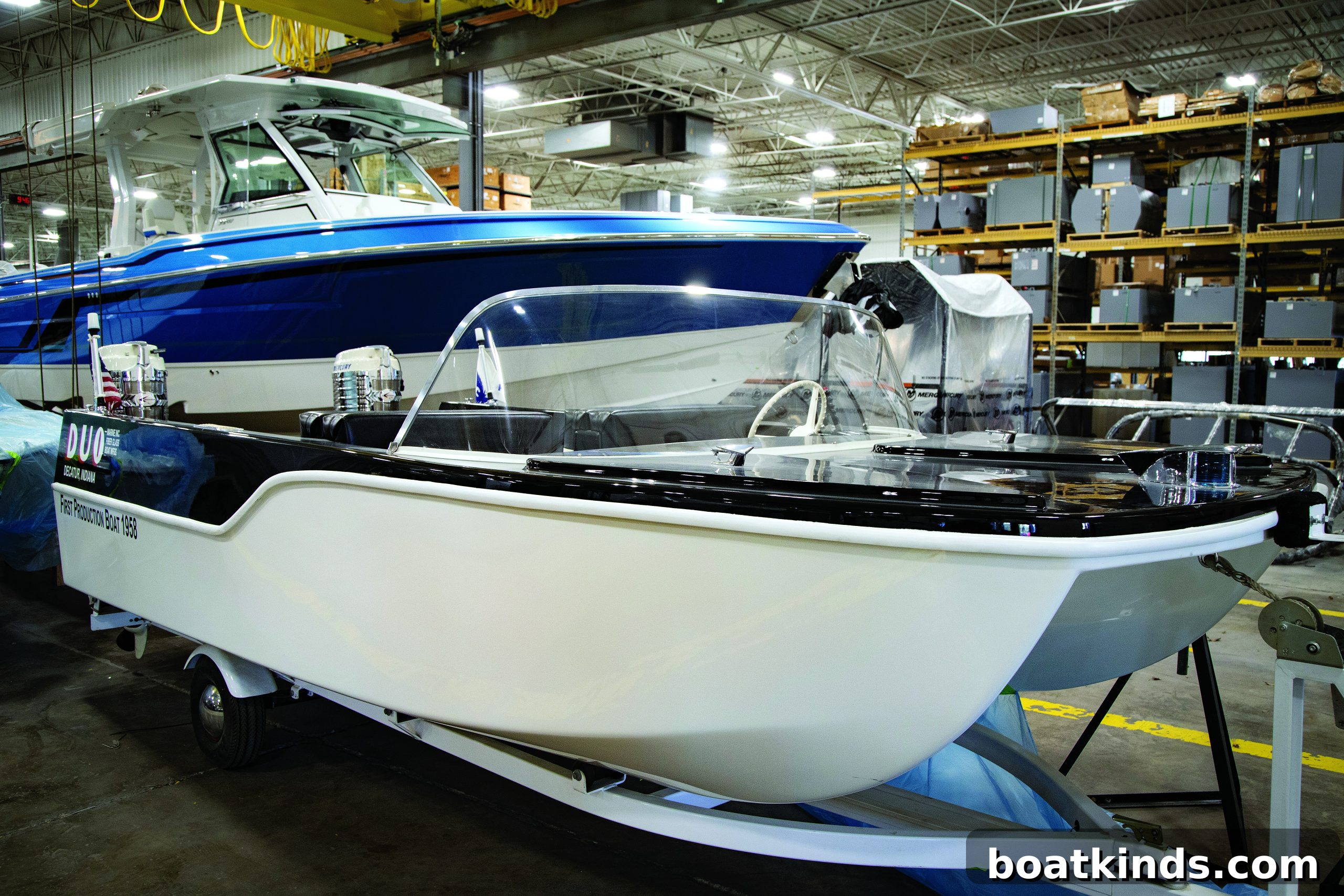
He began building small dayboats with three employees in a converted ice cream locker — modest origins for a man whose company would go on to international recognition. What made him respected, current employees say, was both his blue-collar roots and the personal attention he gave to everyone who worked for him.
“My grandfather spent a lot of time here before his passing,” says Vic’s grandson and third-generation employee Josh Porter. “He never really retired. He’d walk the factory floor most days, talking to employees. He wanted them to know they were valued and that what they do matters. His leadership and servant attitude are still referenced in meetings. His legacy lives on.”
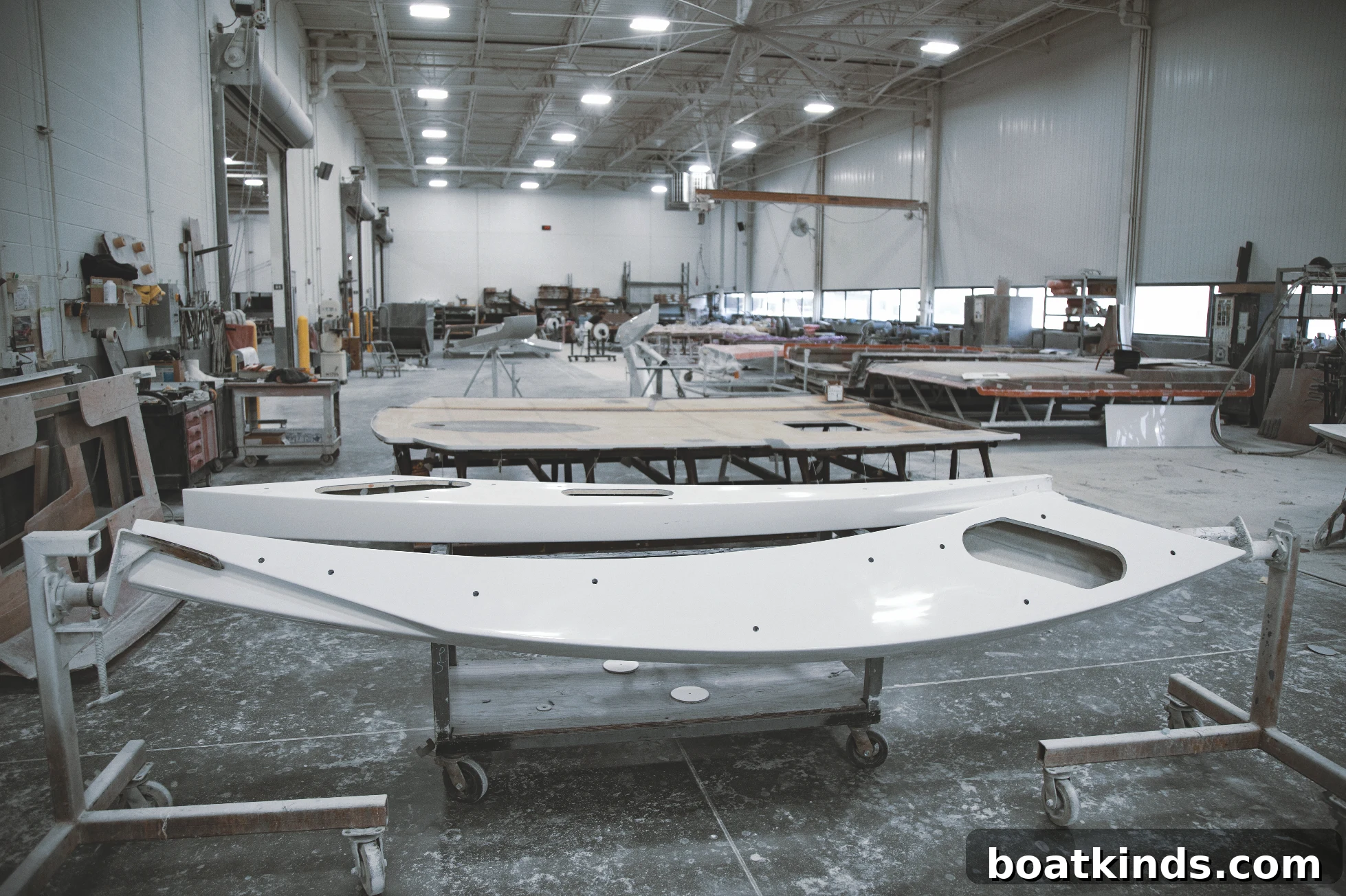
Josh didn’t feel forced into the family business — the door was open but not pushed. He initially pursued aeronautical engineering at Purdue University, then found the pull of Formula’s culture and craftsmanship irresistible. He returned and applied his engineering training to hull development, starting with a rotation through the factory floor and time with the prototyping team before moving into engineering work.
He spent time hands-on in engine installations, enjoying the mechanical side of seeing systems come together. Later he contributed to hull development on flagship projects, including work on the 500 SSC. On models such as the 457 he helped refine hull angles, step placement and depth to preserve the brand’s racing DNA while evolving performance and ride quality.
Pedigree of Performance
Even after witnessing the family-first culture, I kept asking how a manufacturer based far from the ocean stays so in tune with offshore usage. The answer is purposeful testing and real-world feedback. On the 457, for example, Formula added doors on both sides of the console aligned with the helm. At the push of a button they open to redirect wind that typically buffets a person seated behind the helm — a small change that significantly improves comfort and the onboard experience.
Those kinds of refinements come from Formula’s sportfishing team, which puts new models through rigorous, often rough, sea trials and tournament seasons. Unlike builders that shy away from testing that can scuff or damage a prototype, Formula embraces hands-on use: long days and nights aboard, cooking, fishing, handling gear and even cleaning blood from decks. The team returns with notebooks full of practical design tweaks that result in features “born at sea.”
On the new 457 those born-at-sea features include dedicated storage sized for a Seabob with matching paint options, a smart aft grill with a foldout cutting board and utensil storage, dual transom doors with a fold-out step for easy boarding, and a huge cockpit cooler that holds 180 cans. The layout also offers conveniences such as a power windshield, abundant phone chargers and numerous cup holders — practical details compiled by a passionate team in the Midwest who test and refine boats for real offshore use.
Before visiting Decatur, I pictured Formula primarily as a family weekend boat — a model to take generations offshore. After seeing the factory and meeting the people who build each hull, I still see Formula as family-oriented, but now that family includes the 500 employees who consider this their company and community. I left with new respect for how these boats are engineered, tested and assembled, and for the culture that has produced decades of performance-driven, family-built vessels.
This article was originally published in the September 2024 issue.