
Sailing directions for the stretch from Cabo Tres Montes to the Strait of Magellan, including the Patagonian channels, couldn’t have been clearer: “The prevailing wind is from the north and sometimes blows with great fury. … The principal feature in the weather here is not the strength of the wind, but the almost perpetual rain.” Those words framed every passage we made through southern Chile’s maze of fjords and channels.
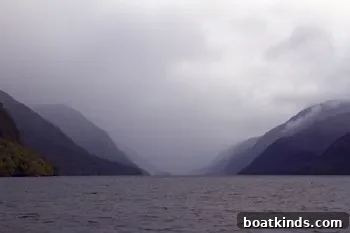
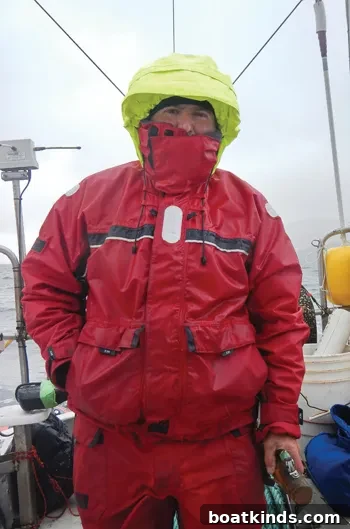
Chris and I left Puerto Williams under bright skies, heading west and then north toward Cabo Tres Montes. We were Southern-latitude sailors accustomed to cold, wind and even ice, but rain—relentless, cold rain—was less familiar. Our boat, the steel Triereme 35 Morgane, became part of the coastline routine: tie up to shore-side trees at dusk, free the lines at first light. In long Patagonian summer days we pushed on whenever conditions allowed; after two sunlit days, however, the rain followed and hardly let up for the remainder of the trip.
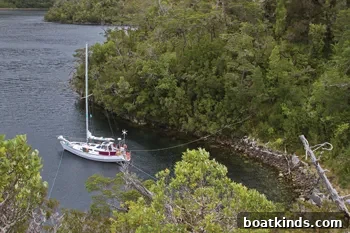
Thankfully, the steep, rugged coast of southern Chile offers many small refuges for a small vessel. Enter a sheltered cove and the howl outside can suddenly become a quiet oasis—though these havens are often tiny and require careful planning to use safely. Approach can be tricky because some entrances are extremely narrow. You first must pick the cove, then assess which side the wind will funnel down from and choose an appropriate spot to anchor and tie aft. Next comes the dinghy work: put the dinghy in the water with a shore line clipped to you, row hard to shore, and secure that line to a sturdy trunk—canelos are ideal for their strength—then return for another. One person holds the boat off the rocks while the other runs lines ashore, repeating until the vessel is snug. Finally, add chain and shorten lines as needed. Even after doing all that, there is often room for just one more safety line.
One night we did that work in the dark. Dusk found us tired and soaked as we eased into a cove that at the moment was surprisingly calm. I climbed from the dinghy with a headlamp and scrambled up the steep bank to loop the line around a tree as Chris kept the spotlight on me. Slippery rocks and big rubber boots make for awkward footing in daylight; in the dark it feels worse. Once the line was secure and the dinghy back on board, I relaxed. We slept fitfully as williwaws later thrashed the cove with savage gusts, but our lines and the trees held.
The anchorages in and around the Beagle Channel rewarded us with spectacular views and memorable hikes. There the forest opens up, allowing access to glaciers and waterfalls close enough to touch. The landscape, however, bears the scars of past human choices. Beavers introduced to Tierra del Fuego in 1946 as a misguided effort to start a fur industry multiplied without predators and altered entire watersheds. Their dams and felled centuries-old trees have dramatically reshaped the forest, and we noticed their handiwork from places near Ushuaia and Puerto Williams to the more remote Caleta Olla.
Another introduced mammal, the North American mink—released for fur in 1934—has spread across Andean Patagonia, preying on bird eggs and threatening native species. We even had a mink visitor much later on a different part of our voyage, but its presence underscored how altered the islands’ ecosystems have become.
As we sailed north from the western end of the Beagle Channel, forest cover became denser and hiking opportunities scarcer. Typical days meant battling wind and rain, hunched under our dodger while cold water hammered the canvas. Each evening we celebrated small victories by setting the anchor in a protected cove and enjoying a hot meal inside the warm hull.
A reliable heater is essential for cruising these latitudes, so when our stove chimney slipped overboard into what felt like 2,600 feet of water my chest sank. We watched it go—perhaps somewhere along Canal Pitt—but the loss didn’t leave us long. Chris improvised: he rebuilt a chimney from a cooking pot and fashioned it so it rotates with the wind, preventing back-drafts into our Refleks stove. It’s a reminder that ingenuity is as valuable as patience out here.
Weather windows dictated our progress. We tried to push north and often had to turn back when tides and gusts conspired against us. Our first real break came in Puerto Eden, a small fishing settlement with no road access and a reminder that kindness exists even in remote places. A local fisherman and his wife welcomed us for onces—an afternoon tea with snacks adapted from the British custom—swapping stories of harvesting shellfish and trading 22 pounds of flour for a small spare part we happened to have. Small exchanges like that kept us moving and connected.
Night watches brought their own comforts. I would ask Chris if he’d heard whales as he settled for a few hours of sleep; you can often hear their breaths at night even when moonlight doesn’t reveal them. The Golfo de Penas—somberly called the Gulf of Sorrows—was kinder to us than its name suggested: the skies cleared, the water warmed, and our spirits, dulled by weeks of gray, began to lift.
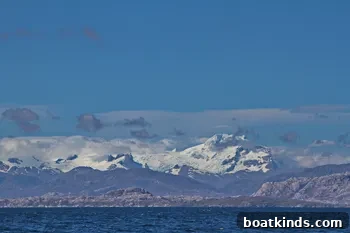
There is an emotional intensity to sailing the Patagonian channels. It’s not only the precise navigation through narrow passages, but the relentless negotiation with climate and the patience demanded by sporadic weather windows. Yet the channels have a particular magic: we rowed home beneath a blood-red sunset as the moon climbed; dolphins guided us into coves every day; humpback and sei whales moved through the deep water with an easy mastery that matched the grandeur of the landscape. We watched a fishing otter at ease in a cove we’d temporarily occupied; we delighted in kingfishers, hummingbirds, steamer ducks, upland geese and condors performing in the air and on shore. The sea was full of life—countless jellyfish drifting like tiny galaxies—and we glimpsed orcas leaving the Golfo de Penas. Once we even spotted the ghostly silhouette of the Captain Leonidas aground on Bajo Cotopaxi, and we watched a lunar eclipse in the west while dawn lit the snow-capped peaks of the Cordillera Darwin to the east.
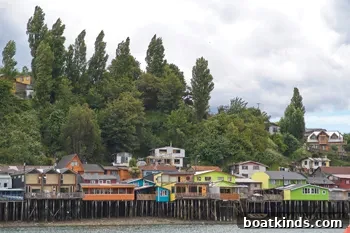
By the time we reached Chiloé, the last of the summer sun warmed our faces. That night, as we turned in, rain began to patter on deck once more—another familiar sound in a place where the weather keeps its own counsel.
This article originally appeared in the February 2017 issue.