
There’s growing interest in “adventure boats,” but what exactly do people mean by that term? In simple terms, adventure boats are typically pilothouse designs with upright styling and seaworthy hulls, built for boaters who want to get offshore and explore even when weather or schedules are tight. These boats prioritize protection, range and practical deck access so owners can make the most of limited time on the water.
Ben Knowles, president of East Coast Yacht Sales (ECYS) in Yarmouth, Maine, explains that adventure-boat buyers tend to be active professionals who use every spare hour they can find. “They make the most of every minute aboard and try to get a taste of adventure in the process,” he says. For that kind of use, an enclosed pilothouse, robust construction and reliable systems are key.
Several trends are driving demand for these boats. Owners want to extend their cruising seasons into cooler months, when conditions are often rougher and a pilothouse is a clear advantage. At the same time, social media—YouTube and Instagram in particular—has increased awareness of attractive local destinations reachable by boat. “People are more excited than ever to see places like Cuttyhunk by boat,” Knowles says, noting that inspiration from videos and posts prompts many owners to plan trips they might not otherwise have considered.
Knowles himself is no stranger to adventure cruising. Last March he left an icy dock in Harpswell, Maine, and covered about 100 nautical miles to Northeast Harbor so his family could ski Acadia National Park’s carriage trails. Aboard a 37-foot Axopar—one of the pilothouse models ECYS represents—the family enjoyed heated shelter in the pilothouse on the run north, passed quiet coastal villages still sleeping off winter, and arrived to clear views of Acadia’s snow-capped peaks. They spent the night ashore, skied freshly groomed trails the next morning, and returned happily to the boat for the trip home.
That trip illustrates several things adventure-boat owners value: the ability to venture off-season, secure and comfortable shelter for children and family, and a capable hull that handles varied conditions. “March is a magical time in Maine,” Knowles says. “The trip was epic. Highly recommended.”
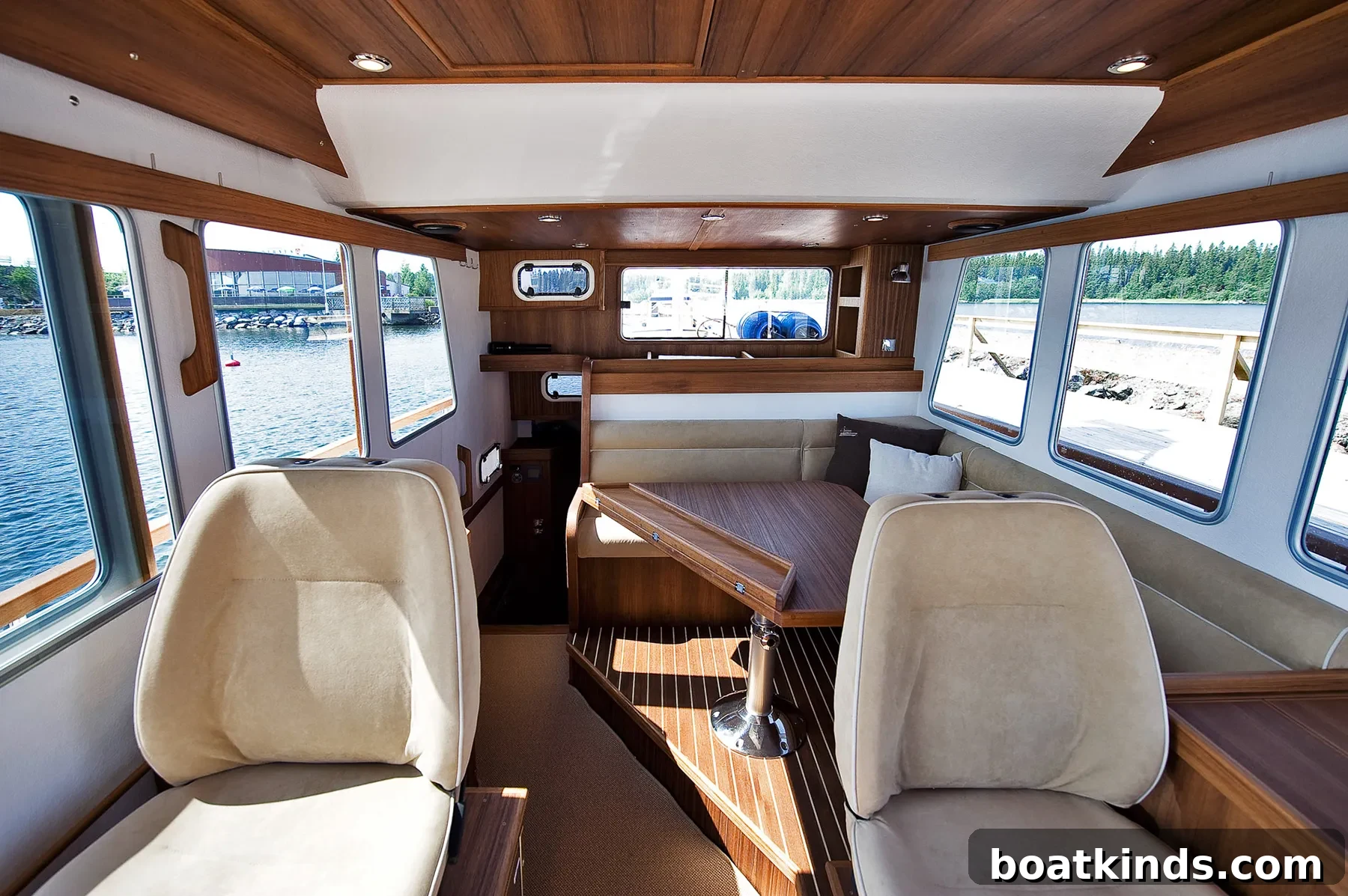
ECYS, which has eight offices in the Northeastern U.S., recently added another brand to its offerings: Targa, a Finnish builder with nearly 40 years of history in Europe. While Targa models are newer to the U.S. market, the line spans from 23 to 46 feet and leans into the pilothouse, expedition-ready ethos that appeals to adventure buyers. Knowles expects particular interest in the Targa 37, which he describes as sitting in the “sweet spot” for size and capability.
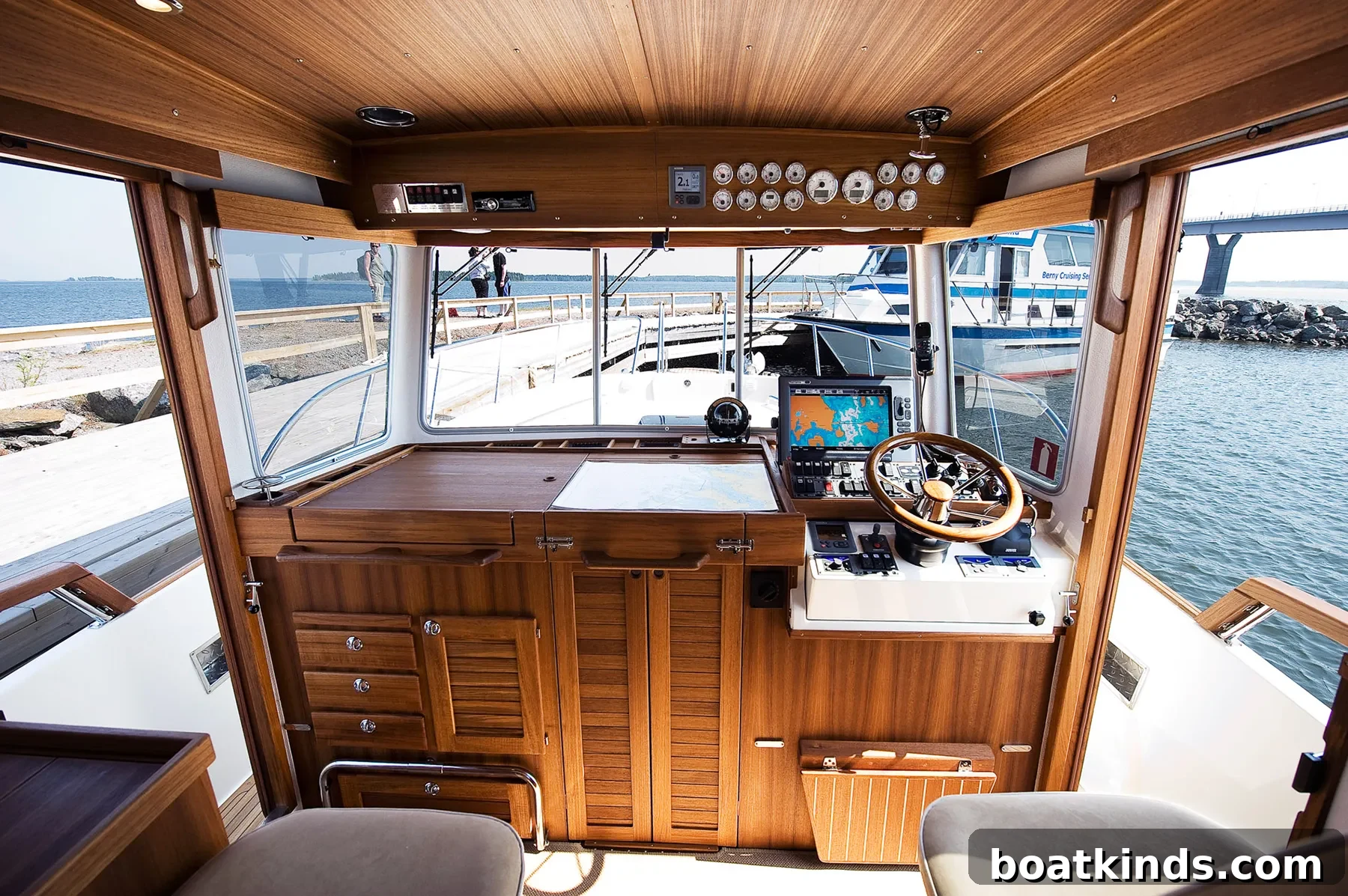
The Targa 37 brings volume and practical features that match the needs of active cruisers. Full walkaround side decks are a deliberate safety and convenience choice—owners who typically cruise with small crews need simple, secure ways to move about the deck to handle lines or pick up moorings. The 37 also offers pilothouse doors and a reverse windshield to reduce glare, and it can be equipped with diesel sterndrives or Volvo Penta IPS, appealing to buyers who prefer diesel range and fuel efficiency for longer runs offshore.
Range and performance are central to the adventure-boat proposition. Many owners want the ability to go farther and faster on a single tank so they can reach more remote destinations within tight windows of time. When powered by twin diesel 440-hp Volvo Penta D6 DPI sterndrives, the Targa 37 will cruise near 31 knots with a top speed around 43 knots; the most efficient cruise speed is roughly 23.5 knots, offering a range of about 406 nautical miles. Those numbers make the 37 attractive for serious coastal cruising and weekend escapes where speed and distance matter.
Despite being a long-standing model in Europe—the 37 debuted in 1997 and roughly 250 hulls have been built—the boat has evolved while retaining its proven hull form. That continuity is similar to other respected designs whose molds and hull shapes remain effective year after year. The Targa 37 is semi-custom: owners can add a second helm on a flybridge, and the cabin layout can include two staterooms and two heads to sleep up to five people, making it a capable family cruiser as well as an adventure platform.
Pricing reflects the 37’s capability and finish. A well-equipped example with teak interior and desirable options can approach a $900,000 price point, a figure Knowles says signals the builder is targeting buyers who intend to cruise seriously and invest in long-term use.
Adventure boats respond to a clear market: owners who want protection from the elements, ease of handling, extended range and the ability to get to interesting destinations year-round. With pilothouse designs like the Axopar and Targa 37 available through dealers such as ECYS, more boaters are able to combine family-friendly comfort with the thrill of exploration on their own schedules.
—Jeanne Craig
This article was originally published in the July 2023 issue.