
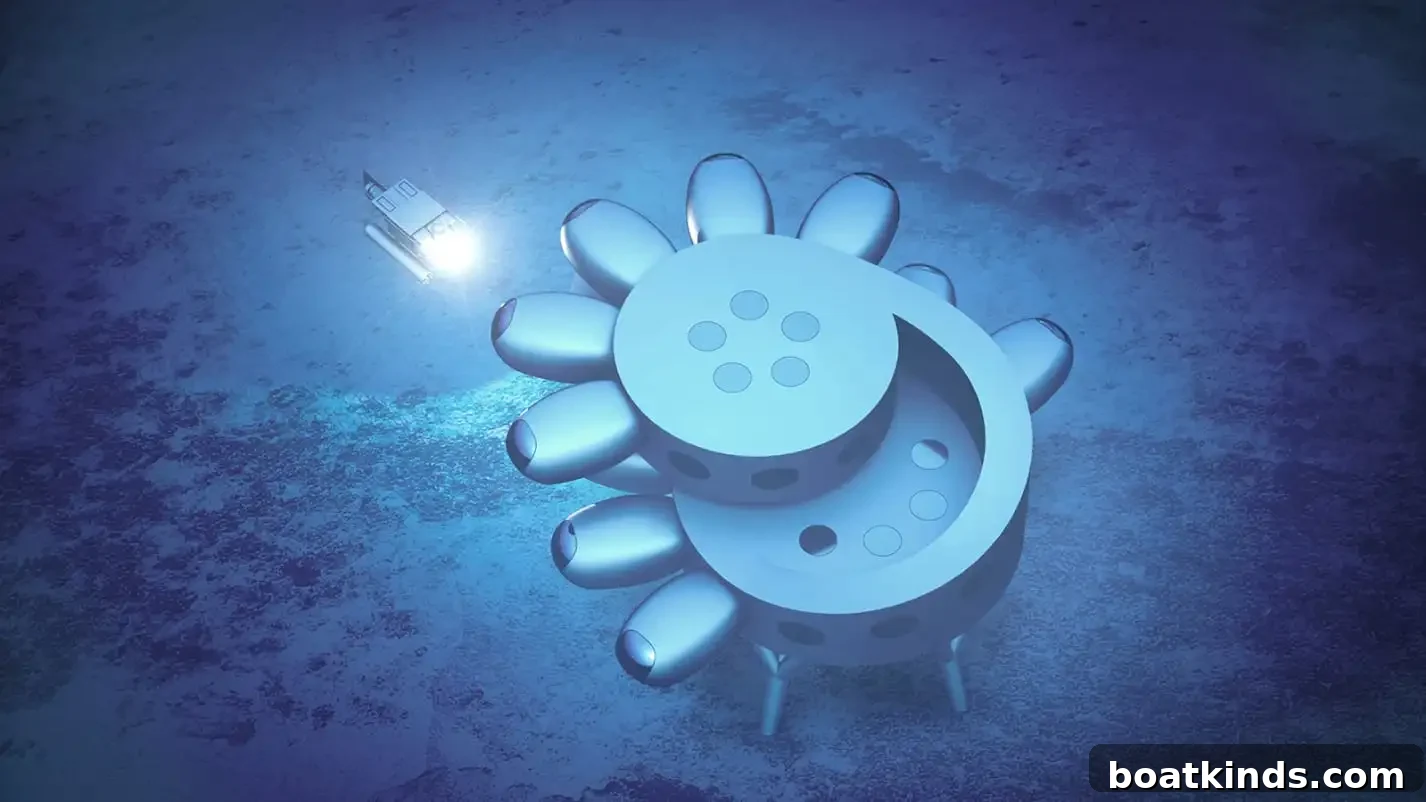
Proteus: The World’s Largest Underwater Research Station
Aquanaut Fabien Cousteau and industrial designer Yves Béhar have unveiled plans for Proteus, a proposed 4,000-square-foot underwater research station and habitat. Designed to rest approximately 60 feet below the surface of the Caribbean Sea off the coast of Curaçao, Proteus is envisioned as a two-story, stilt-supported complex where scientists, researchers and private-sector teams from across the globe can live and work for extended periods studying the ocean.
Design and Sustainable Power Systems
The current concept for Proteus emphasizes sustainability and long-term habitability. The structure is planned as a two-level facility elevated on stilts to minimize seabed disturbance and provide stability in the marine environment. Energy systems will combine wind and solar power with ocean thermal energy conversion (OTEC), a technology that generates electricity by exploiting the temperature difference between warmer surface water and colder deep water. This hybrid approach aims to ensure reliable, low-carbon power for life support, research equipment and the station’s infrastructure.
Underwater Greenhouse and Food Production
One notable feature of Proteus is its proposed underwater greenhouse, which would be the first of its kind at this scale. The greenhouse is intended to enable on-site cultivation of fresh produce under controlled conditions, reducing dependence on frequent resupply missions and demonstrating new methods for sustainable food production in marine habitats. The greenhouse will also serve as a research platform to study plant growth under unique light, humidity and nutrient regimes influenced by the underwater environment.
A Global Platform for Ocean Research and Collaboration
Proteus is being positioned as an underwater analogue to the International Space Station—a modular, collaborative research hub where governments, academic institutions and private companies can work together without borders. By providing prolonged access to a living ocean ecosystem, the station will allow researchers to monitor ecological changes in real time, conduct long-duration experiments and test new marine technologies. Cousteau has stressed the urgency of ocean research, noting that understanding the sea is critical to human survival and planetary health.
Scientific Priorities: Climate, Biodiversity and Medicine
The research agenda for Proteus would focus on pressing global challenges. Scientists based at the station could conduct intensive studies on the local and regional impacts of climate change—tracking coral reef health, ocean acidification, temperature-driven species shifts and changes in marine chemistry. Proteus will also provide opportunities to discover and characterize new marine organisms and their biochemical compounds, advancing the search for novel medicines and biotechnologies derived from ocean biodiversity.
Timeline, Challenges and Future Ambitions
Developers estimate that the installation of Proteus will take roughly three years once construction begins. Progress has already experienced delays due to the global pandemic and the logistical complexities of building and deploying a large submerged habitat. Despite these challenges, Cousteau envisions a future network of similar stations distributed across the world’s oceans, creating interconnected nodes for continuous ocean observation, rapid response to environmental crises and international scientific cooperation.
Why Proteus Matters
Proteus aims to expand humanity’s capacity to live and conduct research beneath the waves while showcasing sustainable design and renewable energy integration. By enabling extended human presence in the marine environment, the station could accelerate discoveries about climate impacts, ecosystem resilience and potential medical breakthroughs sourced from the sea. As an experimental habitat and research facility, Proteus represents a bold step toward prioritizing ocean science on the global agenda.
While plans remain subject to engineering, regulatory and funding hurdles, Proteus offers a compelling vision: a permanent, sustainable underwater platform where scientific inquiry, conservation efforts and technological innovation converge to deepen our understanding of the ocean and help inform solutions for a changing planet.