
Quick Thinking and Teamwork Save Boater After Onboard Cardiac Arrest in Port Jefferson Harbor
A dramatic rescue in Port Jefferson Harbor ended with a man alive and grateful after suffering a heart attack inside the cabin of his Sea Ray. What began as a sudden medical emergency became a coordinated, life-saving effort by boaters who were nearby that evening—an example of preparedness, calm leadership and teamwork on the water.
Dennis Dillon and his wife, Tricia, were anchored when Dennis went into cardiac arrest. Tricia immediately began CPR and called for help. Her urgent cries drew the attention of nearby boaters and set a rapid chain of response in motion.
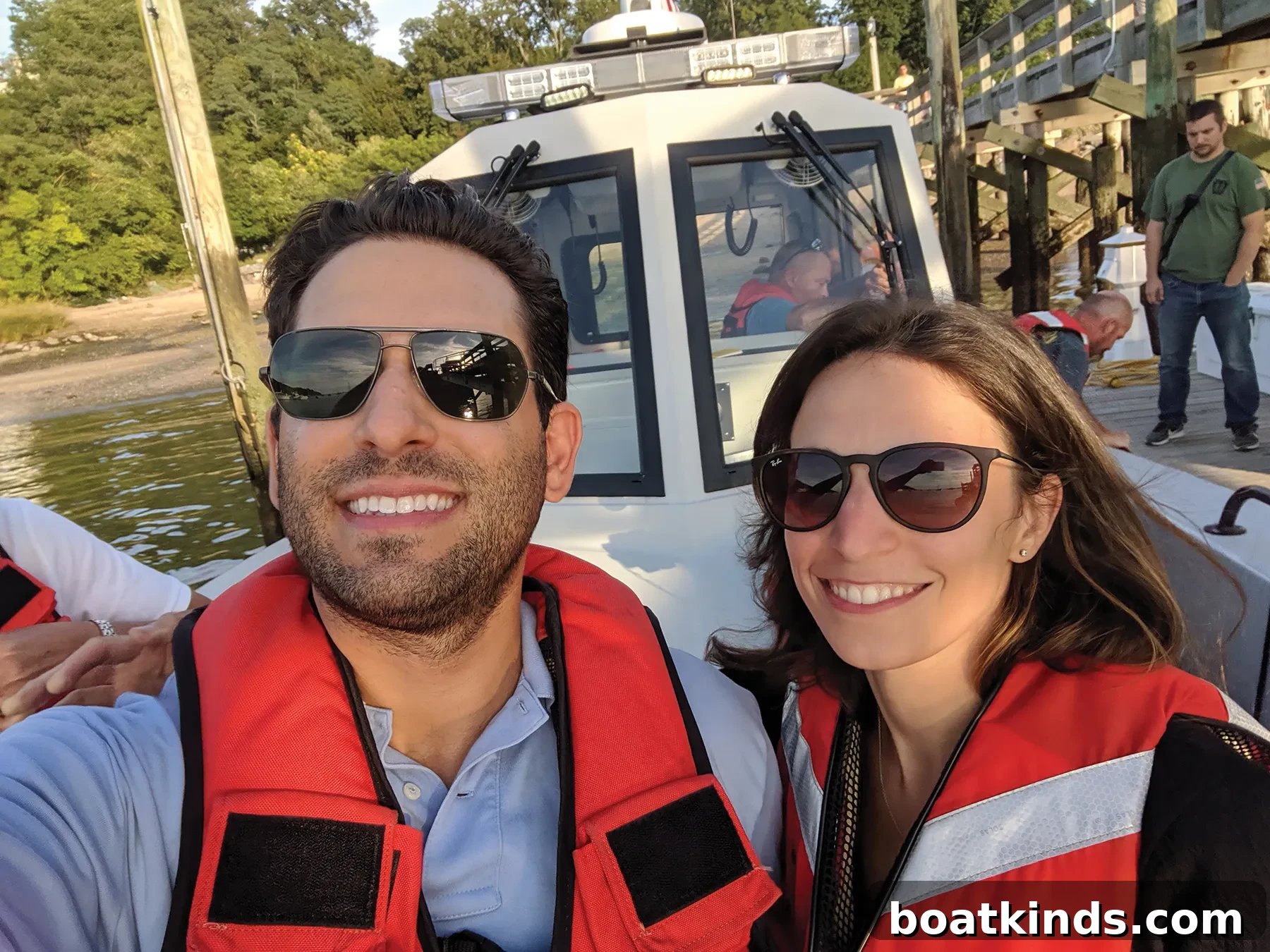
Josh Stein, visiting from Connecticut and anchored on a nearby mooring aboard his Beneteau Swift Trawler, heard Tricia and sprang into action with his fiancée, Dr. Elizabeth Nadal. The couple had been preparing to attend a Saugatuck Harbor Yacht Club event when they realized something was seriously wrong. “Lizzy grabbed aspirin and I took the handheld VHF radio before we jumped into our dinghy and headed for their boat,” Stein recalled.
When Stein and Nadal reached the Sea Ray, other volunteers were already assisting by taking lines and helping them board quickly. Dr. Nadal took medical leadership at the scene, performing CPR and directing a rotation of volunteers—Heather Tearne, Alan Bertrand and Doug Ewing—so compressions could be sustained without fatigue. The quick rotation kept high-quality CPR going while other tasks were handled.
Stein coordinated logistics: he called for help on the VHF, directed someone to contact the Coast Guard and Suffolk County Marine Police, arranged for an ambulance on shore to meet them and located flares to mark their position. He also used the handheld radio to request an automated external defibrillator (AED).
Kevin and Kathleen Rooney, fellow Saugatuck Yacht Club members who were nearby, had an AED aboard their boat. They passed the device to Dr. Robert Kloss and his son, Robert, who were able to reach the Sea Ray quickly in a fast dinghy after spotting a flare. With the AED in place, rescuers alternated CPR and used the device as needed while continuing their efforts to stabilize Dillon.
After waiting 10 to 15 minutes with no sign of the Coast Guard or marine police, Stein decided to bring the Sea Ray to shore himself while CPR and AED use continued. Although he had never driven a vessel of that type, he navigated it at 30 knots and stayed on Channel 16 to coordinate with an ambulance and establish a meeting point. During the run to shore, Dillon regained a pulse and began breathing on his own.
About 25 minutes after Tricia first called for help, paramedics took Dillon to a local hospital. Doctors discovered a 100 percent blockage in the left anterior descending coronary artery—an often-fatal condition with a reported 5 to 6 percent survival rate on land. “That’s the survival rate on land,” Stein noted. “We have heard it’s virtually zero on the water.” The rapid CPR, AED use and coordinated response contributed directly to saving Dillon’s life.
The community came together again in June when Dillon appeared at a ceremony to personally thank the rescuers. The Coast Guard awarded certificates of merit to all of the people involved in the rescue. “I will never be able to repay any of the beautiful, loving people who are responsible for my being here,” Dillon said that night.
Stein and Nadal, now married, emphasize that the successful outcome reflected a true team effort and the preparedness of conscientious boaters. Stein offered a reminder to everyone who spends time on the water: “I’m always alert on my boat and I’ve helped in a number of emergencies on the water. I’m always listening to Channel 16 and I’ll always have a pen and paper at the helm to record coordinates if someone is in trouble. That’s part of the responsibility of being a boater. My only hope is that if I need help in the future, someone will be there for my family.”
The rescue highlights several practical lessons for boaters: keep a VHF radio tuned to Channel 16, maintain basic medical supplies and an AED when possible, practice CPR or ensure someone on board is trained, use flares or other position markers to help responders locate you, and be ready to coordinate on-scene efforts until professional help arrives. In this case, those habits and the willingness of multiple boaters to act quickly made the difference between life and death.
Jeanne Craig
[email protected]
This article originally appeared in the August 2020 issue.