
Bestaven Wins Vendée Globe After Drama, Dalin Claims Line Honours, Herrmann Overcomes Collision
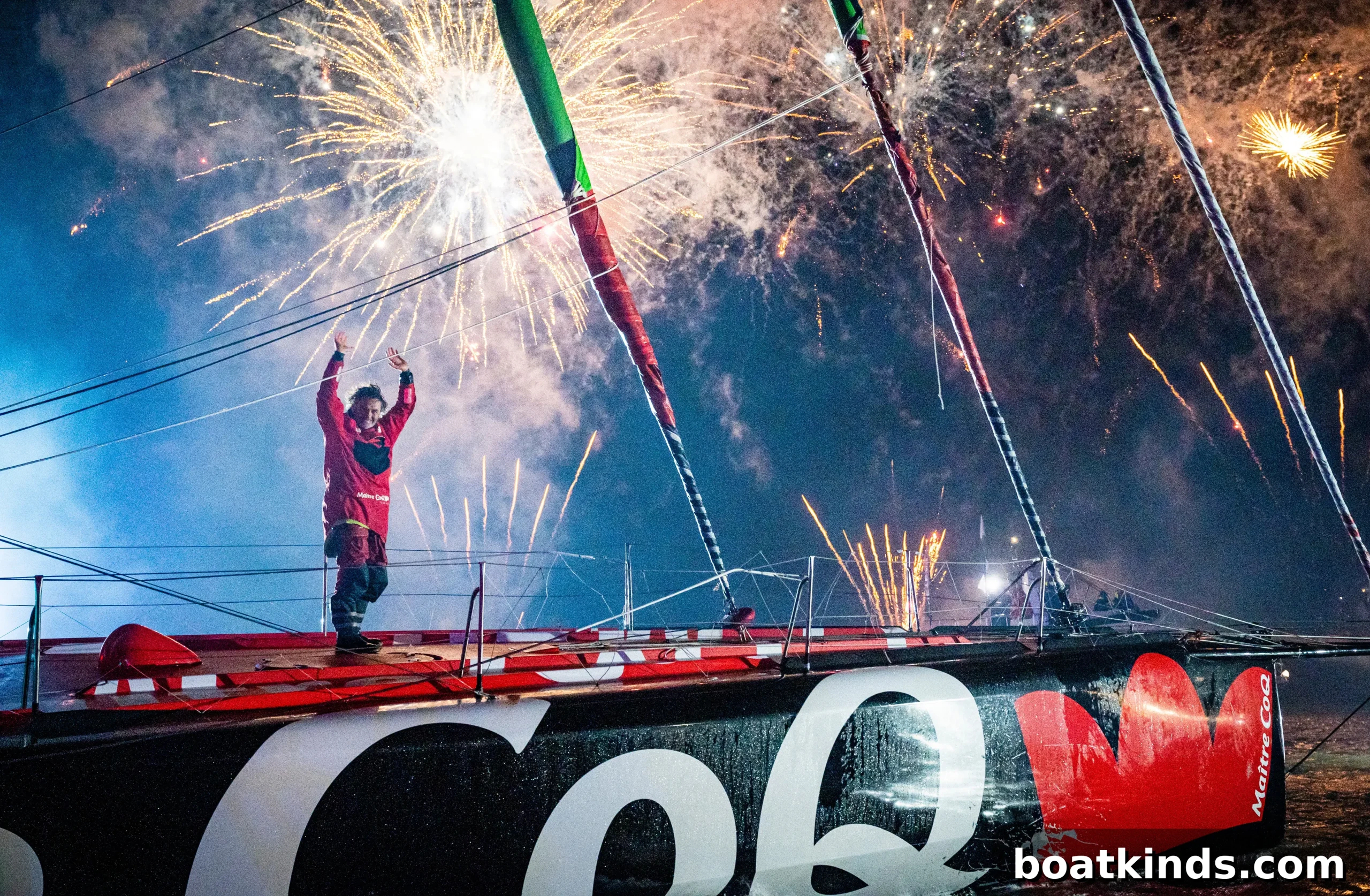
After more than 24,000 non-stop miles over 80 days at sea, the 2024–2025 Vendée Globe finished in a mix of elation, heartbreak and relief. Yannick Bestaven emerged as the overall victor, Charlie Dalin crossed the line first and earned line honours, and Boris Herrmann suffered a late collision with a fishing boat that cost him a podium place.
With under 24 hours remaining, all three skippers were still within reach of the overall win. Charlie Dalin was the first to enter Les Sables d’Olonne and received the warm reception typically reserved for the race winner. But Bestaven, sailing the IMOCA 60 Maître CoQ IV, closed at high speed—sometimes over 20 knots—and benefited from a time compensation awarded by an international jury.
Bestaven had taken part in a search and rescue operation two months earlier for Kevin Escoffier, whose boat sank in the Southern Ocean. For that effort he received a 10-hour, 15-minute time allowance. Although he arrived almost eight hours after Dalin, the compensation moved him ahead in the official standings and secured the trophy. Both French sailors greeted one another with mutual respect. “There are two winners in this Vendée Globe,” Bestaven said ashore, while Dalin accepted his role in taking line honours, commenting beforehand that time compensation for those who stop to help is beyond his control.
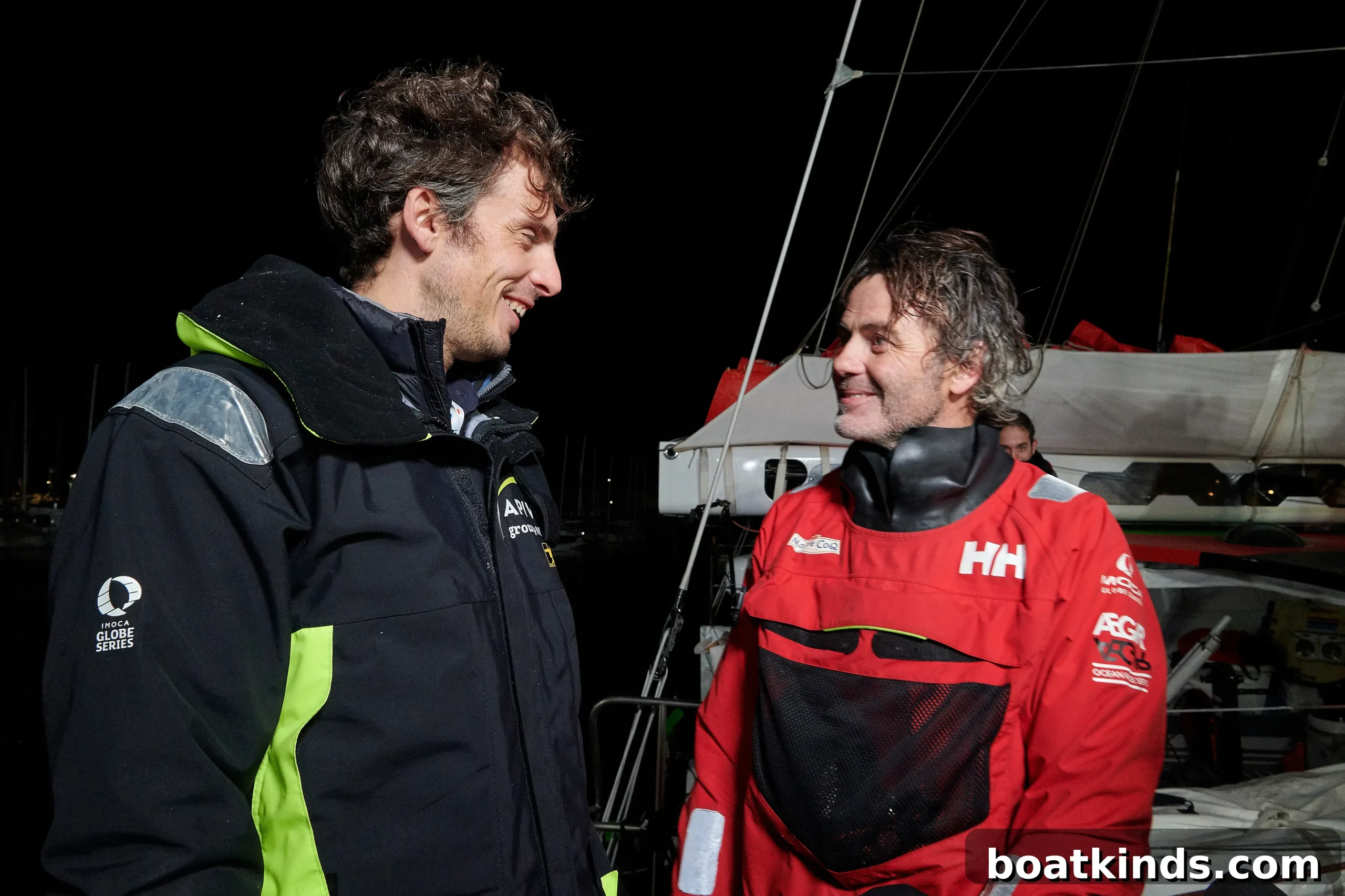
Boris Herrmann, the race’s sole German entrant, had also been credited with a six-hour allowance for his participation in the same search operation. He was in contention for a podium spot until a collision with a fishing vessel about 90 miles from the finish damaged one of his foils and forced him to slow to roughly seven knots after months of averaging much higher speeds. Earlier in the race he had narrowly avoided a serious incident with a bulk carrier near the Azores, underscoring how tense and perilous the event can be.
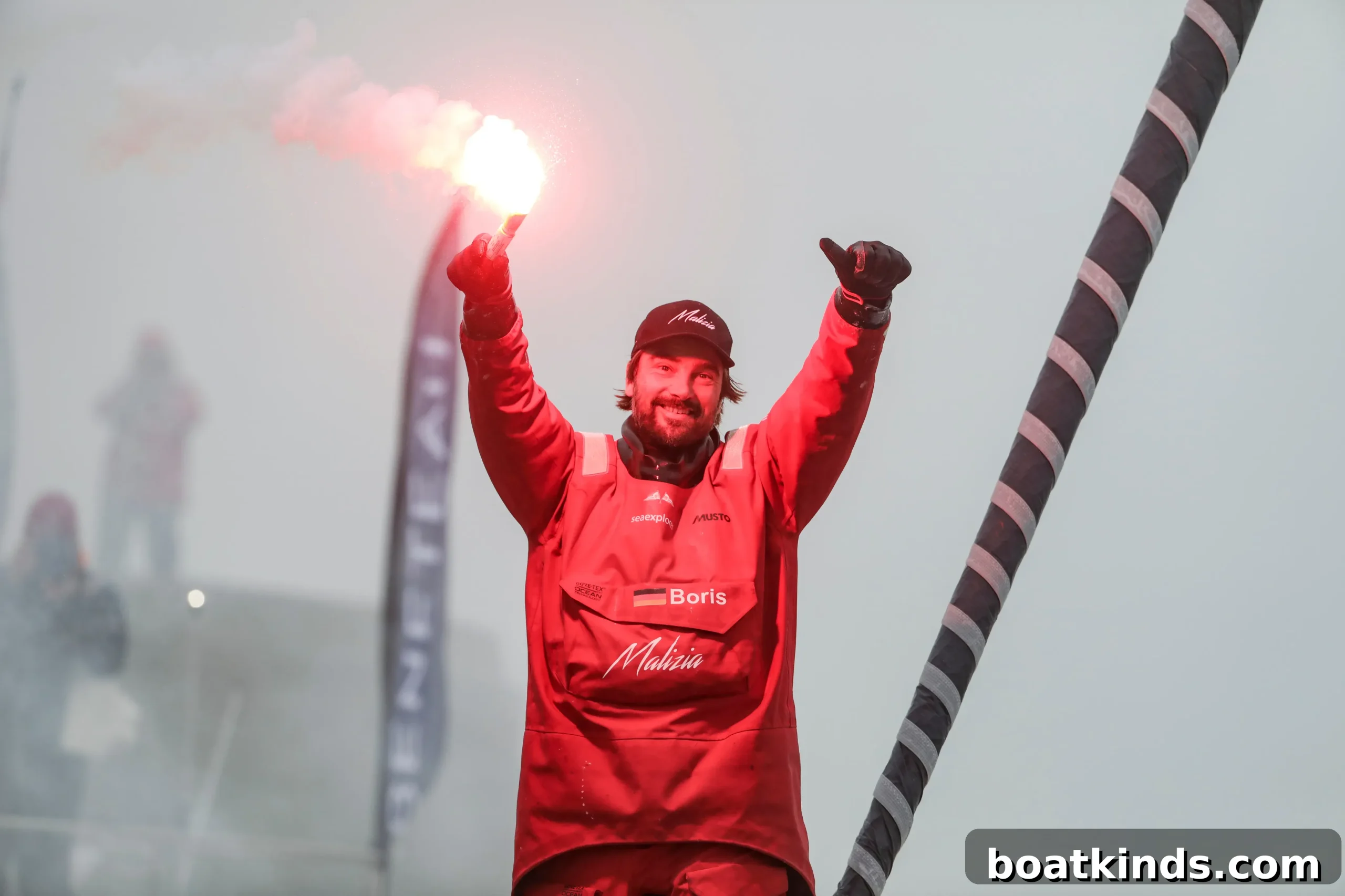
Herrmann ultimately crossed the line in the early morning light, finishing fourth in the official order. Despite the setback, he celebrated with a broad smile and lit a flare, showing the relief and joy that come simply from completing the Vendée Globe. “I am happy with the result,” he said after finishing.
Finishing the Vendée Globe is itself a major achievement. Out of 33 skippers who started on November 8, eight retired for various reasons, while others remain en route, with some still rounding Cape Horn and covering thousands of miles before they finish. Endurance, seamanship and navigation under extreme conditions make completion a victory for most who reach the finish line.
Bestaven’s path to victory was unconventional. He led the fleet for 26 of the 80 days—one of the longest stints at the front—but he was never the pre-race favorite. He passed Cape Leeuwin in third and left Cape Horn in first with a 15-hour margin, even extending to a 440-mile lead in the South Atlantic before experiencing three days of calm south of Rio that erased his advantage.
His comeback began in the Azores when he chose a northerly route through the Bay of Biscay. Although longer, that track brought him into a favorable low-pressure system that accelerated his approach and allowed him to close on Dalin. Bestaven increased his speed over the final 24 hours and arrived within the awarded time, surpassing Dalin and bumping Louis Burton—who had crossed second—down to third in the overall classification.
This was Bestaven’s second Vendée Globe; in 2008 he had to retire less than a day into the race after being dismasted in the Bay of Biscay. Unlike some rivals who raced brand-new, foil-equipped boats with large teams, Bestaven returned aboard a 2015 IMOCA with smaller foils and a carefully selected, compact shore team.
Foils played a significant role in this edition. While they boost speed, especially when conditions are favorable, they also introduce structural risks debated among skippers and designers. Asked about foils in the post-race interviews, Bestaven was measured: his victory with smaller foils did not dismiss the benefits of larger ones. “You have to see the larger foils as a turbo,” he said, noting they can act as powerful accelerators when the sea and wind permit, but also stressing that boats must remain unsinkable.
One of the most moving moments came when Kevin Escoffier greeted Bestaven on the gangway and the two shared a long embrace. Bestaven recalled the harrowing night of the search: “It was a nightmare, standing on deck all night looking for someone. I really thought we might not find him.” Another reunion followed soon after: Jean Le Cam, who rescued Escoffier in the Southern Ocean, finished in time to move from eighth to fourth once his allotted compensation was applied.
The Vendée Globe delivered dramatic racing, human courage and complex decisions that tested every skipper’s seamanship. For Bestaven, Dalin, Herrmann and the many others who crossed the Atlantic to Les Sables d’Olonne, the race was a testament to endurance, solidarity and the high stakes of solo ocean racing.