Jeannette Memorial at the Naval Academy Cemetery: Current Condition and Conservation Needs
The Jeannette Memorial, erected in 1890 and located in the Naval Academy cemetery, has been assessed repeatedly by architectural conservation experts and was determined to be in poor condition during surveys in 1994 and again in 2008. Despite its historical significance and striking design, the monument presents a neglected appearance that reflects the wear of time, environmental exposure and intermittent vandalism.
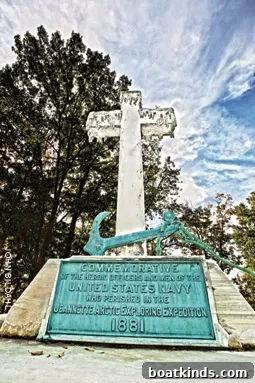
Carved from white marble, the memorial features a cross draped with sculpted icicle-like forms rendered in high relief. The decorative carving, once sharp and expressive, is now heavily soiled and shows surface erosion from weathering and atmospheric pollutants. A primary bronze plaque that formerly identified the memorial was replaced in 1965; that plaque was cleaned and treated during the 1994 intervention and remains legible. A second bronze plaque, however, which lists selected names of navy men who perished during the 1881 Arctic expedition, has blackened with corrosion and is largely illegible, obscuring the names and the story it was intended to convey.
At the base of the cross sits an antique bronze anchor from which a long bronze cable—shaped like a hawser—runs across the top of the granite plinth and nearly reaches the ground. The exposed end of the cable is twisted, bent and frayed, its fibers untwined as if echoing the unraveling fate of the historic expedition it commemorates. Architectural conservator Howard Wellman, who carried out the 2008 survey, concluded that the loosened and dangling bitter end of the hawser most likely resulted from repeated handling over the monument’s 124-year history. He noted the plausibility that visitors, including children, might have used the cable as a makeshift swing or climbing aid, hastening its deterioration. Historical drawings or older photographs could clarify the original appearance of the hawser and the anchor, but locating such images would require dedicated archival research.
Wellman’s 2008 assessment catalogued a range of condition issues: loss of pointing, biological growth and staining, stone loss and stress cracking, surface erosion, metal corrosion and staining of the stone from polluted runoff and corroded metal elements. These conditions combine to degrade both the aesthetic presence of the memorial and the legibility of its inscriptions. While the monument is not at immediate risk of collapse, its decline is evident and ongoing without intervention.
One of the challenges facing the Jeannette Memorial is its low visibility. Situated on “Strawberry Hill” in the academy cemetery—a tranquil but seldom-visited site removed from the main campus—the memorial is largely out of sight for midshipmen, alumni and most visitors. That seclusion makes it harder to attract attention, fundraising support and advocacy for conservation work. Despite its historical and artistic value, the memorial has not been prioritized for preservation in the way more visible campus monuments have been.
There are precedents at the academy for alumni-led restoration efforts. For example, the Class of 1973 raised funds to restore the Macedonian Monument figurehead of Alexander the Great on Stribling Walk, demonstrating that class or alumni projects can marshal resources for conservation when a campaign is organized. The Jeannette Memorial could benefit from a similar initiative—whether as an academy class restoration project, an alumni-driven campaign, or a formal conservation plan led by preservation professionals.
Although the Jeannette Memorial is not a burial marker, it stands among weathered tombstones of distinguished naval officers in a picturesque, pastoral setting. Many surrounding markers show their own signs of age—cracking, surface loss and illegible inscriptions—so the memorial sits in a broader landscape of historic stonework in need of care.
Conservation of the Jeannette Memorial would likely include careful cleaning, stabilization of cracked or eroding stone, consolidation where necessary, removal or control of biological growth, treatment and possible replacement or conservation of corroded bronze plaques, and reattachment or modest repair of the frayed hawser element in a way that preserves historic fabric and prevents future damage. Any treatment should follow established conservation standards and be documented with before-and-after photography and detailed condition reports.
Preserving the Jeannette Memorial would protect an evocative memorial to men lost in the 1881 Arctic expedition and restore dignity to a monument that reflects a chapter of naval history. With focused attention and coordinated funding, the memorial could be stabilized, its inscriptions rendered readable again, and its presence on Strawberry Hill returned to a state that honors its original intent.
See related article: Heroism and heartbreak
January 2015 issue