Chesapeake Bay Maritime Museum Expands Shipwright Apprentice Program with $30,000 Grant
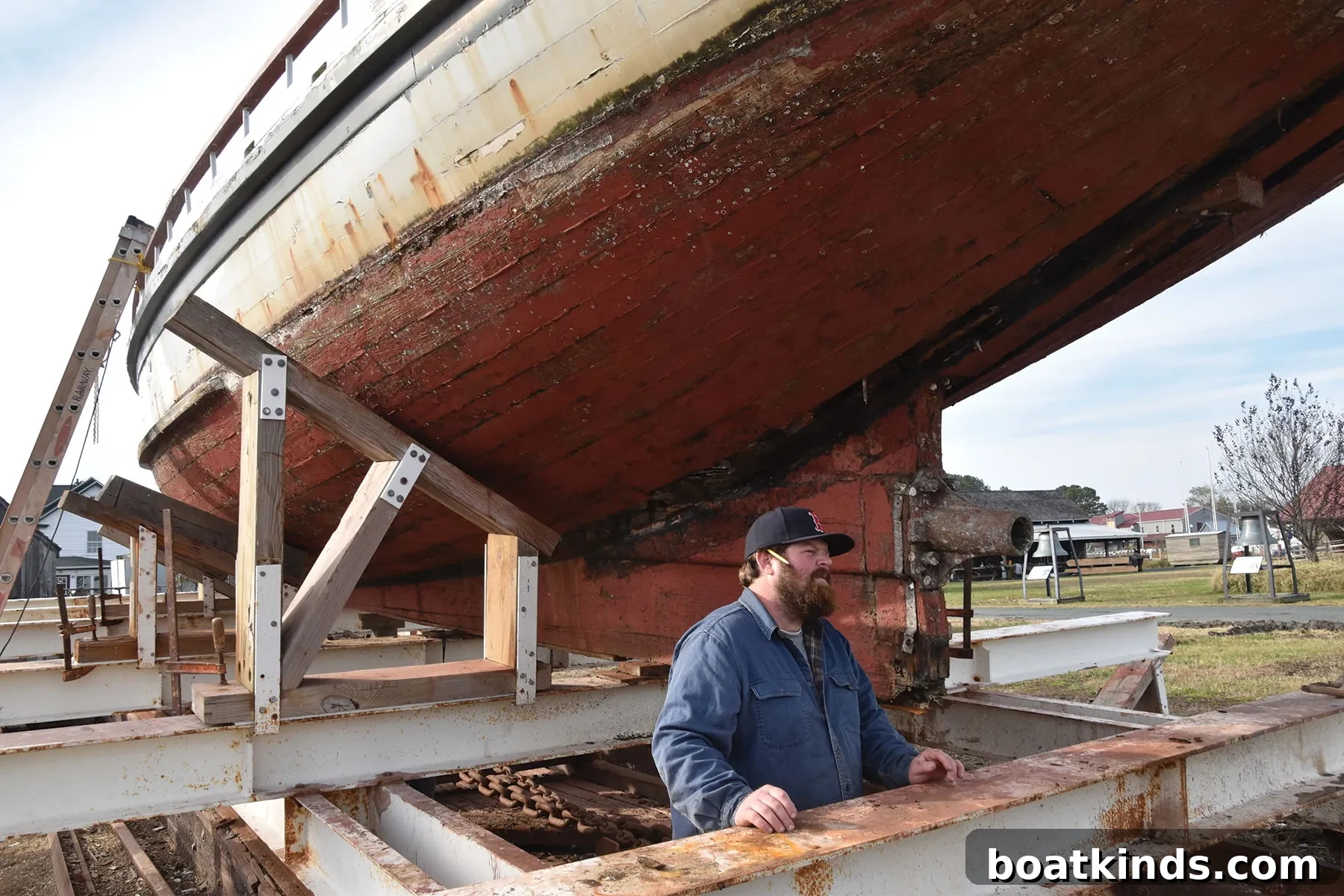
The Chesapeake Bay Maritime Museum has received more than $30,000 in grant funding from the Rural Maryland Council to strengthen its Shipwright Apprentice Program. The award, announced in January, will help support stipends for formal apprentices and expand opportunities for public engagement with traditional wooden boatbuilding.
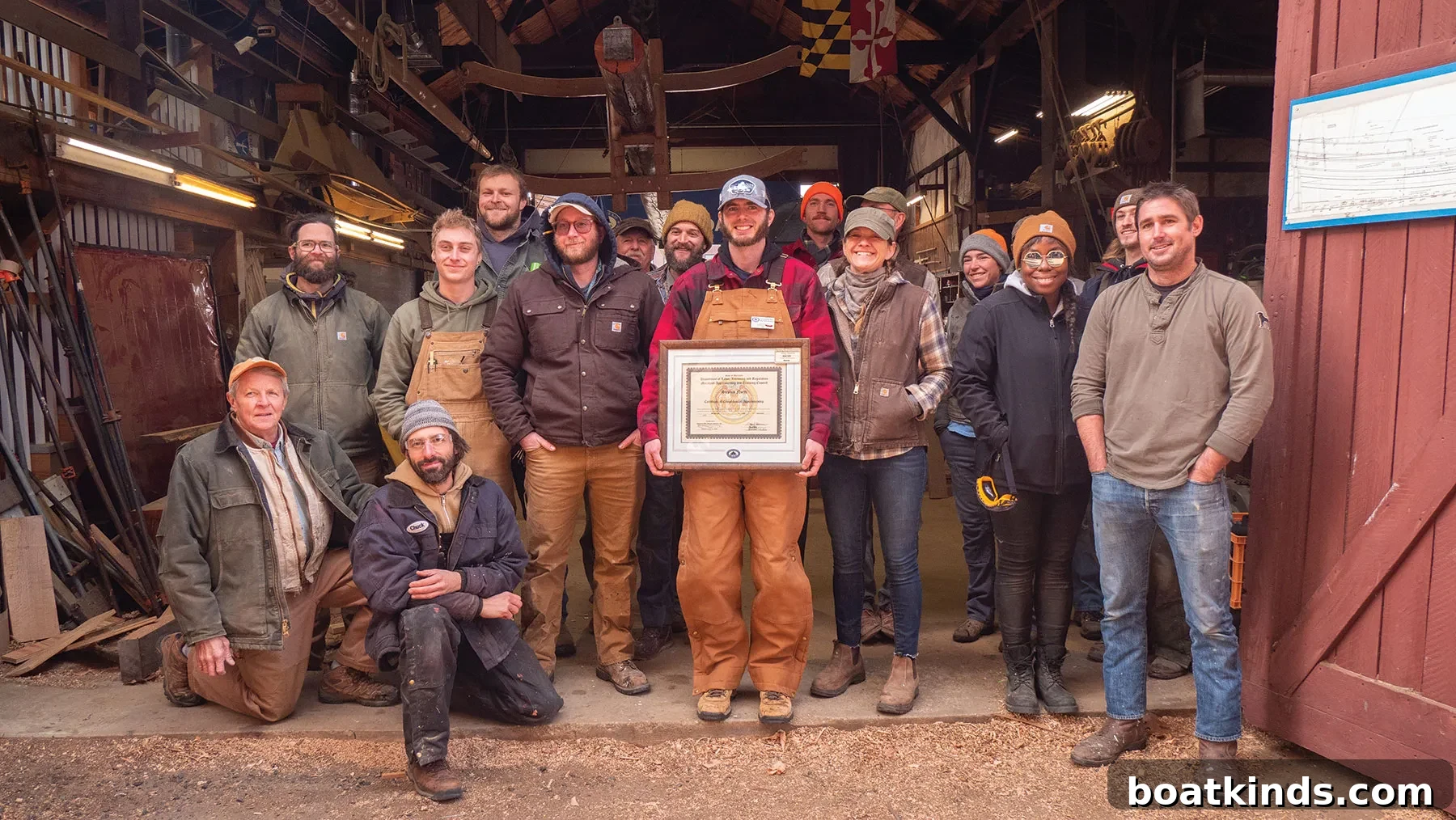
The museum has run an apprentice-style program for more than 20 years, training more than 50 people in hands-on shipwright skills. In 2018 the museum formalized the curriculum, establishing a four-year apprentice certification that meets federal and state guidelines. That formal program recently celebrated its second graduate this past winter. The new grant funding will directly support the continued development of that formal apprenticeship and help ensure apprentices receive financial support while they train.
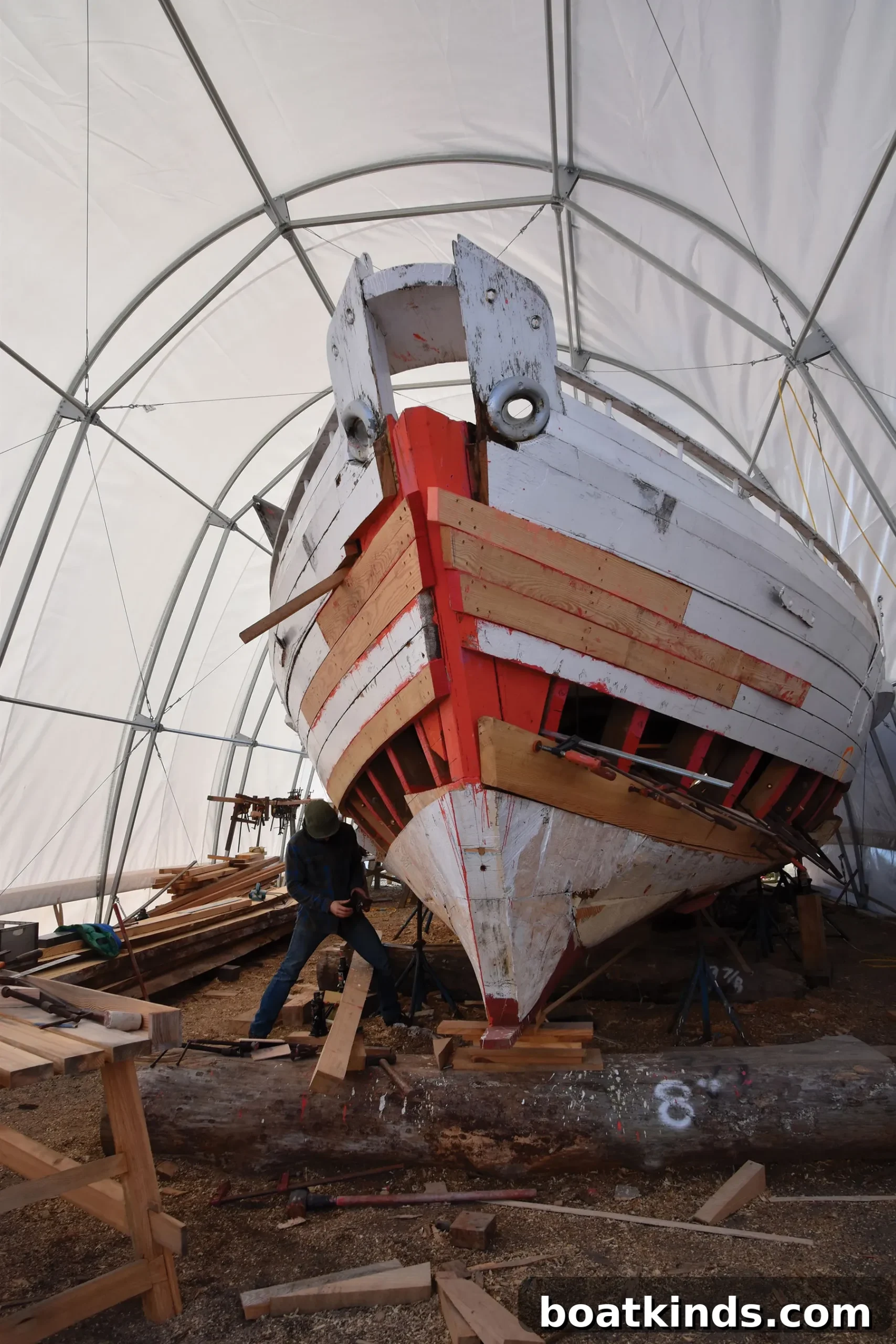
The impact of the grant reaches beyond finances. Apprentices work openly in the museum’s shipyard on major projects, offering visitors a chance to watch, ask questions and learn. One of the current projects is building the Maryland Dove, a reproduction of the trading ship that accompanied the colony’s first settlers in 1634. Apprentices participate in tasks such as planking, installing cabin soles, and learning rigging techniques. These activities are performed in full public view so museum guests can observe traditional methods and join the learning experience through classes or short “apprentice for a day” sessions.
“Whether you just want to come and experience traditional boatbuilding for a day or you want to build a career out of it, or you want to get your kids interested in it, they’re all linked to one another, and the backbone is the apprentice program,” says Christian Cabral, vice president of shipyard operations. “As we continue to do our work in the shipyard, the apprenticeship program will grow, and more and more people will be involved.”
Jennifer Kuhn, the shipyard education programs manager, notes that visitors come from many backgrounds and skill levels. Many are recreational boaters seeking to learn specific techniques for their own projects. Some attend a single class to learn caulking or other repairs; others discover a new passion for woodworking after experiencing traditional methods in person. “There was a guy that came to a couple of the Maryland Dove workdays. He’s building a 14-foot boat in his garage,” Kuhn says. “Another person came to a class during which we were doing some caulking. He wanted to learn that for a project on his boat. You also have people who are curious, or maybe they’ve built a stitch-and-glue boat, and they got turned on to the idea of building boats.”
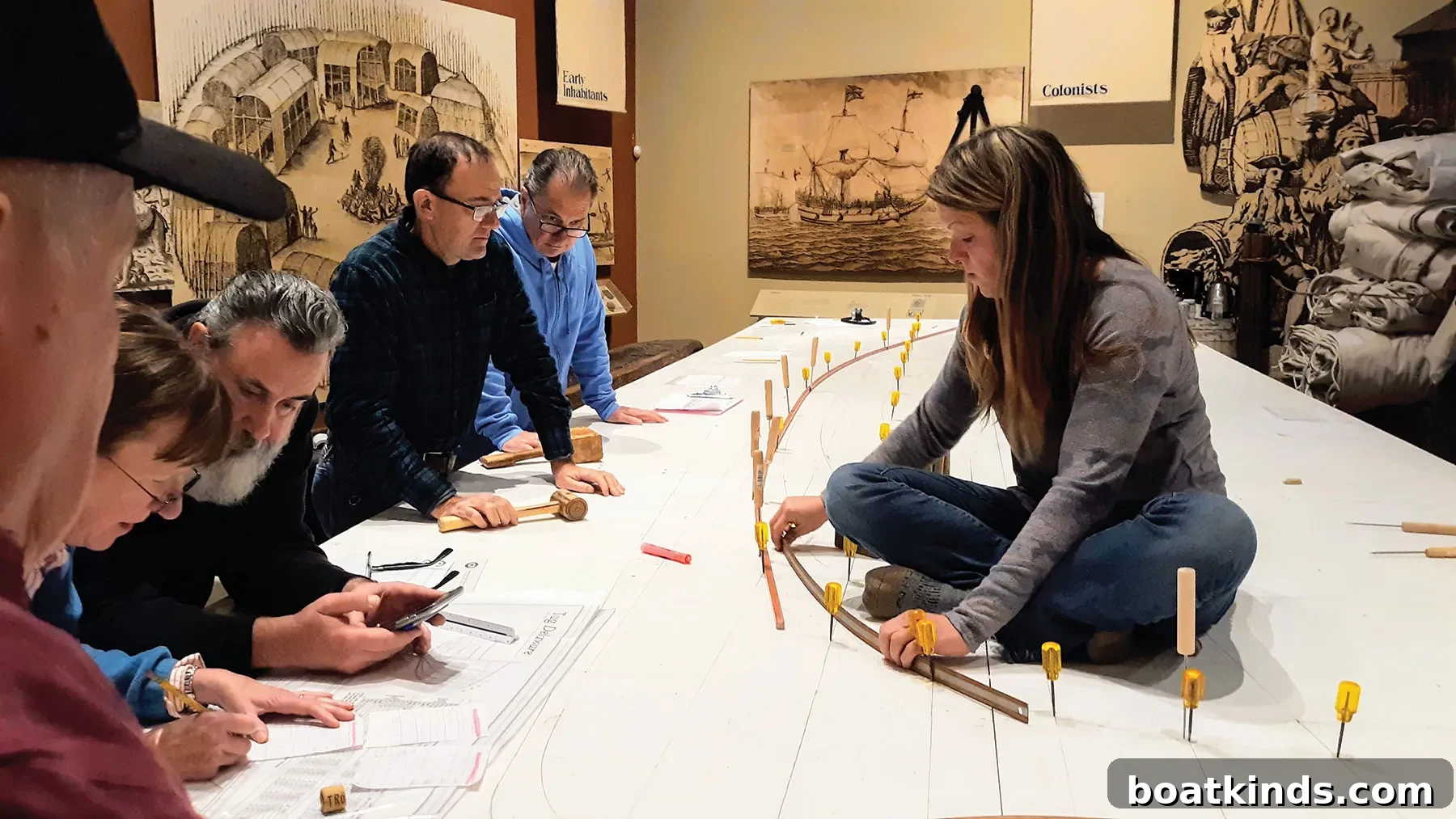
Observing apprentices at work and engaging with them directly helps visitors understand techniques and connect with the traditions behind wooden-boat construction. The museum currently has space for four formal apprentices, who receive housing and a stipend. With the recent graduation of Stephen North—now a full-time associate shipwright working on the Maryland Dove—a slot has opened for a new apprentice. Kuhn emphasizes that the application process is competitive and attracts people who are serious about learning shipwright skills.
Stephen North explains how his path led to the museum’s apprenticeship: he became interested in boating as a child while rebuilding a yawl with the Boy Scouts of America Sea Scouts, then studied wooden boatbuilding at a community college in North Carolina. Through the museum’s program he not only honed practical skills but also went out on historic vessels. “One of the most beneficial parts of the program, I think, is that you actually get to go out on these boats,” North says. He notes that working aboard vessels like the Edna E. Lockwood—part of the museum’s floating fleet and once used for oyster dredging—helps apprentices understand why repairs are made a certain way and why specific fasteners and techniques matter.
Kuhn highlights how accessible the shipyard programs are for a wide range of visitors. Some guests arrive by their own boats, tie up at the marina for a weekend, take a daytime class, and explore the town in the evening. The museum offers options for beginners, intermediate learners, and those with mobility considerations who may prefer smaller projects in the shop. These programs foster social connections as well as practical skill-building—participants often leave with new friends, increased confidence and pride in their work.
“When people do something they’ve never really done before, they feel empowered,” Kuhn says. “You can see it. They’re smiling. They make friends. The group dynamics are wonderful.”
Beyond producing and preserving wooden boats, the museum’s programs aim to keep the craft itself alive. In an era dominated by metal, composites and mechanized production, hands-on wooden-boatbuilding programs inspire new generations to learn traditional skills and appreciate the heritage they represent. Participants take part in a living tradition, contributing to vessels that have longer lifespans and cultural significance.
“I think it’s a really romantic idea,” Kuhn says. “There’s a lot of sanding and scraping and stuff that’s not the glorious work, but years from now, you can say, ‘I worked on the Dove.’ That’s a big feather in a cap.”
This article was originally published in the April 2022 issue.