In “Where Have All the Pirates Gone,” singer Eileen Quinn paints a picture of Boot Key Harbor in Marathon that evokes both fond memories and uncomfortable truths about a changing cruising community. The song’s tongue-in-cheek verses—about beaches, bikini-clad crowds and an endless supply of overproof rum—hint at a bygone era of rough-and-ready boaters who once populated the harbor. Quinn used to introduce the song by describing Marathon as a kind of American Dream for people with little money who drove south and never left when their cars broke down. That portrait, she says, belonged to an older Marathon—one much different from the tidier harbor of today.
He’ll bluff about the beaches,
The bikini babes, the boats,
And the endless sea of overproof
On which this whole myth floats.
Where have all the pirates gone?
They’re pumping gas in Marathon.
Living in some trailer park,
They sail their dreams out after dark.
Many of Marathon’s original liveaboards and hard-core cruisers have moved on—those with seaworthy boats and reliable transportation. Yet the personality of the old harbor survives in the stories told at local bars and around dinghy docks. Sit in any sailor bar in Marathon and you’re likely to hear a dozen versions of “Scruffy the Sailor”: the native raconteur who boasts loudly about past exploits and grand plans. Multiply him by the number of tables in town and you have an idea of pre-cleanup Marathon.
When I arrived just before Thanksgiving last year, my mission was practical: deliver a 2006 Island Packet 440 from Bradenton, Florida, to the south coast of the Dominican Republic. Marathon offered the right mix of services and provisioning options for an 11-day ocean crossing, and the three-day layover gave me a chance to see the modern harbor and explore its past. From Bradenton we sailed overnight to Marco Island, then made Little Shark River in Everglades National Park to anchor under a sherbet-and-strawberry sunset. The final leg to Marathon across Florida Bay was an easy 37-nautical-mile run—typical for the relaxed cruising pace between Tampa Bay and the Middle Keys.
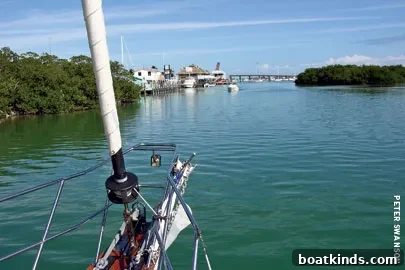
As we entered Boot Key Harbor, Thanksgiving was two nights away and the mooring field was only half full. A few shabby craft lay at anchor and a handful of character boats still gave the place color, but most vessels were well-maintained cruisers between 30 and 45 feet. Neat rows of mooring balls and visibly clean water made a favorable first impression. We tied up Tides Forever at the Boot Key Harbor Municipal Marina, which manages the mooring field from a former fish-processing building.
Dropping the hook
The debate over anchoring rights in Florida has raged for years and Boot Key Harbor became a prime example. Land-based residents who pay dearly for waterfront views often resent boats that anchor for free. A more legitimate concern has been the long-standing problem of derelict and abandoned vessels—a cycle that usually begins with someone dropping a hook and never returning. Municipalities responded with stricter rules, mooring fields and increased enforcement, actions many cruisers view as harassment.
Some communities, like Marco Island, took a hard line that ran into legal trouble; others took a more strategic approach. Marathon’s process, which included establishing a regulated mooring field and enforcing no-discharge rules, is often cited as a model—though it wasn’t without controversy. Businessman Bruce Popham, who bought Marathon Boat Yard in 1998, recalls Boot Key Harbor as once being “the last frontier” with many liveaboards, crime and extensive storm damage after Hurricane Georges. The city cleared hundreds of damaged vessels and began building a managed mooring field, growing from 25 rental balls in 2003 to about 220 over time.
The combined effect of mooring expansion, pumpout services and enforcement drove away much of the outlaw element. A city pumpout boat now handles an estimated 16,000 to 20,000 gallons of sewage during peak months that otherwise would have polluted the harbor. Yet not everyone applauds these changes. Local volunteers and longtime residents, such as Gregory Absten, a snowbird from Ohio and former yacht club port captain, criticized what he considered overregulation and heavy-handed boardings in the harbor. Absten argued that some cruisers with solid cruising capabilities were pushed out along with derelicts, and he warned against sterilizing the harbor into a tourist ornament rather than preserving its role as a maritime crossroads.
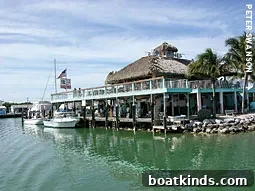
City leaders, by contrast, speak of development as an economic opportunity. Vice mayor Don Vasil, a former liveaboard and strong advocate for harbor development, has pushed to secure permits for floating docks and a larger marina footprint. Vasil believes the harbor should be the economic heart of Marathon, bringing services and spending into the city. Several private marinas already offer hundreds of slips, and more will follow as damaged facilities are rebuilt after storms.
Why Marathon?
Beyond marina development, Marathon’s strategic location in the Middle Keys positions it as a logical staging point for voyages to Cuba, the Bahamas and beyond. Local leaders and studies have long suggested Marathon as a potential port of entry that could share customs and immigration services with Key West if U.S.-Cuba relations changed. Many locals—Popham, Absten and Vasil among them—agree that closer ties with Cuba would likely boost boating traffic to the Keys and benefit Marathon’s service industry.
Marathon’s harbor offers 360-degree shelter and a service-rich town within easy walking distance of the dinghy landing: supermarkets, hardware and marine supply stores, electronics shops, restaurants, pharmacies and even a hospital. These conveniences make it an attractive wintering spot for cruisers who want affordable, walkable access to both marina support and local life.
On the social side, community remains a strong draw. At the Dockside Lounge in Sombrero Marina, longtime visitors gather at a long “Table of Knowledge” to swap tales and advice. Forrest Myers, a Tennessee snowbird, praised Marathon as the southernmost affordable winter destination for boaters in the United States and emphasized the neighborhood feel and the helpful city marina staff. Others, like Connecticut retiree Ed Bortree and his wife Patty, describe the harbor as a welcoming community that draws people from across the eastern U.S.
Elvis and turkey
After provisioning the boat with supplies, electronics and an EPIRB, my crew enjoyed a final night out in Marathon. Rather than the town’s notorious Brass Monkey, we followed a sign that promised “Free Elvis Tonite” at the American Legion Hall. The evening—complete with an Elvis impersonator and a free turkey dinner buffet—turned into an unexpectedly warm welcome for two British crew members who arrived having seen little of the States. One confessed he had believed the U.S. was “filled with Americans” and came expecting little. A night of local hospitality, a Thanksgiving-style meal and friendly conversation at the Legion left him charmed and surprisingly forgiving of his misconceptions.
Marathon today is a mix of contradictions: a cleaner, more regulated harbor that has lost some of its rough edges but retained enough character to draw a loyal community. For cruisers seeking services, shelter and a friendly harbor base with easy access to provisioning and repairs, Boot Key Harbor still offers a compelling combination of convenience, history and coastal life.
This story originally appeared in the March 2009 issue.