
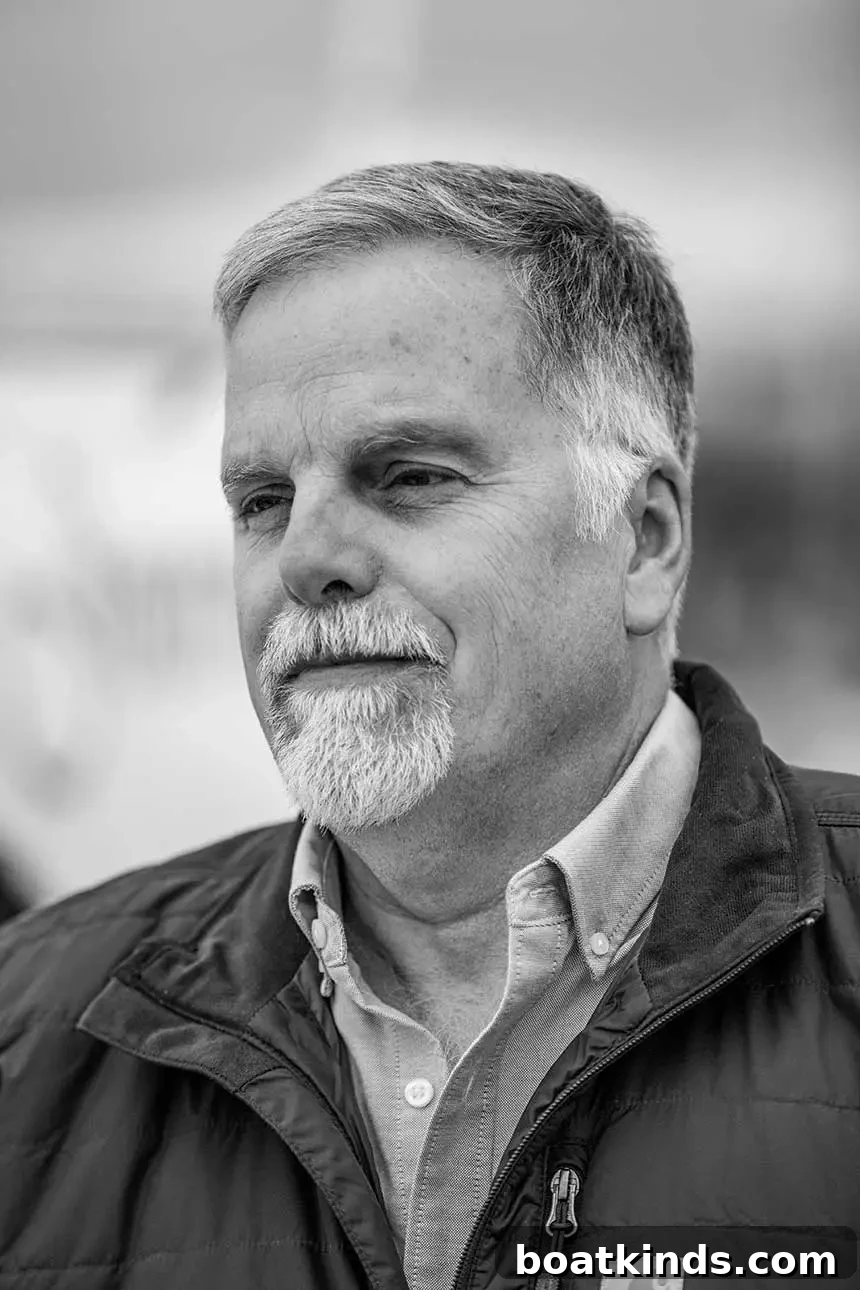
Larry Graf is a data-driven designer whose easy laugh and warm smile might not fit the stereotype of a pocket-protector engineer. Yet his passion is unmistakable: analyzing boat performance and turning those numbers into practical, seakindly designs. Graf has created numerous rugged, fuel-efficient power catamarans over a long career, from his early work founding Glacier Bay Catamarans to his current role leading Aspen Power Catamarans in the Pacific Northwest.
Graf’s love of boats and the coastal environment began in childhood. Born in 1957 into a family that spent a lot of time outdoors, he learned to fish, camp and explore Puget Sound. Early memories include an 18-foot Glen-L cuddy cabin with a 35-hp outboard his father built from a kit, and later family cruises in a 24-foot Tollycraft that opened up the San Juan Islands to the family when Graf was about 12. Those years seeded a lifelong interest in cruising and boat handling.
In high school Graf gravitated toward metalwork and engines, calling himself a “motorhead.” He learned fabrication in the school shop and took on jobs that paid for his first boats, beginning with a Hobie 14. Racing continued into college—Graf and his future wife, Cathy, campaigned a Hobie 16 competitively from late high school through their years at Western Washington University. They owned a variety of small boats, including power cats and a Catalina sailboat, all shaping Graf’s early understanding of hull behavior and handling.
At Western Washington Graf also led the Viking Car Program, a student engineering effort that focused on extreme fuel efficiency and lightweight construction. Those projects—ultra-aerodynamic, high-mileage cars that frequently won national competitions—left Graf with a deep appreciation for efficiency and disciplined engineering, lessons he later applied to marine design.
After college Graf worked as a service engineer at Subaru America before returning to the Pacific Northwest and joining Bayliner in 1982. At Bayliner he ran a division producing tens of thousands of marine windshields annually and supported engineering on production models. A subsequent role as director of engineering at exercise equipment maker Precor broadened his manufacturing experience, but boats remained central to his vocation and personal life.
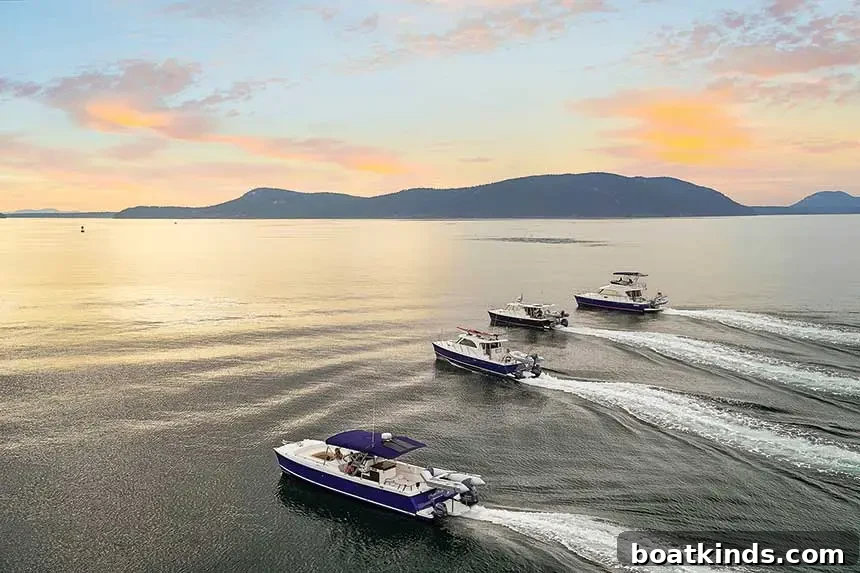
Cathy’s sensitivity to seasickness on pounding monohulls steered Graf toward catamarans. He set out to design production power cats that combined a soft ride, stability and superior fuel economy—reflecting both a practical and frugal mindset. In 1989 he launched Glacier Bay Catamarans and brought a 24-foot prototype into production as the Glacier Bay 248 in 1990. Over the next two decades Glacier Bay produced more than 3,000 hulls, earning a reputation for oceangoing toughness and efficient performance.
Graf and Glacier Bay boats logged notable long-distance achievements: in 1995 a Glacier Bay 260 became the first outboard-powered vessel to win the Bermuda Challenge, running nonstop from Norfolk, Virginia, to Bermuda. In 1998 two 26-foot Glacier Bays set an offshore record by traveling 1,328 miles from Oahu to Midway Island, winning the Pacific Challenge. Such voyages validated the company’s emphasis on seaworthiness and economy.
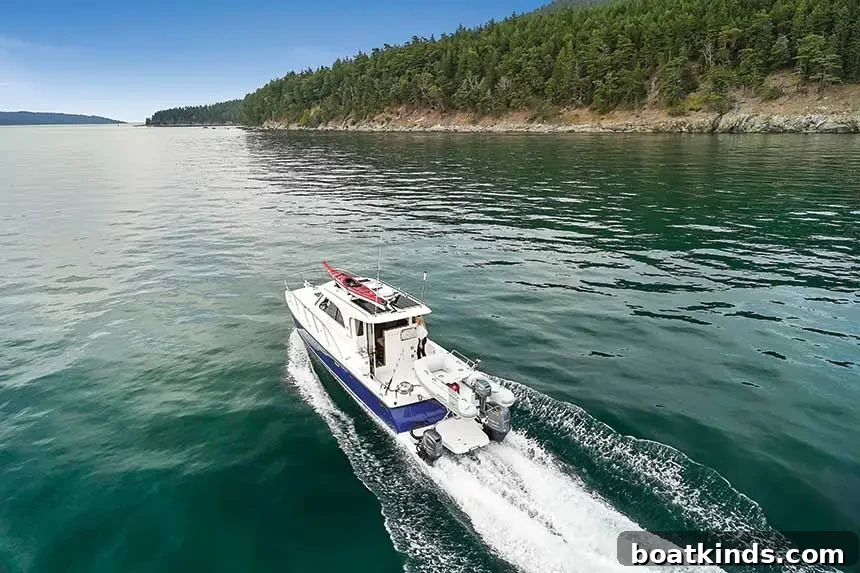
After selling his interest in Glacier Bay and looking for a new direction, Graf concentrated on pushing catamaran efficiency further. In 2007 he founded Aspen Power Catamarans with a distinctive objective: design hyper-efficient passagemaking power cats that often operate with a single engine. Graf had long noticed how slippery, low-drag cat hulls could be managed on one engine, and he pursued a bold approach—building proa-style asymmetric hulls with one hull about 35 percent smaller than the other to reduce drag and fuel use.
Early skepticism from colleagues gave way to success after initial modeling proved the concept feasible. Graf secured investors and built a 26-foot prototype that evolved into Aspen’s first production model, the C90. The production C90 was delivered at 28 feet LOA with a 10-foot beam, a comfortable saloon with galley and dinette, a lower master stateroom with an enclosed head and shower, and a berth in the smaller port hull. Powered by a 150-hp Volvo Penta D3 diesel, the C90 demonstrated striking efficiency—able to cruise at 16 knots while burning about 5.8 gallons per hour and reach a 21-knot top end.
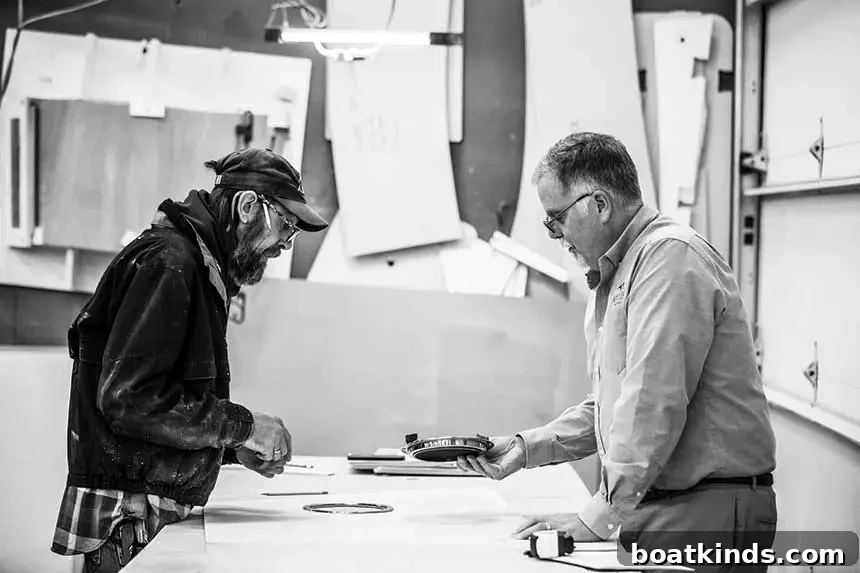
Aspen’s lineup expanded to include larger models—28-, 32-, 34- and 40-foot versions—designed with the Pacific Northwest cruiser in mind. Interiors are well protected against the elements, with heating available for year-round use. Materials like wood, leather and stainless steel, combined with ample glazing, deliver a warm yet airy living space suited to extended cruising in cooler climates.
Graf continues to test his designs in long-range voyages. In October 2018 he completed a 10,502-mile delivery from the Pacific Northwest to Annapolis aboard a 40-foot Aspen C120 with a 435-hp Volvo Penta D6, averaging a fast cruise near 17 knots and achieving a fuel economy of about 1.48 miles per gallon for the trip. He has skippered a C100 around Vancouver Island—a 650-mile non-refuel trip—and navigated the Mackenzie River to the Arctic Ocean in a 34-foot L107, averaging roughly 1.6 mpg against strong currents. These trips underscore the real-world efficiencies and seakeeping capabilities of Aspen’s asymmetric proa-influenced cats.
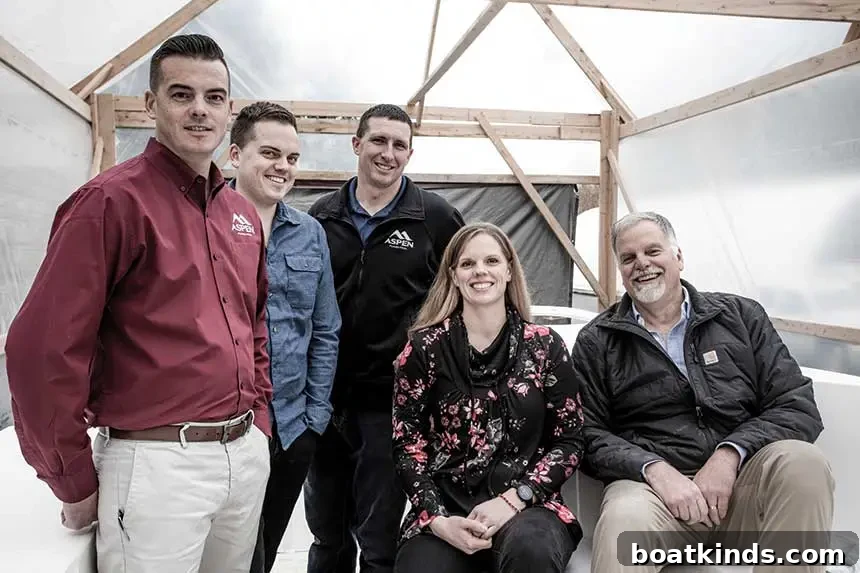
Today Graf balances product development with family life. His children are involved with Aspen in various roles, and he delights in time spent with his wife Cathy and their four grandchildren. Despite a career full of milestones—production success, offshore records and innovative single-engine catamarans—Graf keeps returning to the same simple pleasures: refining hull shapes, testing performance figures and making boats that help people cruise farther, cleaner and more comfortably.
This article originally appeared in the February 2020 issue.