Marine electronics today can connect you almost anywhere on the planet. Satellite coverage, compact digital devices and rapidly advancing technology mean there are now many more choices than there used to be, and your budget often determines which systems you install. The right mix of communication, navigation and emergency gear keeps you safe and makes voyages more enjoyable, whether you cruise the coast or head offshore.
Twenty-five years ago, when commercial GPS first became available, my crewmates and I pooled funds for a handheld Garmin prototype and a discounted Sony single sideband (SSB) receiver. Our setup also included a fixed-mount and a handheld VHF and a tiller pilot. For two years cruising the Caribbean and South America, we relied on SSB weather broadcasts in much the same way people now check social media—constantly—watching for changes in fronts, wind speed and direction. We added a 406 MHz EPIRB before crossing the Pacific through the Panama Canal.
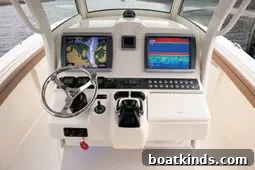
That modest kit would look sparse compared with what many boaters buy today. At boat shows, it’s easy to get carried away: multifunction displays, chartplotters, multiple radars and more. Some sailors, like my friend Steve Cannon, have proven that you can cross oceans with very little—Cannon made a solo Pacific passage in a 21-foot Mini Transat with only a VHF, a sextant and a nautical almanac. Others later chartered boats fitted with multiple GPS units that never left protected waters. The point is that needs vary widely.
BoatUS technical director Beth Leonard sums up the essentials: communication equipment (from a simple VHF to satellite radios), navigation tools (GPS/chartplotters and multifunction displays) and emergency signaling devices like a 406 MHz EPIRB. For many day sailors and coastal cruisers, a smartphone or tablet with chartplotting and weather apps plus a reliable VHF and a depth sounder are sufficient. “A lot depends on what you’re going to do with the boat,” says Ed Sherman of the American Boat and Yacht Council. If you’re sailing within sight of shore, you generally don’t need the same suite of electronics as offshore voyagers.
Even so, some traditional tools remain invaluable: a paper chart and a depth sounder are still practical and reliable backups when electronics fail or batteries die. For nearshore work, a handheld VHF with built-in GPS is a compact and effective communicator and safety tool. For routine coastal boating, a fixed-mount DSC (digital selective calling) radio adds emergency signaling capability and easier contact with rescuers.
Boaters who face frequent fog or limited visibility should consider radar regardless of how close to shore they plan to stay. Sherman keeps radar on his 18-foot center console for fishing near Newport, Rhode Island, where dense fog is common. Radar helps with collision avoidance and locating other vessels and fixed obstructions when visual cues are gone.
Offshore cruisers confront different communication and safety challenges. Once you’re out of VHF range, long-distance options become critical. Many sailors choose SSB radios for receiving weather broadcasts and communicating with other cruisers, while satellite phones and satellite communicators provide broader coverage and additional services. Satellite services have become more affordable and versatile; many allow weather downloads to a smartphone or tablet, and some devices—like the DeLorme inReach and the Iridium Extreme—offer built-in emergency messaging and two-way communication.
A 406 MHz EPIRB is highly recommended for offshore passages. If a boat you’re buying has an older EPIRB, check its classification: beacons that transmit only on 121.5 MHz (Class A, B and S) are no longer monitored. Make sure your EPIRB registration is current and listed in your name. NOAA maintains a beacon registration database at http://www.beaconregistration.noaa.gov — register or update your beacon there.
Hard-core offshore anglers often outfit their boats with extensive electronics: multiple fishfinders, advanced sonar transducers, long-range radars and SSB or satellite communications. Tournament fishing and long-distance runs benefit from up-to-the-minute satellite weather reports and high-resolution sonar. Large open-array radars can detect ship traffic and weather systems, as well as flocks of birds that often indicate nearby fish, which is why serious anglers invest in comprehensive gear.
Regardless of how much technology you install, electronics should complement, not replace, solid seamanship. Limited electronics in earlier days forced us to hone navigation and weather-reading skills, which made us safer and more self-reliant. Modern devices improve situational awareness and convenience, but they are most effective when used as part of good preparation, training and decision-making.
Finally, Leonard emphasizes one practical addition many cruisers overlook: a reliable autopilot. A good autopilot reduces fatigue on long legs, helps maintain course in variable conditions and can be invaluable in emergencies.
March 2015 issue