In 1960, Cornelius “Connie” Ray partnered with his college friend Arch Mehaffey to enter the fiberglass boatbuilding business. The two men took over an existing operation called Carr Craft — a builder that, at the time, even produced fiberglass coffins — and moved their new venture into an abandoned potato warehouse in Oxford, Michigan. From that unassuming start they began building small fiberglass boats and testing ideas that would reshape recreational boating.
Early Sea Ray production produced six models, the largest measuring only 17 feet, but Ray imagined a very different future. He founded his company on three core beliefs that guided every design and business decision: a heavier fiberglass hull yields a more comfortable, confident ride; the interior of a boat must offer comfort and style comparable to an automobile; and a wide, well-managed dealer network is essential to reach customers and support them after the sale. Those simple principles informed Sea Ray’s product development, styling, and distribution strategies.
To raise the design bar and generate consumer interest, Ray commissioned Harley Earl Associates to rework the look and feel of the boats. Harley Earl, renowned for automobile design and credited with shaping iconic cars such as the Chevrolet Corvette, brought automotive sensibilities to the boats’ interiors and exterior styling. New Sea Ray models adopted upholstered seating, automobile-style dashes and steering wheels, plush cabin finishes, and coordinated color schemes in blue, tan, and red. Above all, Ray insisted on quality control: “If it has my name on it, it has to be the best,” he declared, making craftsmanship a hallmark of the brand.
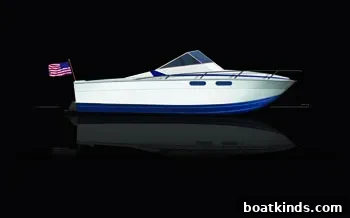
Those ideas culminated in the launch of the SRV 240 in 1968, a model that became Sea Ray’s flagship and a template for many future designs. The SRV 240 was offered in multiple configurations—Cuddy-Cabin, Weekender, Sportbridge, and Hardtop—so buyers could choose the layout that best suited their needs. Equipment options reflected the growing expectations of boating consumers: the availability of OMC and MerCruiser sterndrives modernized propulsion, while covered cockpits offered practical sun protection. Inside, buyers could select a wood-grain dash and wheel, teak flooring, a galley, and even a marine sanitation system, demonstrating that recreational boats could be both functional and refined.
Ray marketed Sea Rays much like automobiles, relying on a strong dealer network and attentive customer service to build brand loyalty. Dealers provided local access to sales, service, and parts, and that nationwide presence helped Sea Ray expand its reach beyond regional markets. This combination of design, comfort, and distribution proved successful: the SRV 240 not only became Sea Ray’s best-selling model of its era but also established the main template upon which the company would build and refine future products.
Author Jeffrey Rodengen captured the significance of the SRV 240 and its influence on the company in his history, Commanding the Waterways: The Story of Sea Ray. For a company that once produced boats no larger than 24 feet, Sea Ray’s trajectory over the subsequent decades has been dramatic. Today the brand is part of the Brunswick Corporation family and offers an extensive lineup—33 models ranging from the compact 19 SPX sportboat to the larger L650 motoryacht—showing how the company scaled its original ideas into a broad portfolio that serves diverse boating lifestyles.
Sea Ray’s early focus on heavier, sturdier fiberglass construction, well-appointed interiors, and a dependable dealer network set standards that many modern builders would follow. The SRV 240 era stands as a turning point when recreational boats began to prioritize ride quality, onboard comfort, and showroom-style finishes. Those priorities helped transform consumer expectations and contributed to the growth of boating as a leisure activity for a wider audience.
This article originally appeared in the December 2015 issue.