
Fishing the Cape Cod Canal: Early-Morning Topwater Striper Action
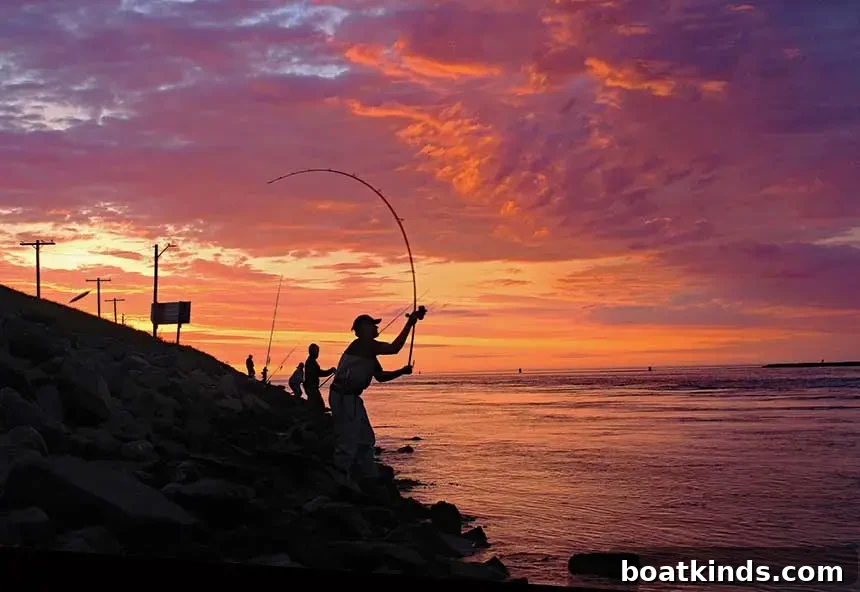
Years of fishing the Cape Cod Canal taught me an odd skill: I can set an alarm for any minute—2:37, 3:11, 1:55—and wake up five minutes before it goes off. It’s a defensive habit developed from sleeping beside a patient, understanding partner. My subconscious knows that keeping her asleep matters, even when I’m slipping out to chase stripers at ungodly hours.
Why the Canal Holds Fish
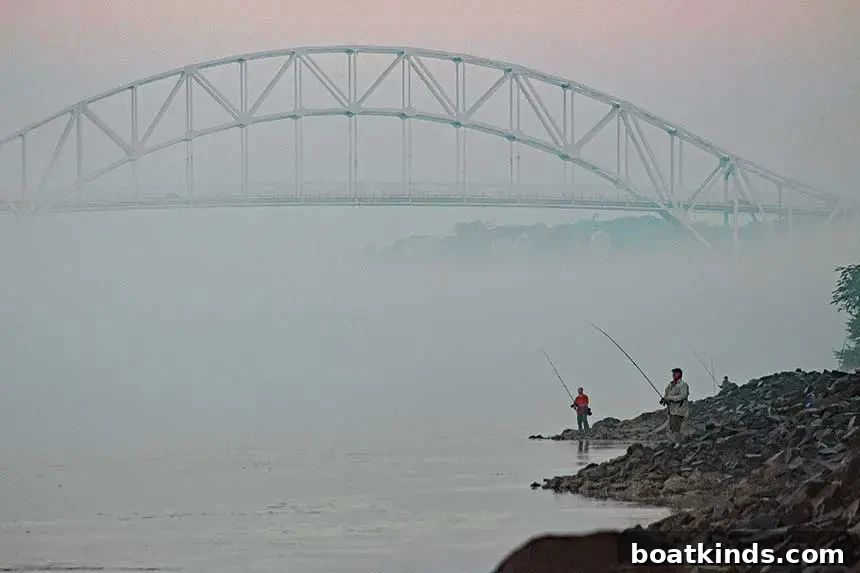
The Cape Cod Canal is a seven-mile man-made shortcut between Buzzards Bay and Cape Cod Bay in Massachusetts. Differences in tide timing and height between the two bays drive powerful currents through the canal—sometimes as fast as six knots—with extended slack periods of about 30 minutes as the flow reverses. Those currents funnel baitfish into the “Big Ditch,” and the bait, in turn, draws large numbers of striped bass. The canal is one of the East Coast’s biggest natural fish funnels.
Driving down MA-25 toward the canal, the promise of the coming tide builds anticipation. In the dark, imagination mixes with memory: the sun breaking behind gray clouds, night melting into morning, light revealing the same familiar edges of the bank. By the time I arrive, I’ve already lived the morning in my head.
Topwater Moments and the Bite
Mackerel V-waking near the bank, the sun lifting enough to justify switching to a topwater plug—the rhythm of a morning set in motion. A long cast upcurrent, a Guppy Pencil Popper splashing down and worked slowly in the slowing tide. The plug steps through an undulating rip, glides into the slick inside seam, and then the surface explodes. A small boil, then the hit—an explosion that shatters the quiet and brings everyone within earshot to life. The line hisses tight, tails flash, and the fish drive into current and structure.
Decisions are constant: cross the Bourne Bridge to fish the Cape side, or exit and stay on the mainland? On this morning I take the exit, pull into the Herring Run lot, and trade the solitude of the road for the ritual of preparation.
Canal Culture: Bikes, Gear and Preparation
The canal’s access roads run along each bank and prohibit motorized vehicles, so bicycles are the accepted mode of transport. The lot at Herring Run fills with anglers unloading gear into baskets on canal bikes—two to four rods held in PVC pipe, plugs, jigs, a coffee, maybe a doughnut. Faces are silhouetted in the dark; there’s a quiet, almost prickly demeanor—New England quiet—among the anglers who share that early-morning ritual.
Canal bikes are personalized and ingenious. Many have rear baskets and front-mounted carriers, PVC rod holders, and custom kickstand systems. A bent-wire center kickstand often gets a golf ball epoxied to its tip to prevent it sinking into soft grass. Backups range from lengths of shovel handle to notched hockey sticks that support the basket and dig in when wind threatens to topple the loaded bike. These grassroots modifications—passed from angler to angler—are reminders of surf-casting ingenuity in an increasingly commercial world.
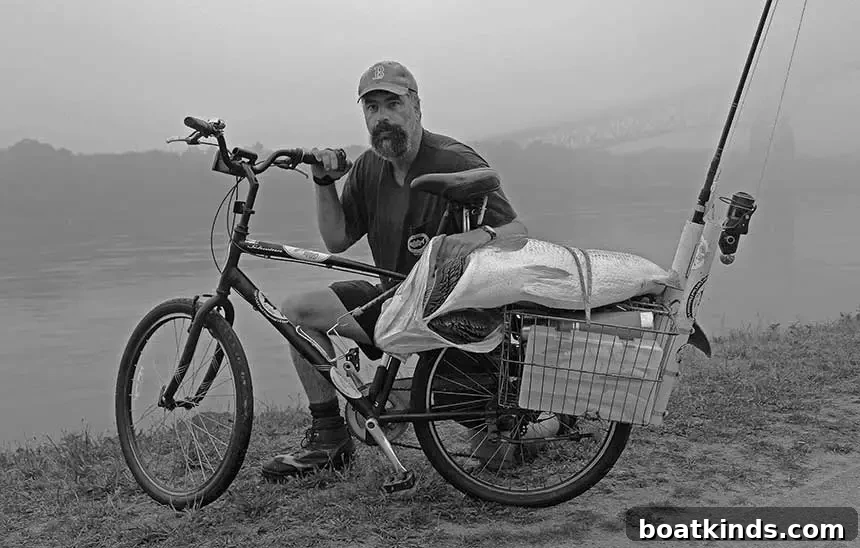
As riders spool out along the access road, the ride is a small prayer: that your spot is free, that your late start will be worth it. Later, when the bite is on, the ride becomes a mission—ride with the current to stay in front of fish. If the bite is off, the mission is to figure out where you went wrong.
Breaking Tides and Why They Matter
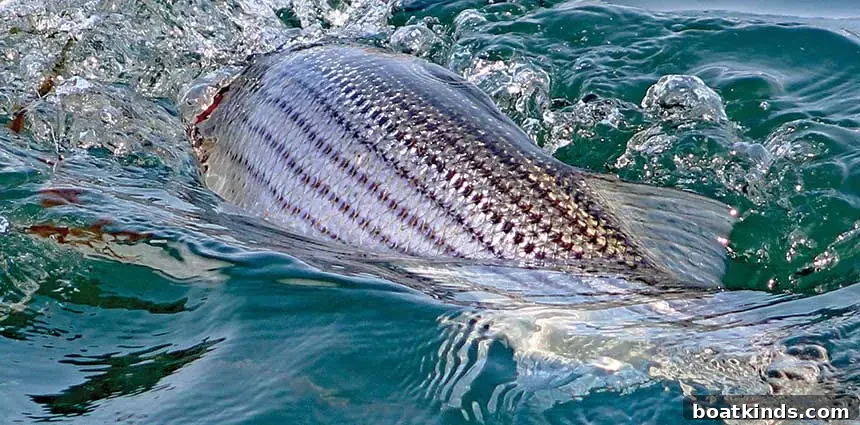
The canal’s geography and the spring striper migration combine to produce what many anglers call “breaking tides.” When the current turns east from Buzzards Bay within an hour of first light, the canal can pack with bait that cannot escape the current. As the water slacks and the bait attempts to run, predators converge. Scores of stripers—some 40 pounds or larger—can push through, smashing mackerel, herring, whiting and butterfish on the surface. That creates an aggressive topwater feeding frenzy ideally suited to pencil-popper plugs.
Wayne Hess, maker of Guppy Lures and an avid canal angler, explains: “That current packs the canal full of bait, and the bait can’t fight through the current to get out. When the water slacks and the bait tries to make a run for it, it’s a free-for-all.” For anglers chasing the thrill of surface strikes, those conditions are hard to beat.
Strategy and the Social Rhythm
There aren’t many true “secret” spots in the canal for plugging; certain rips and eddies hold fish longer and some places corral bait as tide speed increases. Generally, a portion of the fish enter in the dark and hold near the bottom until the tide slows. When sunlight penetrates the water, predators push bait up through the column and surface activity explodes.
On the best mornings, waves of bass move through, delivering vicious hits and epic fights. In depths of 36 to 50 feet with ledges, riprap and current to their advantage, big bass can make shore battles intense and memorable.
The atmosphere at the lots mirrors the morning’s outcome. Dave Daluz, a dedicated surfcaster and canal angler from Dartmouth, Massachusetts, observes the mood swings: “When the bite is on, they’re practically high-fiving, chest-bumping and slapping everyone that walks by. But when the bite is off, good luck making eye contact.” When the fishing is good, anglers linger, trade war stories and relive the morning; when it’s not, the lots cool quickly.
Why Anglers Travel for the Canal
The canal draws anglers from far and wide because of its rhythm and potential. John “J.M.” Basile from New Jersey says he’ll drive 300 miles for the experience: “Even though I live 100 yards from the Atlantic Ocean back home, I don’t think twice about the 300-mile drive to the canal. The canal is its own environment, with its own techniques and its own unique group of guys who fish it.” For many, the ride on a paved path, the changing scenery and the chance to hook a big striper make the trip irresistible.
By 9 a.m., the dust of a great bite settles into the tide. After a few last casts, anglers climb the bank, collect their bikes and return to the day. The lot hums with quick, breathless accounts—this is the adrenaline that draws us out of bed at impossible hours. For those who fish the Cape Cod Canal, the ritual, the engineering of canal bikes, and the violent poetry of topwater strikes are the reasons they keep coming back.
This story first appeared in the Fall 2017 issue of Angler’s Journal.