
Carpenter’s Boat Shop: A Place of Craft, Community and Renewal
To understand the Carpenter’s Boat Shop, you have to know the story of its founders, Bobby and Ruth Ives. Their vision was never just about building boats; it was about creating a place where people could find purpose, community and a disciplined, contemplative way of life.
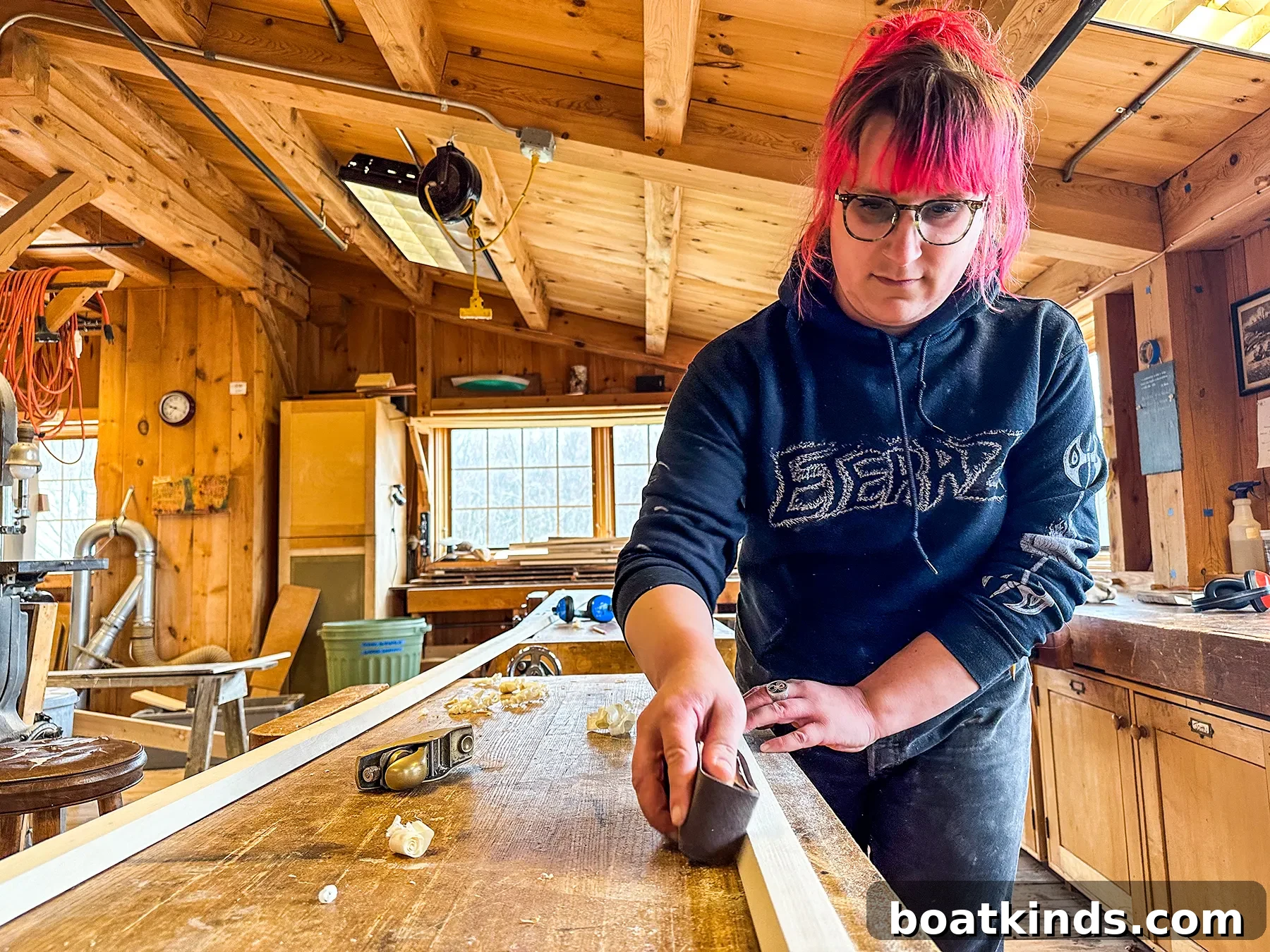
Founded in 1979 in Maine, the Carpenter’s Boat Shop stands apart from other wooden-boat programs by combining traditional craftsmanship with a communal, service-oriented mission. Bobby described the Shop’s aim simply: to teach boatbuilding while giving people the space “to think, to live without fear, to love without reserve, and willingly work for the benefit of others.”
Bobby’s motivation for creating such a place dates back to his college years at Bowdoin, and to his experience as a young person who had been orphaned. The help he received from others convinced him that collaborative work could be both restorative and formative. His studies in the history of religion at the University of Edinburgh reinforced that belief. In Scotland he encountered the Brethren of the Common Life, a devotional community whose daily life centered on work, worship, hospitality and service. That model of lived purpose, together with shared values he and Ruth both held, planted the seeds for their future community.
After marrying in 1973, the Iveses experimented with communal living on Monhegan Island. Ruth taught in a one-room schoolhouse while Bobby assisted; soon he began preaching at a local church. Their life there—simple, rigorous and service-minded—showed them how practical work and spiritual life could be integrated.
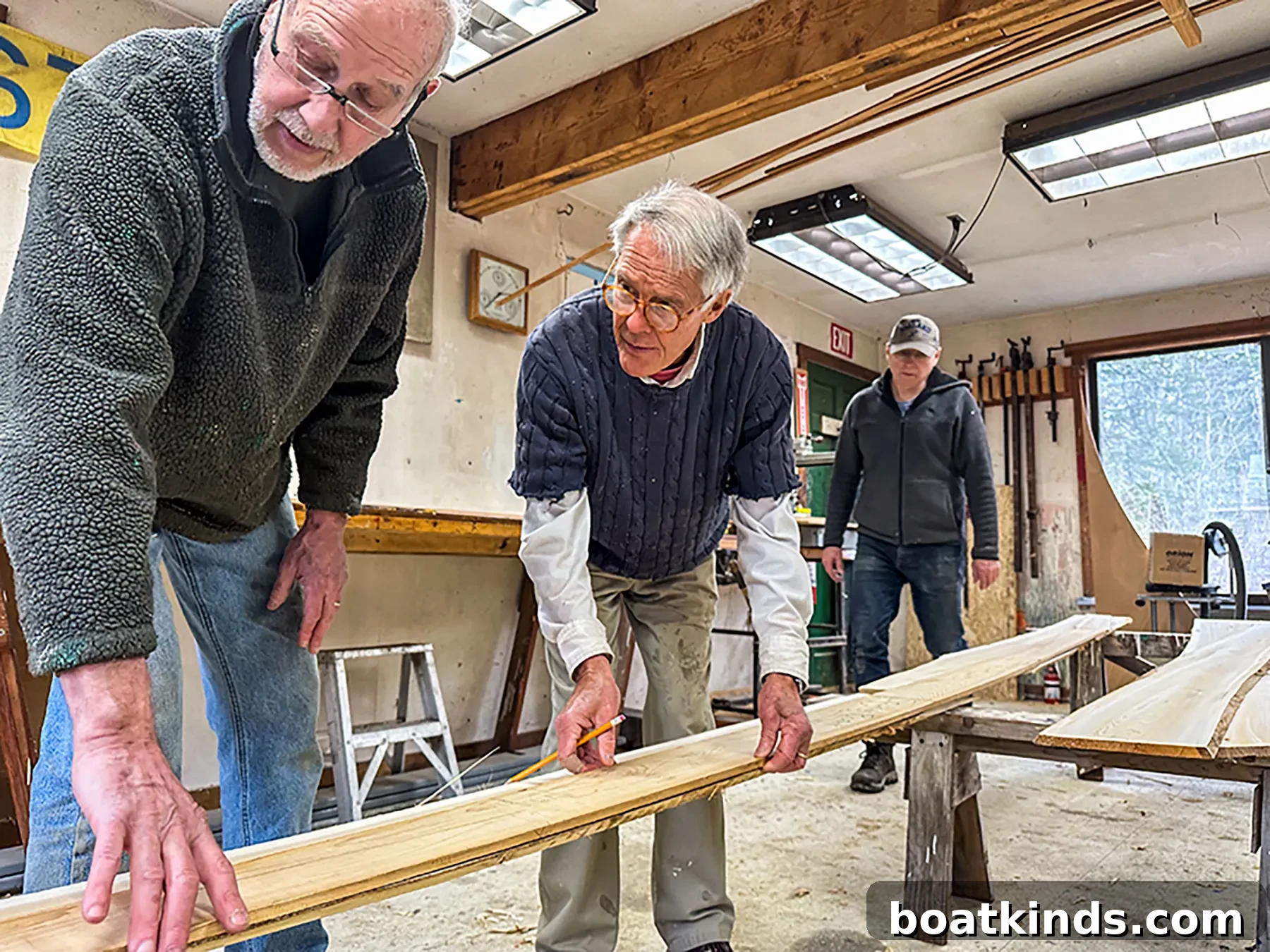
When Ruth’s teaching term ended, they pursued their shared plan more intentionally. They bought a house and barn on Louds Island in Muscongus Bay and set out to build a self-reliant, intentional community—digging gardens, clamming, making lobster traps and repairing boats. Bobby, who had grown up sailing and had built his first boat at nine from a Boy’s Life article, learned the finer points of boatbuilding on Louds Island from Norwegian immigrant Edward Salor. Salor taught him traditional, hand-tool methods, shaping both Bobby’s skills and his appreciation for manual craftsmanship.
Life on the island was austere and demanding. Every Saturday the Iveses rowed a peapod across Muscongus Sound to buy groceries, sleeping at Ruth’s parents’ home and then returning to preach and row back. This practical rhythm of work, travel and service underscored the couple’s commitment to hands-on learning and communal resilience.
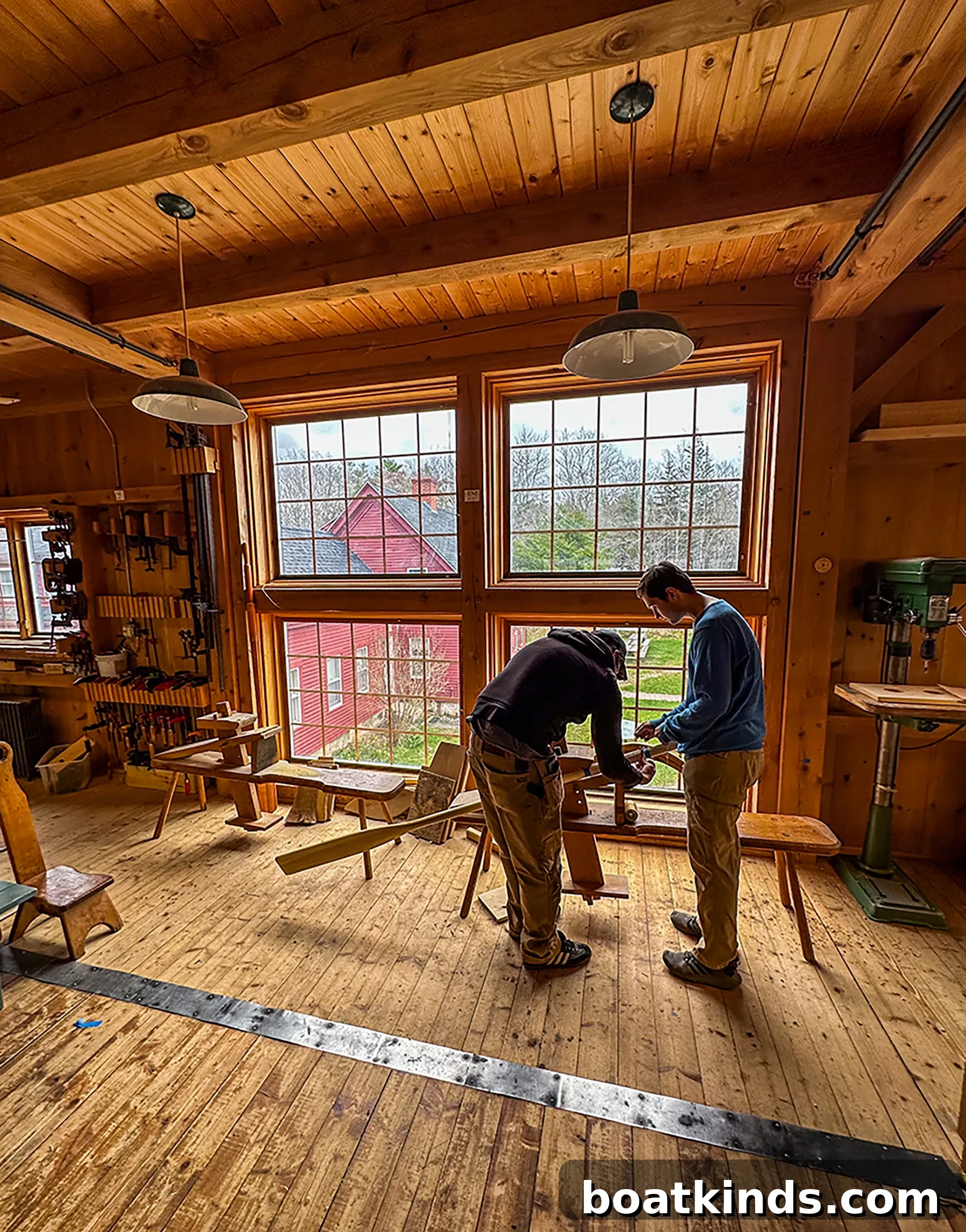
When Louds Island proved too isolated to sustain their plans, Bobby and Ruth moved to the mainland in Bristol and established the Carpenter’s Boat Shop on a small property with a house, barn and garage. The first residents included Bobby, Ruth, their daughter Hilda and Rex, a 16-year-old local boy who became the Shop’s first apprentice. Rex lived and worked with the family until finishing high school, later joining the U.S. Coast Guard and going on to significant maritime work—one of many examples of the Shop helping young people find stable careers.
Within months the community grew to several apprentices living and working together. The garage and barn were converted to living space and classrooms; Edward Salor taught alongside Bobby for the first eight years, focusing on hand-tool techniques and traditional methods. In 1980 the barn was transformed into a dormitory to accommodate the growing number of residents, and over time more buildings were renovated or added to support the program.
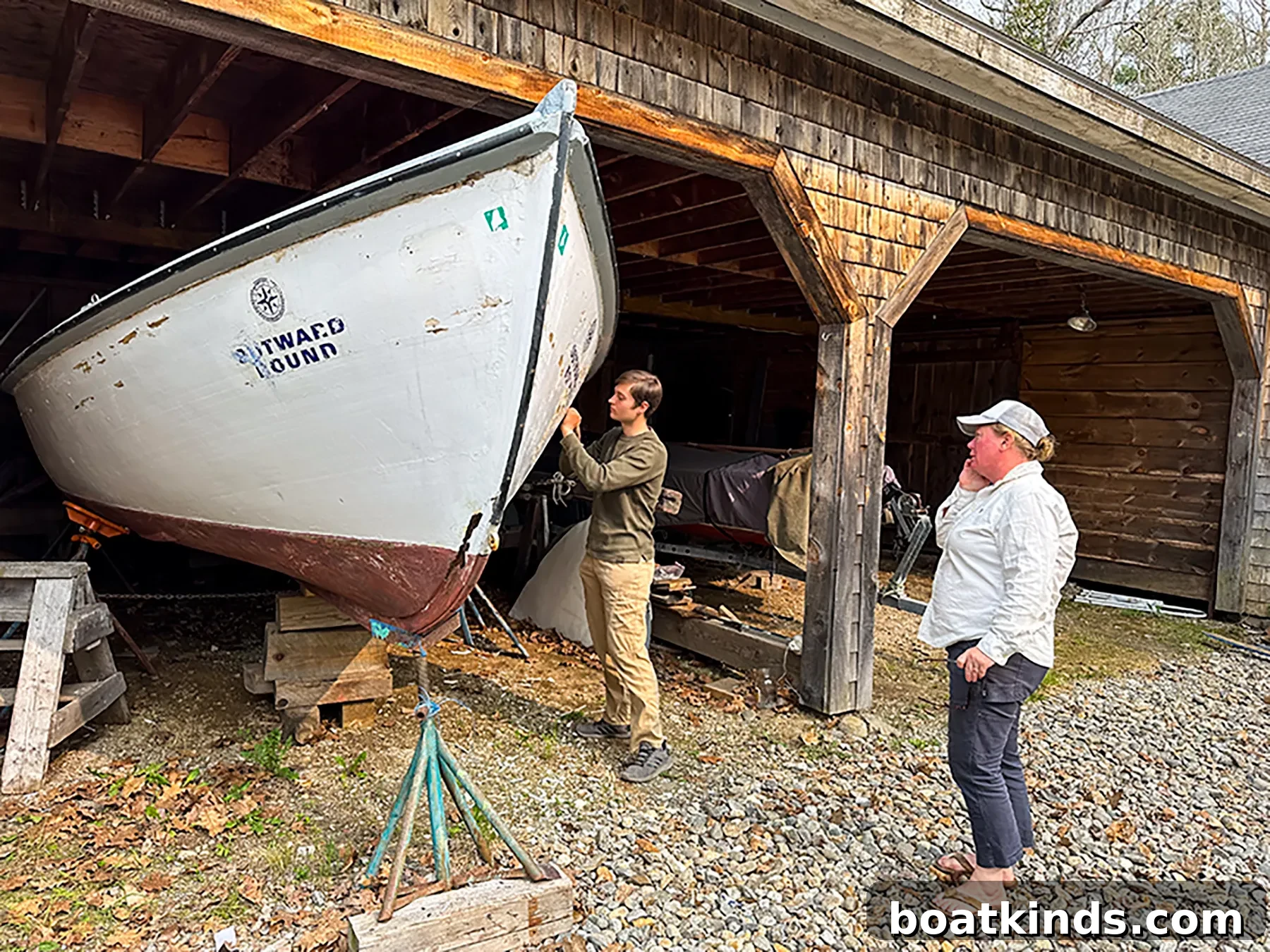
Each year new apprentices arrived—usually by word of mouth—joining a communal routine of shared labor from 8 a.m. to 4 p.m., shared meals and shared proceeds. Early on there was no tuition: food, lodging and instruction were provided, allowing people in transition to step away from their previous lives and learn craft and community. The Shop built and sold a range of traditional small craft—Nutshell prams, Catspaw dinghies, Matinicus peapods and Monhegan skiffs—while also restoring clients’ boats.
Over time the Carpenter’s Boat Shop expanded its facilities. In 1990 the team added a larger barn with a guest room that doubled as a non-denominational chapel and public gathering space. A temporary shed built for a restoration project grew into a dedicated restoration shop, and later additions accommodated machinery and storage.
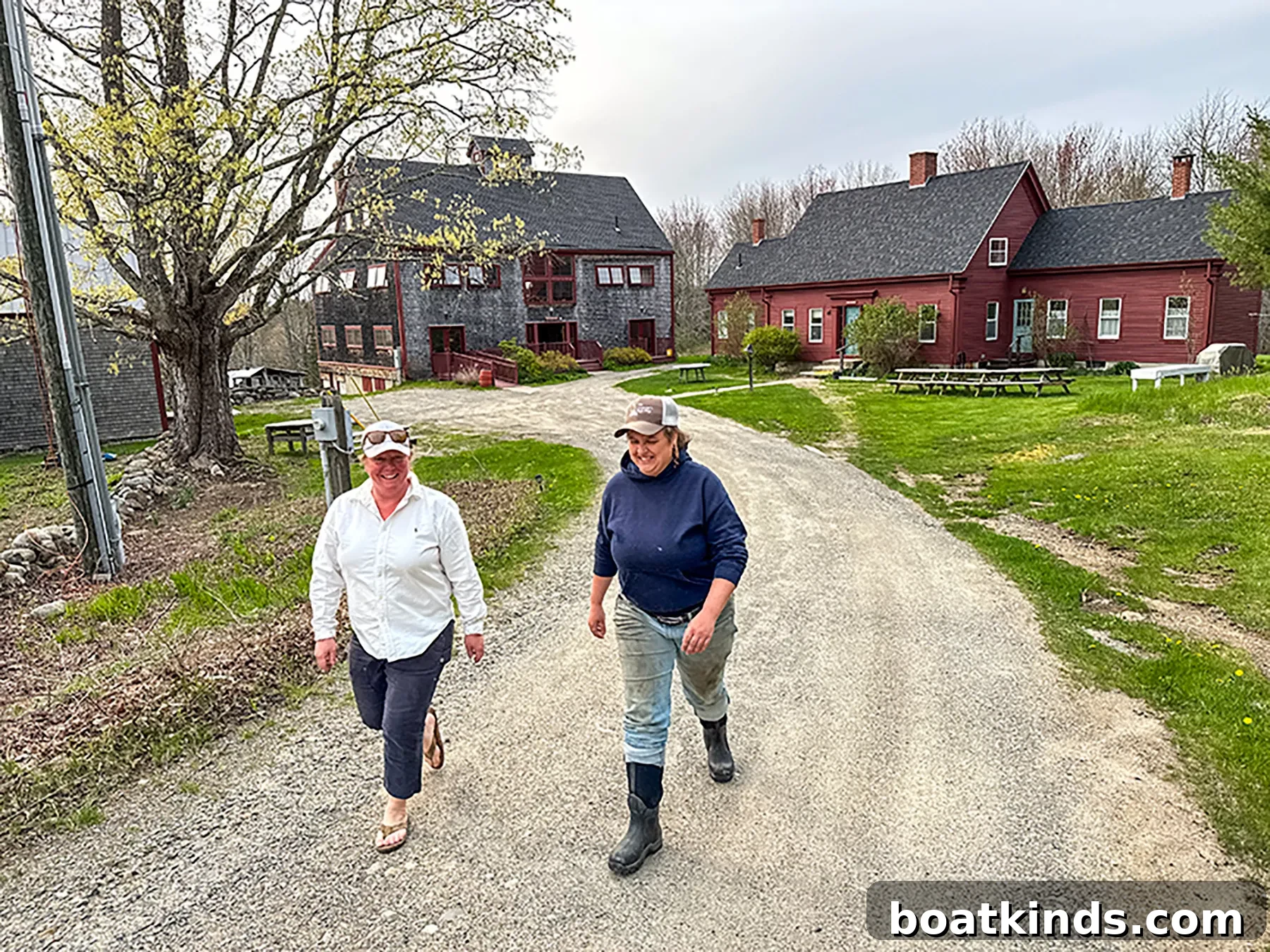
In 1999 neighbors offered a 150-acre farm at a below-market price. With help from local land trusts and community fundraising, the Boat Shop acquired 10 acres and several buildings, while the land trusts preserved the rest. The residents restored the farmhouse and rebuilt a collapsed barn into a new three-story post-and-beam workshop with a lofting floor, machine shop, paint room and library—transformations completed largely by residents and volunteers.
Leadership changed in the 2000s. Ruth died in 2006 and Bobby stepped down as director in 2011. His successor, Kim Hoare, brought deep commitment and a divinity background but the transition proved challenging, and after several years leadership shifted again. In 2021 the Board appointed Alicia Witham as director. With three decades of maritime and educational experience, Witham brought renewed focus and several new initiatives.
Under Witham the Shop reinstated the longer, nine-month apprentice program, returning to an extended format that begins in spring and runs through fall. She also launched a monthly virtual speaker series—initiated during the pandemic—to bring in perspectives from oyster farmers, artists, environmental advocates, authors and boatbuilders from across the country. Witham restored expedition sailing into the curriculum, organizing 10-day trips along the Maine coast that include 3-day island solos to build self-reliance, seamanship and teamwork. Hurricane Island donated a 30-foot pulling boat to support those expeditions.
Other innovations include an artist-in-residence program, partnerships with the local YMCA, and increased community service such as maintenance work for the Maine Island Trail Association. Witham emphasizes that the Shop’s mission reaches beyond apprenticeships: “We are so much more than that,” she says, noting the multigenerational nature of the community and the growing presence of women using tools and learning waterfront skills.
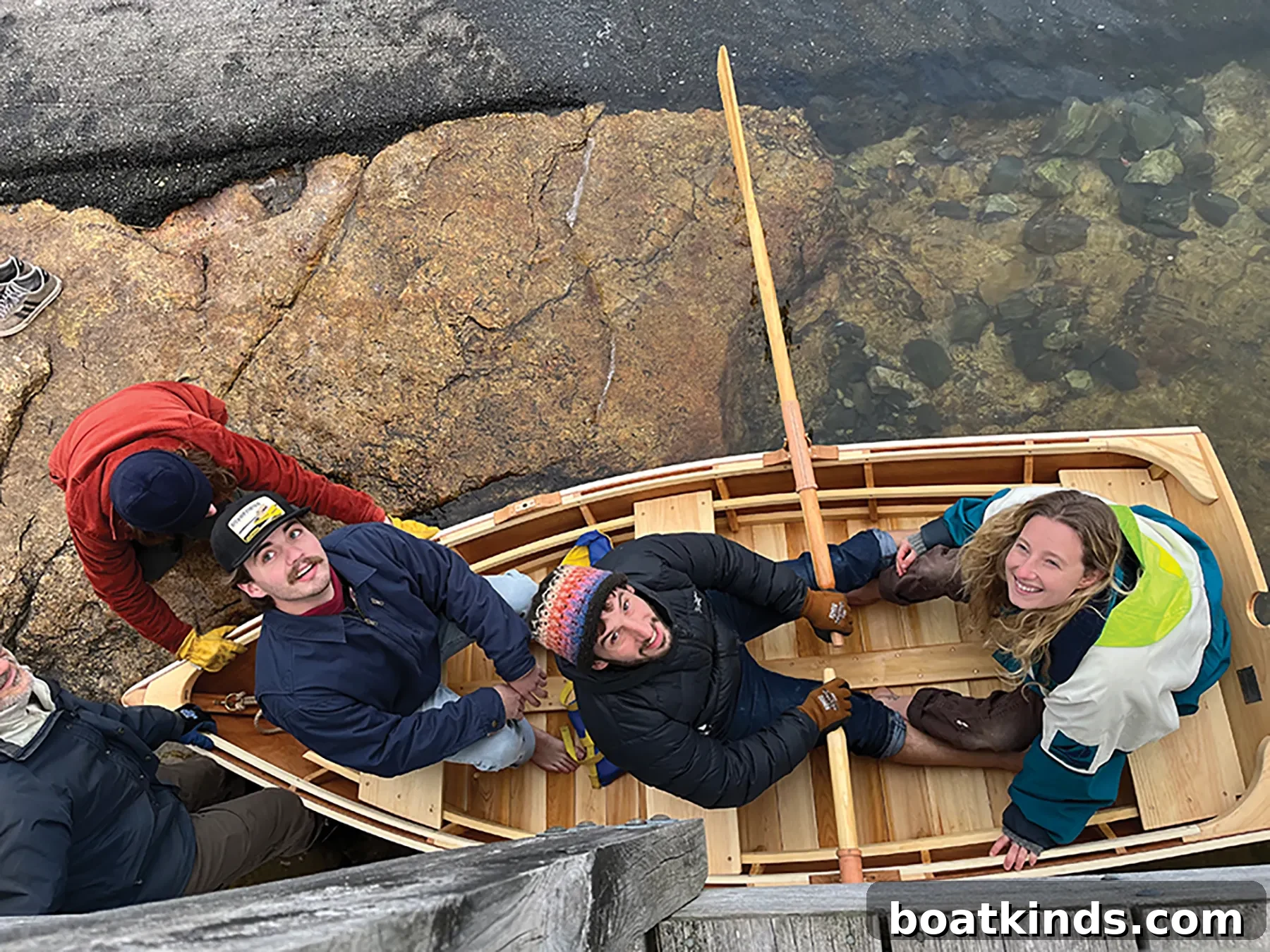
Apprentices come from varied backgrounds. In 2023 newcomers included Marina Ford, who left Brooklyn for the structure and outdoor access of rural Maine; Lily Morgan, an arborist drawn to working with wood; and Brian Keuneke, a former professional sailor seeking greater stability after starting a family. Apprentices quickly learn practical skills—building Monhegan skiffs, toolboxes and shaker chairs, fairing, priming and painting—and find that the communal living supports both practical learning and personal growth.
Bobby continues to teach voluntarily, guiding local residents through projects like building a Matinicus peapod. He emphasizes learning through mistakes: “You never learn anything by doing it right,” he says. While Bobby remains a cherished presence, he prefers the focus to be on the Shop and its current leadership.
Witham lives on campus with her partner and their dog, overseeing daily operations, fundraising and program development. Her approach blends respect for the Shop’s founding values with a drive to expand seamanship, education and community engagement.
“My entire career has led me here,” she says. “So much of what I’m passionate about is right here under this roof called the Carpenter’s Boat Shop.”
This article was originally published in the July 2023 issue.