Rose Dorothea — The Schooner That Won the Lipton Cup
Behind many historical victories are decisive moments and the people who nudged events into motion. In the case of the fishing schooner Rose Dorothea, it was Rose Dorothea Perry who persuaded her husband to enter a high-profile 1907 fishermen’s schooner race that would secure the vessel a lasting place in maritime history.
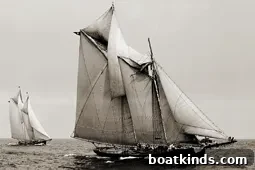
The prize at stake was more than local pride. British yachtsman and tea entrepreneur Sir Thomas Lipton sponsored a large silver loving cup known as the Lipton Cup, awarded to the winner, and the race also offered $650 in cash — a substantial purse at the time. Motivated by the cup and the cash prize, Captain Marion Perry of Provincetown, Massachusetts, put his schooner into the starting line among a fleet of working fishing schooners off Thieves Ledge by Boston Light.
The race course tested both seamanship and vessel design. Competitors followed a roughly 42-mile course: from the start off Thieves Ledge to Davis Ledge, on to Eastern Point off Gloucester, and then back. These races showcased the speed and handling of working fishing vessels as much as the skill of their crews, and they were important events in the maritime communities of New England.
Design and Performance
The Rose Dorothea was an “Indian Head” schooner, a type known for its distinctive rounded bow that allowed the hull to point closer to the wind than some other designs. She was relatively new at the time of the race — just two years old — measuring 108 feet overall. Built by designer Thomas McManus at the James and Tarr yard in Essex, Massachusetts, the schooner embodied the practical shipbuilding tradition of the region: vessels designed for both heavy fishing work and competitive speed when conditions allowed.
Throughout most of the race the Rose Dorothea held a competitive position, staying near the leaders as the fleet navigated the coastal shoals and changing winds. Her sailing qualities and the crew’s handling kept her in contention well into the final leg.
A Narrow Escape and a Stunning Victory
Then fate intervened: the Rose Dorothea lost her topmast. Captain Perry immediately ordered a course change to prevent further damage, and his skipper, John Watson, followed his command. At first it appeared the mishap would end their chances. Yet wind and tide can change everything. The schooner caught a favorable wind shift, and despite the “toothpick of a topmast” that remained hanging by the rigging, she surged forward. Against the odds, the Rose Dorothea crossed the finish line less than three minutes ahead of her nearest rival and won the Lipton Cup.
The image of the partially rigged topmast still aloft as the schooner pressed on captures both the fragility and resilience of these working boats and the seamanship that made their successes possible. That combination of a well-designed hull, an experienced crew, and quick judgment under pressure turned what could have been a disaster into a celebrated victory.
Legacy and Preservation
Decades later, Provincetown residents preserved the ship’s story. In 1977, Francis A. “Flyer” Santos and a group of local volunteers launched a ten-year effort to build a half-scale replica of the Rose Dorothea. The project, completed and dedicated in 1988, created a visible tribute to the town’s fishing heritage and to New England shipbuilding traditions. The replica is now housed in the Provincetown Library, where it stands as a tangible reminder of the region’s maritime past and the fishermen whose skill and courage defined coastal communities.
The Rose Dorothea’s story resonates for several reasons: it highlights the role of women like Rose Dorothea Perry in influencing events, it demonstrates the importance of seamanship and design in competitive sailing, and it shows how local communities successfully preserve and celebrate their maritime history. The Lipton Cup race itself remains a compelling example of an era when working vessels doubled as racing craft, and when local pride and international attention converged over small but fiercely contested trophies.
Originally featured in the December 2012 issue, the tale of the Rose Dorothea continues to be an evocative chapter in New England maritime history, remembered in photographs, written accounts, and the half-scale replica that keeps the schooner’s legacy alive.