Flares: Important Safety Clarifications and Best Practices
After publishing a short piece titled “5 Things You Should Know About Flares,” a longtime friend and colleague, Andy Chase of the Maine Maritime Academy, pointed out several important caveats I omitted. Andy has more than four decades of professional sailing experience, so when he raised concerns I re-evaluated my notes. The result below is a clearer, more practical guide to flare safety—covering inspection, storage, handling, and disposal—so you and your crew can stay safer on the water.
1. Follow the manufacturer’s guidance
There are currently only two manufacturers of USCG-approved marine distress flares in the United States, and they do not completely agree on how to handle expired pyrotechnics. Orion recommends discharging expired flares as a method of disposal, implying they consider that safe under controlled conditions. Drew Marine Signal & Safety advises against firing expired flares. Because the manufacturers’ recommendations differ, and because information about how flares change with age is limited, err on the side of caution. A flare one day past its expiration date is very different from a flare that is 15 or 20 years old, so treat older pyrotechnics with increased caution.
2. Inspect all flares regularly
Whether new or old, your flares should be inspected frequently. Look for physical damage such as cracks, dents, corrosion, leakage, or any other signs that the casing or seals have been compromised. Damaged flares are unsafe to use and should not be fired. Instead, handle them as hazardous waste: contain them safely and deliver them to a household hazardous waste collection site or other approved disposal facility. Many communities have monthly or scheduled drop-off points that accept old flares along with used oil, gasoline, and similar items. If you cannot locate a disposal program, contact your local authorities or marina for guidance.
3. Treat every flare as a dangerous pyrotechnic
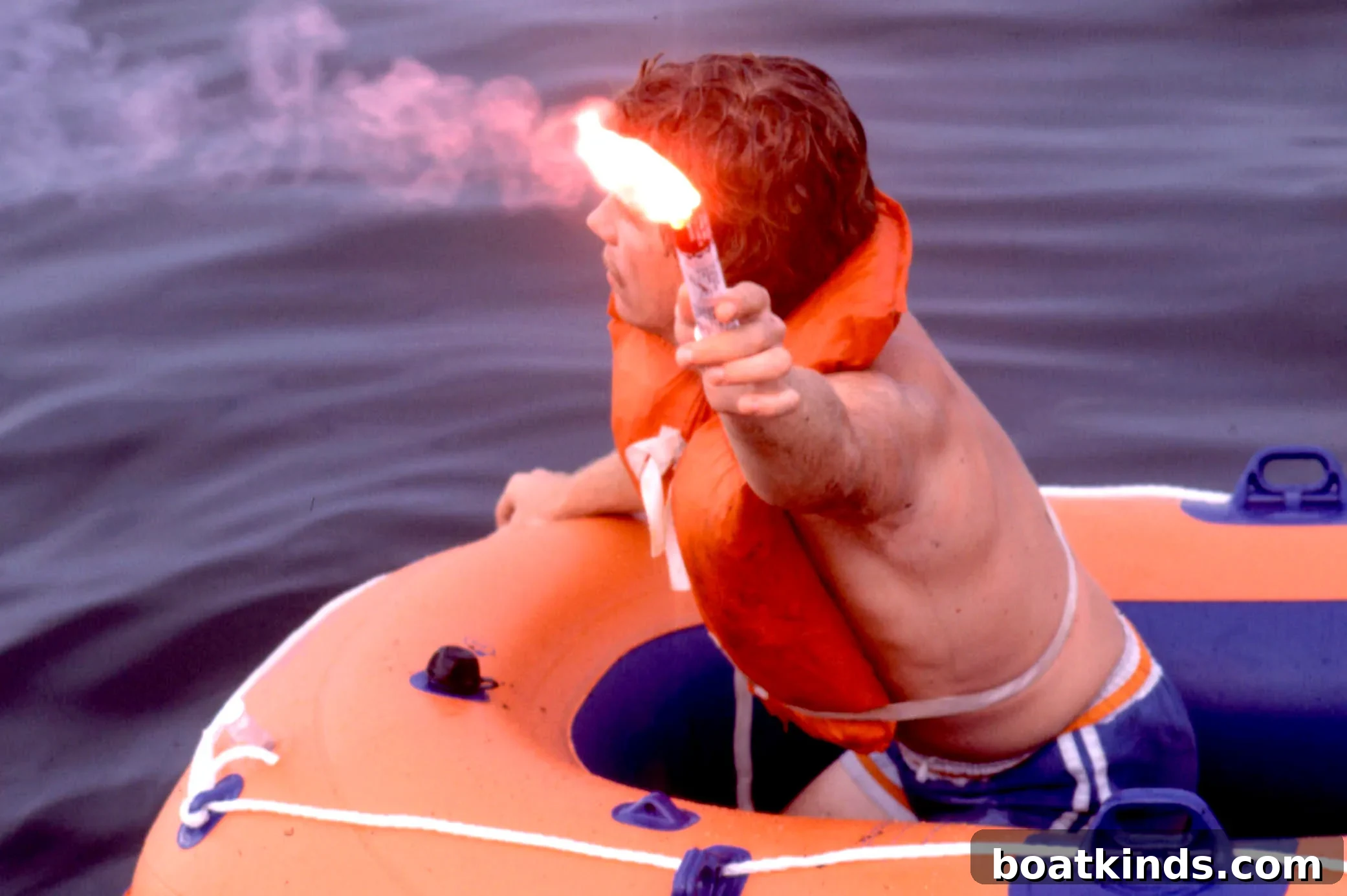
Flares are effectively small incendiary devices. Holding or aiming a lit flare is the same as holding an intense source of heat and light. Modern flares commonly produce between about 10,000 and 30,000 candelas of light. By comparison, a very bright LED flashlight might be rated around 2,500 lumens—meaning a top-end flare can be an order of magnitude brighter. Do not look directly at the burn; doing so can damage your vision. Wear protective gloves (leather is a good choice), safety goggles, and long sleeves when handling or launching pyrotechnic signals. Hold the flare away from your body and away from combustibles, and angle it so the burning end is pointed safely away from people and the boat. Never hand a lit flare to someone else; light it only when you are prepared to use and hold it properly.
4. Know how to launch your parachute or rocket flares
Many parachute and rocket distress signals use a “twist and strike” or “twist and pop” ignition system: twist the base to unlock the striker and then strike to launch. In an emergency, you won’t have time to read instructions or fumble with the package. Make sure every member of your crew knows the exact procedure for each type of flare carried aboard, practices the motions (unloaded and unlit), and understands the safest posture and aiming direction before leaving the dock. Regular familiarization prevents hesitation and mistakes when seconds count.
5. Storage and environmental considerations
Store flares in a cool, dry place protected from direct sunlight and extreme temperature swings. Keep them in their original containers or a dedicated, labeled compartment where they can’t be jostled or crushed. Avoid storing flares near fuel, batteries, or other potential ignition sources. Check expiration dates periodically and rotate supplies if you keep multiple sets on hand. If a flare shows signs of age—corrosion on the casing, a weakened seal, or any other deterioration—do not rely on it as your emergency signal.
6. Disposal and responsible choices
Disposal practices vary by community. If you choose to dispose of expired flares by firing them, follow the manufacturer’s guidance exactly and only do so in a safe, controlled environment away from people, structures, and vegetation. However, because manufacturers disagree and because the integrity of older pyrotechnics can be unpredictable, many safety-minded boaters prefer to use hazardous waste disposal channels. When in doubt, consult local waste management or maritime authorities for the recommended procedure in your area.
Your safety—and the safety of anyone you might need to signal—depends on respecting pyrotechnic distress devices for what they are: powerful, potentially dangerous tools that require inspection, proper handling, and responsible disposal. Take the time now to inspect your flares, brief your crew, and confirm how you will dispose of expired devices. Don’t play with fire; be safe while trying to stay safe.