
Hurricane Irene: Dry Air Collapsed the Eyewall While Heavy Rain Flooded the East Coast
Computer models, satellites, and advanced instruments have greatly improved hurricane forecasting, yet Hurricane Irene — long feared to be a storm of historic intensity — surprised forecasters. Instead of becoming the catastrophic wind-and-surge event many predicted, Irene weakened unexpectedly and became primarily a massive rainmaker for large sections of the East Coast.
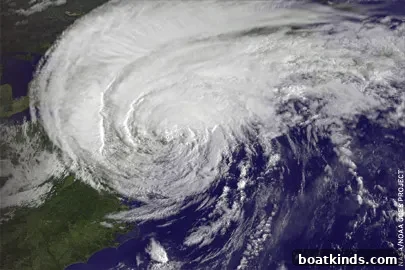
Meteorologists trace Irene’s unexpected weakening to a sudden infusion of dry air at a critical phase of its development. Jeff Masters, director of meteorology at Weather Underground, followed the storm closely and explains that a small upper-level low briefly funneled southwest dry winds into Irene as it was replacing its eyewall. That dry air penetrated to the storm’s core and caused the eyewall to collapse, undermining the storm’s ability to intensify.
When an eyewall collapses, the engine that fuels a hurricane — warm, moist air spiraling in at low levels, rising, cooling and condensing into heavy rain while lowering central pressure — is severely disrupted. In Irene’s case the damage was most pronounced on the southwest flank, which became the storm’s weak side. After that intrusion of dry air, Irene never reformed a strong eyewall and failed to regain the intensity many models had forecast.
Forecasts had anticipated Irene strengthening to a Category 4, but its peak U.S. landfall intensities were far lower. Irene first struck the continental United States near Cape Lookout, North Carolina, as a Category 1 hurricane with 85 mph winds, then weakened to 75-mph winds at Little Egg Inlet, New Jersey, and by the time it reached Brooklyn, New York, it had been downgraded to a 65-mph tropical storm. “We lucked out, for sure,” Masters observed, referring to the avoided worst-case wind scenario.
Despite diminished winds, Irene’s enormous size and prodigious rainfall produced severe flooding across parts of the Mid-Atlantic and the Northeast, including New Jersey and Vermont. Because the storm spanned hundreds of miles and pushed its surge at the time of a new-moon high tide, forecasters were especially concerned about coastal inundation, particularly in New York City. Ultimately, surge was less destructive than feared because the storm’s winds decelerated and the most compromised, dry-air-affected west side of the storm was the portion that struck many Mid-Atlantic communities.
Irene’s heavy rainfall was driven in part by unusually warm coastal waters. Masters notes sea-surface temperatures along the path were 1 to 3 degrees Celsius above average, increasing evaporation and adding moisture to the storm. Some areas reported as much as 20 inches of rain, though 6 to 12 inches was more typical. That volume of rain turned small streams into raging torrents and produced widespread freshwater flooding that became the storm’s primary hazard.
The Irene episode highlights a persistent challenge in hurricane science: track forecasts have improved far more than intensity forecasts. Steering currents — large-scale features such as ridges and troughs — tend to be easier to predict, so track errors have fallen substantially. Masters points out that 24-hour track errors have decreased from about 105 miles in 1990 to around 50 miles. Intensity forecasting, however, has seen little similar improvement over the past two decades because factors that control strength can be subtler and smaller in scale, such as the compact upper-level trough that injected dry air into Irene and disrupted its circulation.
Irene’s origins date to Aug. 15, when a tropical wave emerged off western Africa near the Cape Verde Islands. That region typically spawns waves during the African monsoon season: hot, rising air over land draws moist Atlantic air westward, generating clusters of thunderstorms that can organize into tropical cyclones. By Aug. 20 a coherent circulation and sustained convection prompted the National Hurricane Center to name the system Tropical Storm Irene, the ninth named storm of the season, with surface winds around 50 mph.
Early on, forecasters were cautious because mid-level dry air and moderate wind shear threatened the storm’s survival. As Irene moved westward, however, it entered a moister environment with warm sea-surface temperatures — some readings near 86°F — and lighter shear, conditions that favored intensification. By Aug. 21 forecasters began to identify a potential threat to the eastern Caribbean and the U.S. East Coast. A trough along the East Coast and a weakening Bermuda high set the steering pattern that eventually guided Irene on a north-northwest track parallel to the coast.
That interplay between the Bermuda high and the East Coast trough is key to steering storms that originate near Africa. The timing and strength of the trough determine whether a storm continues west into the Caribbean or turns north toward the U.S. coast. In Irene’s case the trough arrived at the right time to steer the storm northward, narrowly sparing Florida while keeping the Bahamas and the Mid-Atlantic squarely in Irene’s path.
After Irene, forecasters turned attention to Hurricane Katia in the central Atlantic, which also battled dry air and moderate shear. September and October are typically the peak months of the Atlantic hurricane season, and seasonal outlooks predicted an active period. At the time, NOAA forecast 19 named storms with 10 hurricanes, and some analysts projected that 2011 could approach the extremes of 2005 in overall activity.

Related
See related story: Hurricane alarm too shrill?
This article originally appeared in the November 2011 issue.