
The Long Way Home: How the Tall Ship Europa Sailed 10,000 Miles During the COVID-19 Lockdown
This is not how the voyage was meant to unfold for the Dutch barque Europa and her crew. In the southern summer of 2020 they had planned to continue west across the Pacific—visiting Easter Island, Tahiti and Tonga on their way to Australia. Instead, the global spread of COVID-19 closed ports and borders and left the 184-foot steel-hulled barque stuck and quarantined in Ushuaia, Argentina, at the southern tip of South America.
Captain Eric Kesteloo and his permanent crew of 18, drawn from a dozen countries, found themselves effectively marooned aboard their own ship. They had reached Ushuaia just in time to get guest crew to flights out of the country before the port shut down, but thereafter no nation would accept a visiting crew or allow the vessel to call at port. With passengers gone and no clear way to continue the planned itinerary, the team faced a stark choice: remain indefinitely in the Beagle Channel or attempt to sail home.
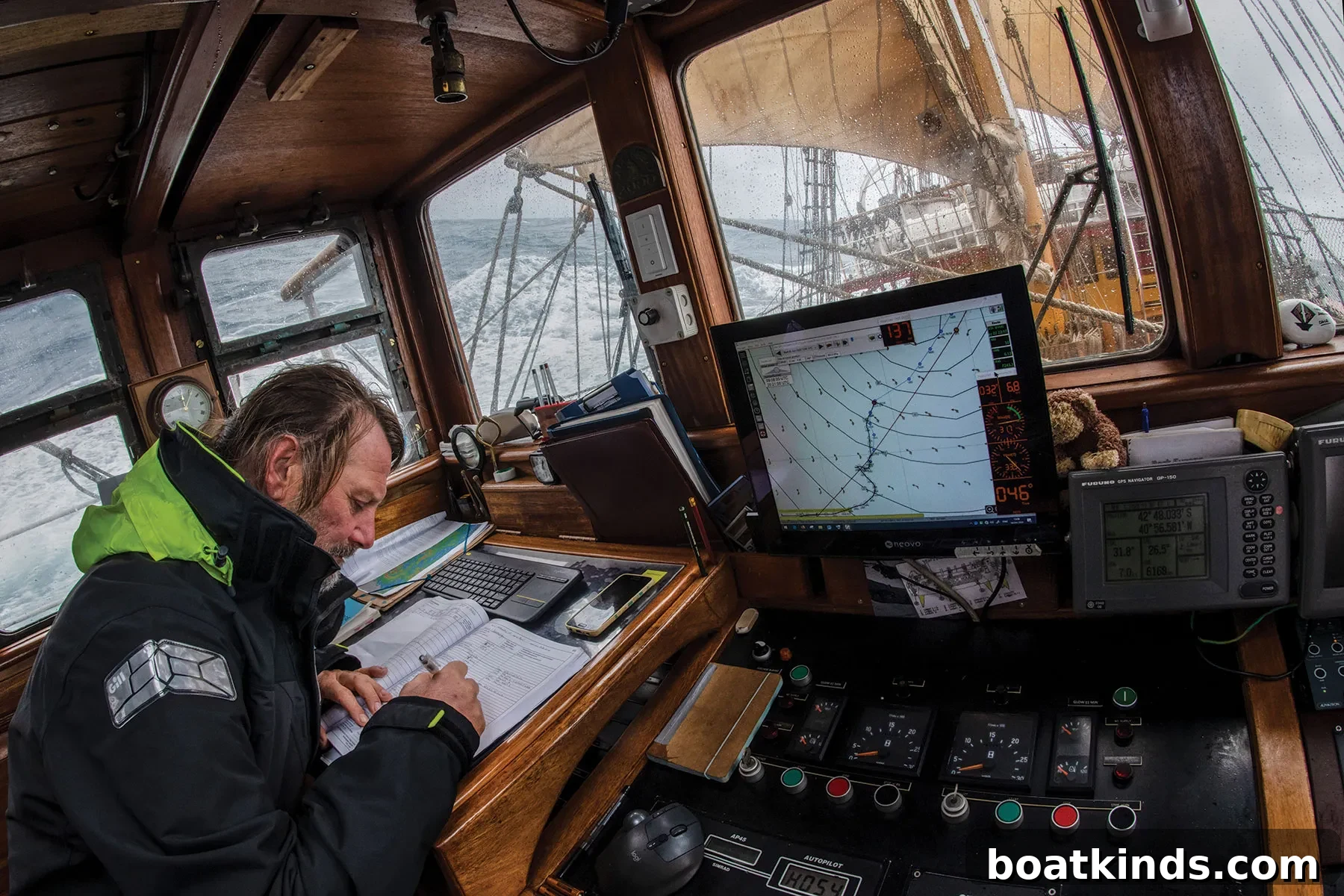
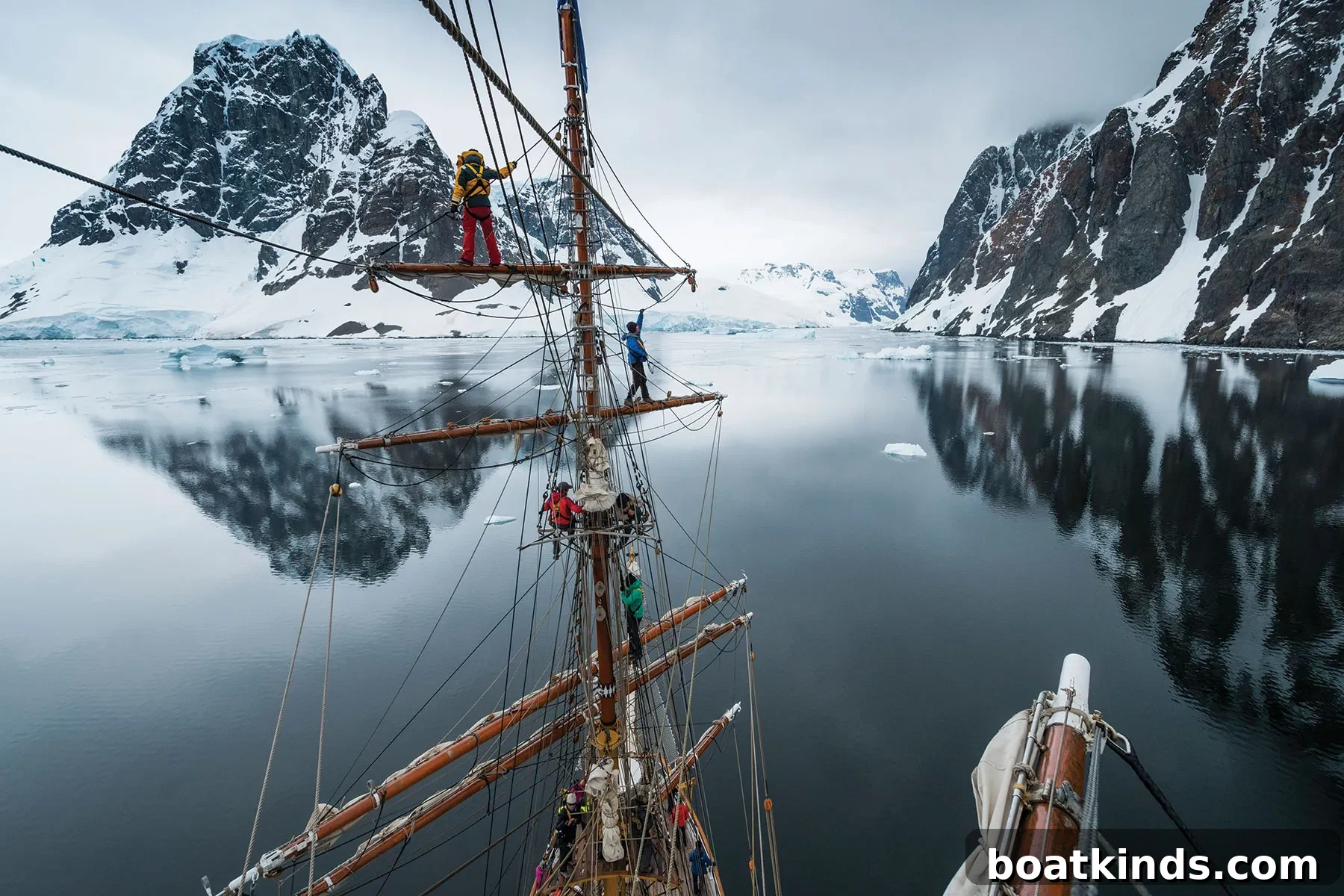
The decision was made to attempt a nonstop, wind-powered return to their homeport in the Netherlands—roughly 10,000 miles away. The Europa is a vessel from another era, launched in Hamburg in 1911 and used as a lightship for decades before being converted into a barque-rigged sail training ship. Since 2001 she has followed traditional trade-wind routes and regularly visited the Antarctic, with frequent refits in Cape Town and voyages across the Southern, Indian, Atlantic and Pacific oceans.
On March 27, 2020, the ship left Ushuaia, turned east out of the Beagle Channel and set a course for Europe. This voyage would have no paid voyage crew to share watchstanding, no scheduled calls at South Georgia, Cape Town, St. Helena, Tristan da Cunha or the Azores—just the permanent crew, provisions for the long passage and a determination to rely chiefly on sail. With concerns that supplies loaded in port might introduce the virus, the crew took strict precautions while provisioning and preparing to be at sea for weeks on end.
The first weeks were a study in extremes. A powerful low-pressure system pushed the ship 1,000 miles closer to their destination and delivered what Captain Kesteloo later described on the ship’s weblog as some of the fiercest sailing he had experienced—wind gusts to 62 knots, breaking seas more than 20 feet and occasional rogue waves. The crew hand-steered for long periods, soaked through repeatedly while trimming sails and coiling lines, and felt the ship heel so far that an iPad used for navigation flipped its screen orientation.
Damage came with the thrills: a heavy wave bent a steel freeing port with a noise the captain compared to a truck striking the hull. Still, the crew cherished the raw, shifting personality of the ocean. “One moment a roaring beast, the next a purring cat,” wrote expedition guide Richard Simko, capturing how the extremes made them feel alive and connected to the voyage.
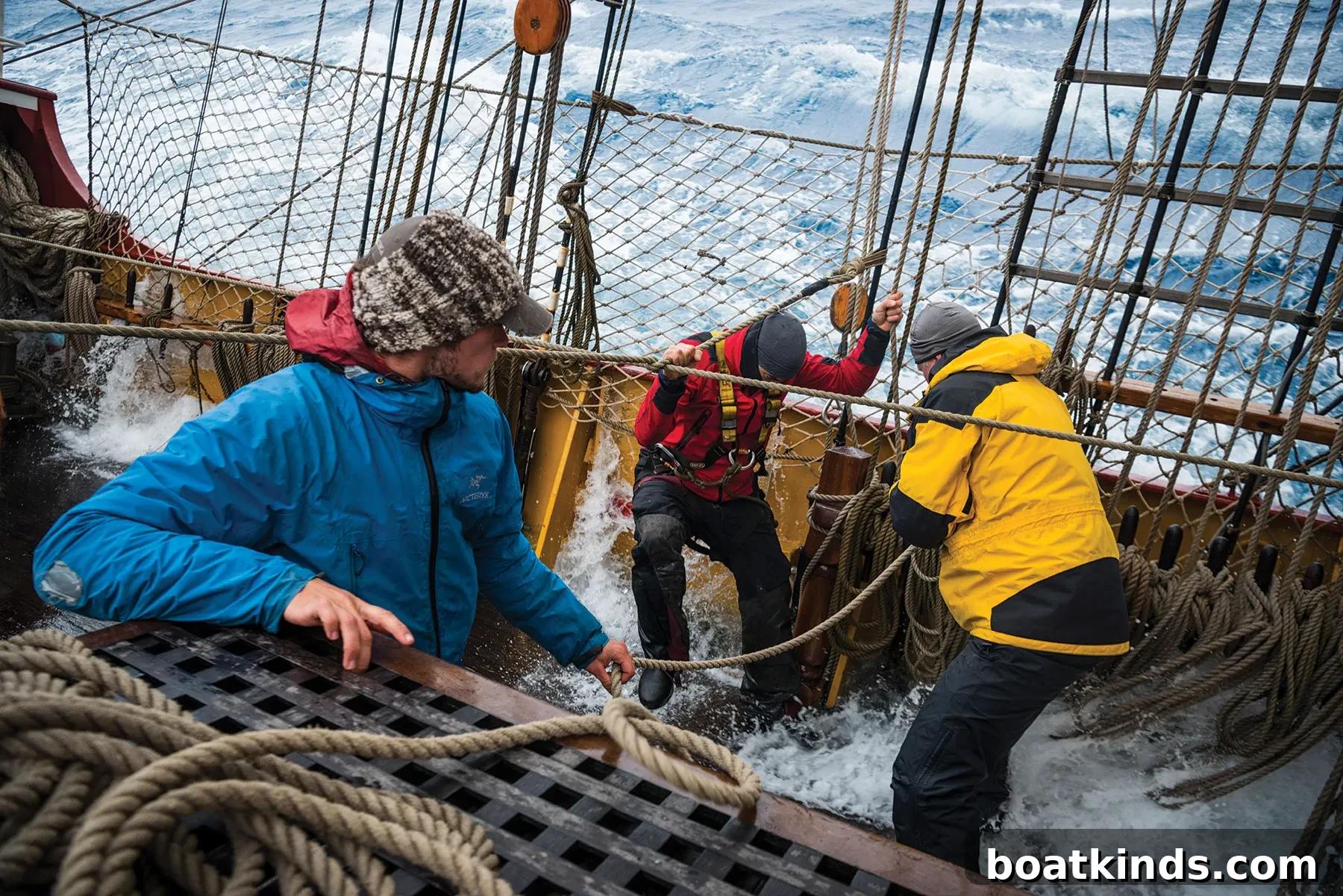
Life at sea alternated between hard labor and small comforts. When weather allowed, the crew dried clothing, repaired sails, greased mast fittings, read, celebrated birthdays and fished for fresh protein. In dead calms they hove to and even swam in the open ocean. On clear nights, stargazing became a communal ritual that temporarily erased the isolation of long watches and endless horizon.
After the initial low, they found themselves in the Horse Latitudes where wind can die completely. For nearly a week at 21 degrees latitude they experienced prolonged light airs—what bosun Krista Swedberg called “epic slow.” Sailing progress slowed to a crawl, sometimes under a single knot, a condition the crew wryly dubbed “snailing.”
Fresh winds returned and helped them cover large stretches of latitude, but by May 1 the ship had sailed some 4,000 miles and fallen about ten days behind schedule. Fresh supplies were running low and the crew was tired from constant sail handling and wet gear. When word came that Argentina’s lockdown would be extended into September, they felt affirmation that choosing to return to the Netherlands was the right call. “We are now chasing the wind to bring us closer to where we all want to be,” Simko wrote then—home.
As they crossed the Doldrums, the crew faced weak winds and heavy showers. Captain Kesteloo weighed the option of burning diesel to push to reliable trade winds against the seafaring ideal of making the passage under sail alone. A compromise followed: after days of tedium he declared a Doldrum Appreciation Day, hoping a pause in maintenance might improve morale and convince the more romantic members to allow limited engine use if necessary.
Ultimately, the crew ran the engines briefly on May 30 after roughly 7,500 miles and 63 days of sailing, partly because one crew member had to reach the Netherlands by a set date. The sound of diesel after so long under sail felt strange to everyone; even those who favored motoring regretted that they could not complete the entire voyage by sail alone. Over the final weeks they alternated between sailing and motoring as winds came and went.
Approaching northern waters brought renewed weather challenges. Another low system lashed the decks with 40-knot winds and 50-knot gusts, forcing crewmembers to don foul weather gear and harnesses while maintaining the helm in wet, cold conditions. Still, signs of land multiplied—more seabirds, increasing ship traffic—and the crew’s excitement grew as Europe drew near. By mid-June the sense of nearing home was palpable; the crew joked they could almost smell land.
On June 17, after 81 days at sea and 10,058 miles under keel, Europa arrived in Scheveningen. Family and friends met the ship on the beach with socially distanced greetings, fresh fruit and a traditional Dutch treat—a case of salted herring—to welcome them home. Their nonstop, largely sail-powered voyage had tested seamanship, endurance and camaraderie, and it proved a memorable answer to an unprecedented global crisis.