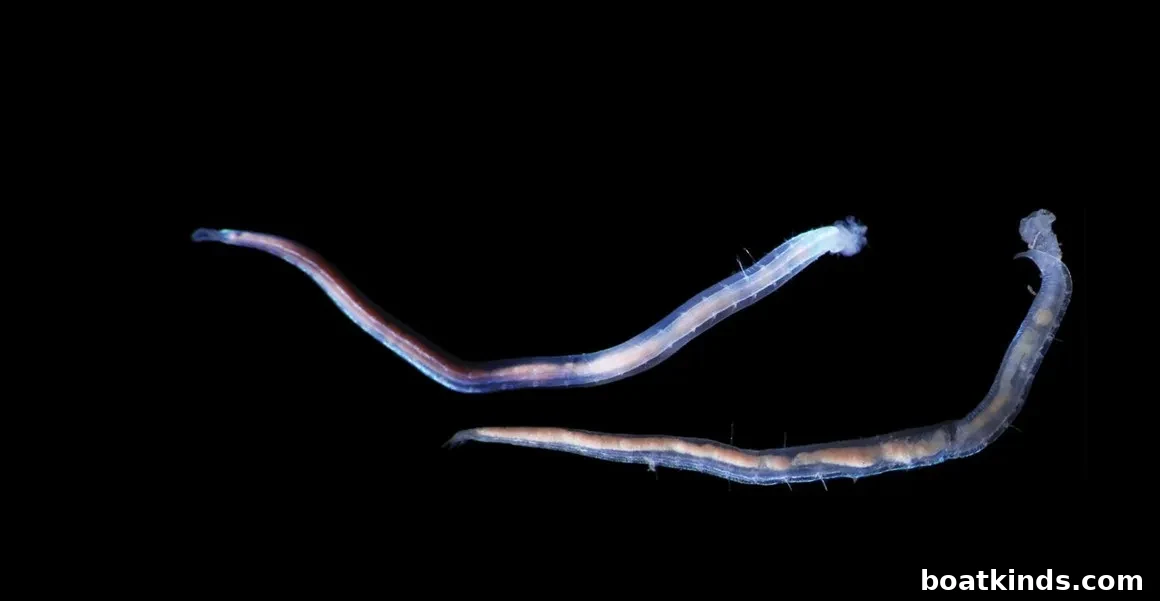
Deep Ocean Life Revealed: 12 New Marine Worm Species and Rising Biodiversity
The deep ocean, long regarded as an inhospitable realm where few organisms could survive, is now being recognized as a hotspot of biodiversity. Recent research led by scientists at Britain’s Natural History Museum has documented 12 new species of marine worm from these great depths and suggests that hundreds more species remain undiscovered. This revelation is reshaping our understanding of deep-sea ecosystems and raising important questions about conservation, resource use, and the future of deep-sea mining.
Discoveries from the Depths
The Natural History Museum team described a dozen previously unknown marine worm species found in the deep ocean. While each new species expands the known tree of life, the researchers believe these 12 are only a small fraction of what exists at depth. The deep sea—an environment historically underestimated for its biological richness—appears to host a far greater diversity of life than scientists once thought. These findings add to a growing body of evidence that the abyssal and hadal zones support complex, specialized organisms adapted to extreme pressure, low temperatures, and limited food supply.
Why Deep-Sea Biodiversity Matters
Deep-sea biodiversity plays a vital role in global ecosystems. Organisms living in the deep ocean contribute to nutrient cycling, carbon sequestration, and the health of marine food webs. Marine worms and other invertebrates are fundamental components of benthic communities, breaking down organic material and supporting higher trophic levels. Discovering new species improves scientific understanding of how these systems function and how resilient they might be to environmental change.
Implications for Deep-Sea Mining
Interest in the deep sea has increased in part because of the valuable mineral resources resting on and beneath the seabed. Minerals such as cobalt, copper, nickel, and manganese are crucial for modern technologies, including batteries for electric vehicles and renewable energy storage. As companies and governments explore deep-sea mining to extract these resources, the presence of previously unknown organisms highlights potential ecological risks. Disturbances from mining could destroy habitat, disrupt fragile communities, and lead to the loss of species before they are even documented.
Balancing Resource Use and Conservation
The discovery of new marine worm species underscores the need for careful, science-driven decision making when it comes to seabed resource development. Policymakers, industry stakeholders, and conservationists face a challenging balance: enabling sustainable access to critical minerals while protecting the unique and poorly understood life forms that inhabit the deep ocean. Baseline biodiversity surveys, environmental impact assessments, and long-term monitoring are essential steps to evaluate the potential consequences of any industrial activity on the seafloor.
Scientific Challenges and the Path Forward
Studying deep-sea life is technically demanding and expensive. Sampling remote, high-pressure environments requires advanced equipment such as remotely operated vehicles, deep-sea submersibles, and specialist collection techniques. Because of these constraints, many regions remain unexplored and many species undocumented. Continued investment in deep-sea research will help fill knowledge gaps, inform conservation priorities, and guide responsible management of ocean resources.
What the Future Holds
The Natural History Museum’s findings are a reminder that exploration of the deep ocean remains one of the frontiers of modern science. Each new species discovered provides insight into evolutionary adaptation and ecosystem dynamics at extreme depths. As interest in the deep sea grows, so does the urgency to document and understand its inhabitants. Effective protection of deep-sea biodiversity will depend on collaboration between scientists, industry, regulators, and the public to ensure that activities such as mining proceed only with robust safeguards—or are avoided in ecologically sensitive areas.
Overall, the discovery of 12 new marine worm species is both an exciting scientific milestone and a call to action. It highlights the remarkable diversity of life beneath the waves and the responsibility we have to manage ocean resources carefully so that these unique ecosystems can persist for future generations.