
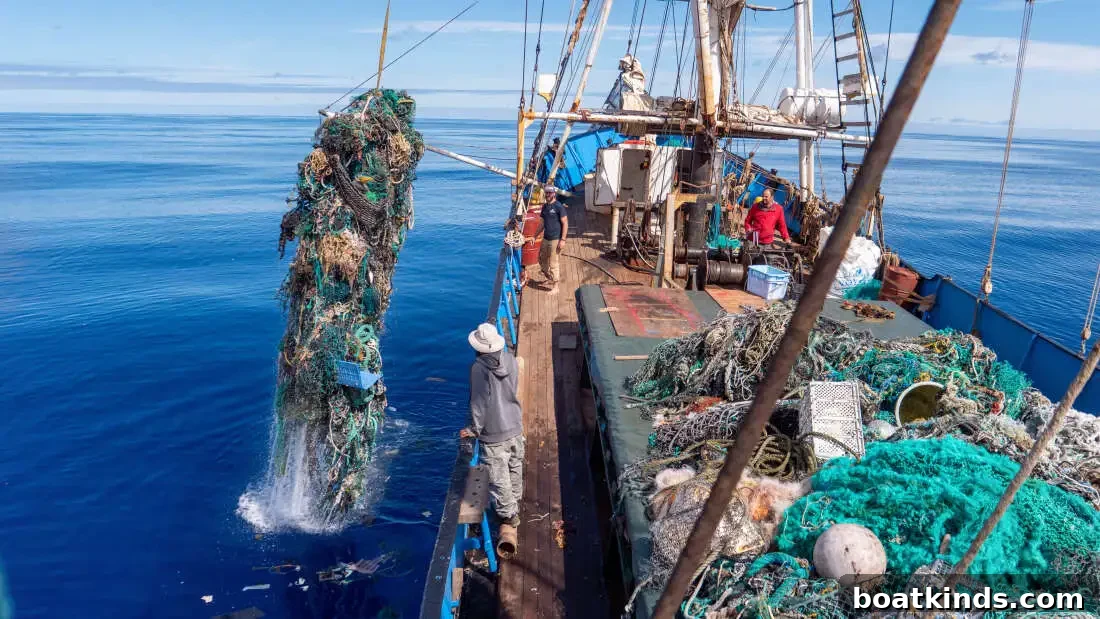
Ocean Voyages Institute Completes 48-Day Cleanup in the Great Pacific Garbage Patch
Ocean Voyages Institute recently concluded a 48-day expedition that the organization describes as the “largest open ocean clean-up in history.” During this mission, crews recovered 206,000 pounds of plastic and derelict fishing gear—commonly known as “ghost nets”—from the infamous Great Pacific Garbage Patch, the sprawling accumulation of marine debris between the coasts of California and Hawaii.
What Was Found: Plastic Waste and Ghost Nets
While a portion of the collected material was consumer waste, a significant share consisted of commercial fishing equipment. These ghost nets are abandoned, lost, or discarded fishing nets and lines that continue to drift, entangle, and kill marine life long after they are no longer in use. The expedition recovered alarming evidence of that deadly legacy: several turtle skeletons were found entangled in the nets, underscoring how persistent plastic and abandoned gear can cause long-term harm to ocean wildlife.
Scale of the Problem
The presence of ghost nets in the patch highlights a broader pattern: much of the accumulated plastic in this region is linked to commercial fishing and maritime operations. Estimates cited for the Great Pacific Garbage Patch place its contents at around 80,000 tons of plastic, with a substantial portion believed to originate from fishing and shipping activities. On a global scale, approximately 12.7 million tons of plastic are estimated to enter the oceans each year, contributing to a floating and submerged mass of plastic waste estimated at 150 million tons currently circulating the world’s seas. These non-biodegradable materials persist for decades or longer, posing a chronic threat to marine biodiversity, fisheries, and coastal communities.
Why Removing Ghost Nets Matters
Ghost nets are particularly destructive because they continue to trap and drown fish, turtles, seabirds, and marine mammals indiscriminately. Nets that drift can entangle animals in feeding grounds, migration routes, and nursery habitats, disrupting entire ecosystems. Beyond the obvious mortality, entanglement can cause long-term injuries and stress to surviving animals, reduce reproductive success, and alter species behavior. Removing these nets is crucial to reduce immediate harm and to allow ecosystems a chance to recover.
Efforts to Address Ocean Plastic
Organizations like the Ocean Voyages Institute play a vital role by physically removing debris from accumulation zones, documenting the types of material found, and raising public awareness about the sources and impacts of ocean plastic. Cleanups provide important data that help identify hotspots, inform policy discussions, and guide improvements in fisheries management and maritime waste handling. Yet cleanup is only one part of the solution: lasting change requires better waste management on land, more responsible fishing practices, improved port and vessel waste controls, and stronger incentives to prevent gear loss and encourage recovery.
Taking Action: What Helps
Preventing plastic from reaching the ocean starts on land. Reducing single-use plastics, improving recycling and waste collection systems, and supporting initiatives that redesign fishing gear to be less likely to be lost or that include recovery programs can all make a difference. Consumers, industry, and policymakers each have roles to play: companies can design more durable, traceable gear and invest in retrieval programs; governments can strengthen regulations and support cleanup and prevention initiatives; and individuals can reduce plastic use and support organizations working to protect marine habitats.
Conclusion
The recent 48-day operation by Ocean Voyages Institute, which removed 206,000 pounds of plastic and ghost nets from the Great Pacific Garbage Patch, underscores both the magnitude of ocean plastic pollution and the urgent need for coordinated action. While cleanup missions provide immediate relief and critical data, addressing the root causes—waste management failures, lost fishing gear, and ongoing plastic production—will be essential to protect marine life and preserve ocean health for future generations.