
Coast Guard
There is nothing more dangerous in boating than an unexpected fall overboard. Medical problems may be the most common at-sea emergency, and many sinkings are caused by neglected through-hull fittings, but going overboard is by far the deadliest mishap afloat. How dangerous? If the Coast Guard is summoned to search for you, there is roughly a 40 percent chance you will never be recovered, alive or dead.
You can greatly improve survival odds by carrying appropriate gear and wearing it, especially a proper personal flotation device. But what should those left aboard do when a crewmember ends up in the water? If the very first reaction is to hit an MOB button on your GPS or fumble with the VHF radio, you are probably making the situation worse. The first priority is always to preserve sight of the person and act in an organized, practiced manner.
Experienced mariners recognize there are two distinct man-overboard (MOB) situations: when the person is in sight and when they are not. Each requires a different response, so your boat’s MOB procedure should include clear, written steps for both cases. If you don’t have a written plan, create one now. If you do, review it and add the variations described here.
In-sight MOB
When someone in the water remains visible, the single most important objective is to keep them in sight. Pressing MOB buttons, making extended VHF calls, or triggering DSC may distract the operator and crew. A VHF call can wait until the person is secured — talking on the radio will only divert attention from the recovery.
If the person is visible, stay focused on them and move deliberately to recover them. Marking a GPS position or trying to call for assistance before you recover the person is usually unnecessary and counterproductive. A concise, practical in-sight MOB procedure looks like this:
1. Throw flotation devices overboard
Immediately throw the life ring or any available floatation to the person in the water — even if they are wearing a life jacket or appear to be a strong swimmer. If two people remain aboard, the non-driving crewmember should keep their eyes on the victim and point to and call out the person’s location until the helm sees them. That spotter should not be searching for a line or boat hook; their sole job is to watch and direct.
2. Approach the victim
Close the boat slowly while maintaining constant visual contact. Communicate with the person in the water as you approach to assess their alertness and condition. Approach at a speed that keeps control and allows a safe stoppage.
3. Get recovery gear ready
Prepare the recovery method — line, pole, lifting device or swim platform — calmly and deliberately. Panic or rushed movements make recovery harder and more dangerous. If your boat is set up correctly, a throw line or reach device will already be stowed near the rail for instant access. If required, secure propellers and deploy your reach device. This step ends when the person in the water holds a line or a crewmember has a firm handhold on them.
4. Recover the MOB
Bring the person aboard slowly and safely. Avoid rushing; abrupt maneuvers near a person in the water increase the risk of injury. Watch for exhaust or propellor hazards if recovering near the stern. Once aboard, allow time to stabilize and monitor their breathing and responsiveness before resuming navigation.
5. Assess the MOB’s medical condition
Perform a head-to-toe check for injuries. Adrenaline can mask pain, so look carefully for bleeding, deformities, or signs of shock. If the water was cold, remove wet clothing, insulate the person and get them dry and warm as soon as possible. Even if they make light of the event, complete the assessment before making further decisions.
6. Decide whether to head in
Consider circumstances: is the recovered person hypothermic, injured, or lacking dry clothes? Are weather or sea conditions worsening? Decide quickly whether to return to shore or to call for medical assistance. If you need help, contact emergency services once the person is stable aboard.
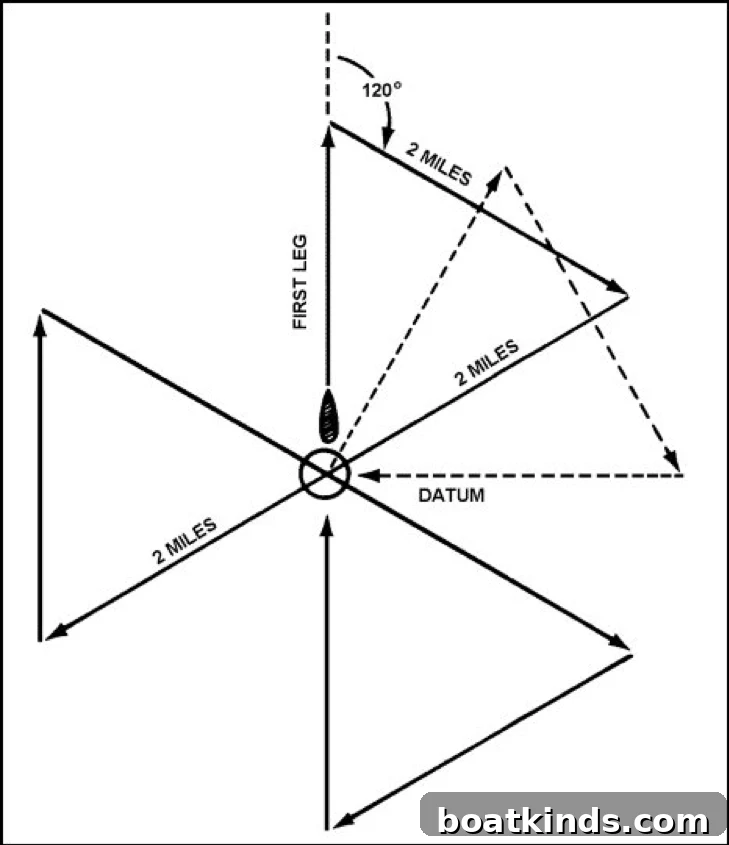
If you lose sight of the MOB
Losing visual contact creates an entirely different emergency. Nightfall, waves, darkness or simply a brief glance away can hide the person within seconds. When the victim is out of sight, every minute counts and you must switch to an organized search-and-rescue mindset.
1. Throw lighted flotation devices overboard
If the person went over at night or is no longer visible, deploy flotation that has a light attached, or attach a light to buoys and floats. The illuminated float will help you and arriving responders maintain a drift datum you can track.
2. Call for help
This is a true distress situation. Activate your DSC or MOB button and transmit a mayday if appropriate. If two or more people remain aboard, have the non-operator make urgent radio calls and coordinate with responders while the operator begins search maneuvers. Clear, concise communications with search-and-rescue assets are critical — give position, sea state, wind and drift information.
3. Start looking
Slowly maneuver to the most likely location the person could be and stop to listen and call. Search methodically, scanning each quadrant while listening for responses. Shouting at short intervals and listening for replies can help locate an obscured person.
4. Figure out your drift
Determine the direction and rate at which your vessel and the waterborne markers are moving. A floating, lighted object can serve as your drift datum; its motion approximates how a human in the water will move. Report drift direction and speed to rescuers and keep updating them as conditions change.
5. Maneuver, call out and listen
Conduct a slow, deliberate sector search, moving into the drift while maintaining a sharp lookout. Listen constantly for calls, whistles or sounds. Consider likely behavior of the person overboard — would they attempt to reach a nearby buoy or landmark? Use that reasoning to prioritize search lanes.
6. Search and wait
Keep searching while awaiting instructions and arriving rescue assets. The Coast Guard or other responders will coordinate broader search efforts; provide them with your observations and any changes in conditions.
Losing sight of a crewmember can become the worst day of your life, and recovery is far less likely when the person cannot be seen. Train your crew to recognize the difference between an in-sight and out-of-sight MOB, practice both responses routinely, and adapt procedures to your vessel and typical boating conditions. Regular drills, clear roles, and prepositioned retrieval gear make the difference between a near miss and a tragedy. Above all, prevention—wearing life jackets, using tethers when appropriate, maintaining secure rails and good seamanship—remains the best protection against MOB events.