
Ocean Cleanup Boom Struggles to Collect Plastic After Three Months at Sea
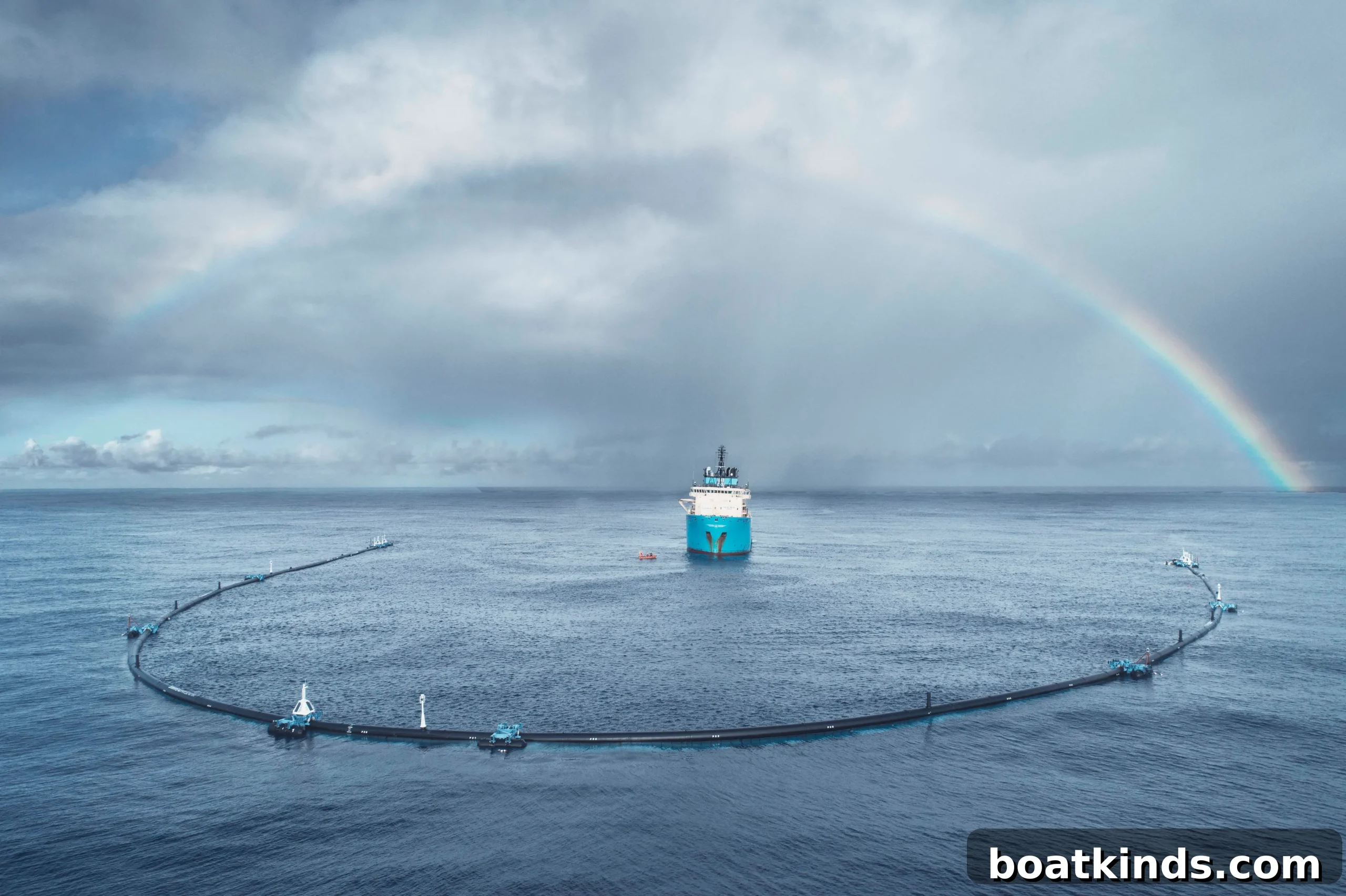
The device designed to remove plastic from the Great Pacific Garbage Patch has been deployed in the ocean for three months, but it has not met expectations. The Ocean Cleanup project, founded by Dutch inventor Boyan Slat, launched its first plastic-collecting boom into the Pacific in September. Despite the initial optimism, the system has so far failed to retain the drifting plastic debris it was intended to capture.
What Happened
Operators report that the plastic collected near the boom has been escaping as the system moves through the water. Observations indicate that when the boom slows relative to the surrounding water and floating debris, some of the plastic drifts out from behind the boom instead of being carried along and contained. In short, the relative motion between the boom and the trash appears to be a core issue: if the boom does not maintain an appropriate speed and positioning, debris can slip away.
Response and Modifications
Rather than abandoning the effort, the Ocean Cleanup team dispatched technicians and engineers to the deployment site to make adjustments at sea. Their immediate objective is to modify the boom so it consistently moves at a pace and in a pattern that keeps plastic inside the collection area. These field modifications are part of an iterative testing cycle commonly used in marine engineering projects: field data is collected, problems are analyzed, design changes are implemented, and the performance is reassessed.
Why This Matters
The Great Pacific Garbage Patch is one of the most visible concentrations of marine debris, and projects that aim to remove accumulated plastic from open water receive significant public attention. Success would demonstrate a scalable approach to cleaning large areas of ocean surface where small and large pieces of plastic are concentrated by ocean currents. Conversely, difficulties during early deployments illustrate the technical and operational challenges involved in designing reliable systems that can withstand changing ocean conditions and variable debris behavior.
Engineering and Environmental Challenges
Operating equipment in the open ocean exposes systems to a wide range of forces, from waves and currents to wind and variable loads caused by debris. Designing a passive system that can capture mobile particles like plastic, which do not always behave in predictable ways, requires careful consideration of hydrodynamics, materials, anchoring and towing strategies, and real-time adjustment capabilities. The recent experience with the boom highlights how real-world conditions can reveal limitations not fully apparent during initial design or simulated testing.
Next Steps
The Ocean Cleanup team is focusing on refining the boom’s behaviour so it can maintain appropriate speed and positioning relative to floating debris. On-site modifications are intended to improve capture rates while the project team continues to monitor results, collect data, and refine their approach. This process of testing, failure, and improvement is typical for complex environmental engineering efforts and is a key part of progressing from prototype to reliable operational systems.
Looking Forward
While early setbacks are disappointing, they also provide valuable information. The data gathered during these initial months will inform future design improvements and operational strategies. If the team successfully adapts the boom to keep plastic contained, it will be an important step toward a practical tool for reducing surface-level marine plastic pollution. Until then, the deployment remains a live experiment with lessons that could benefit wider efforts to address ocean plastic.