
In 2020 nearly 75 percent of new light-vehicle sales in Norway were electric cars, making Norway the global leader in plug-in vehicle adoption. Sweden ranked third with about 32 percent, Finland fifth with 18 percent and Denmark sixth with nearly 16 percent, according to EV-Volumes. Those strong incentives—reduced or waived sales taxes, value-added taxes, tolls and parking fees—help explain why Scandinavians embraced electric cars so quickly. That same sustainability mindset is now extending to another passion in the region: boating.
Electric boating was long held back by two familiar obstacles: limited range and modest speed. Advances in battery chemistry, electric motors and software—many driven by the automotive industry—are changing that. Scandinavian boatbuilders are among the first to apply these technologies to pleasure craft, producing electric boats with extended range, higher speeds and dramatically reduced noise and emissions. Several of these companies are already introducing their models to the U.S. market.
X SHORE
Swedish start-up X Shore unveiled its all-electric Eelex 8000 at the 2021 Newport International Boat Show and quickly turned heads. Built with a distinctly Scandinavian aesthetic and a strong emphasis on sustainability, the Eelex impressed even skeptical marine journalists with its performance and usability.
The Eelex 8000 tops out above 30 knots, cruises comfortably between 15 and 20 knots, and delivers roughly 100 nautical miles of range at 5 to 7 knots on a full charge. Its systems are software-driven and support over-the-air updates, similar to modern electric cars. The cockpit centers on a 24-inch Garmin multifunction touchscreen and a rotary throttle for intuitive control.
Construction includes Divinycell, fiberglass and carbon fiber, although X Shore also offers a flax fabric hull for buyers seeking more environmentally friendly materials, and plans to introduce a PET hull made from recycled plastic bottles. Propulsion comes from an Austrian Brusa 225-kW motor and dual 60-kWh lithium-ion battery packs. A dedicated supercharger can replenish the batteries in roughly one to two hours.
X Shore is developing self-docking features and envisions a level of autonomy for future models. The current autopilot already provides a hands-off ride, and a mobile app enables remote start and location tracking. An optional integration with a Garmin MARQ watch adds a safety feature that will stop the boat within seconds if the watch-wearer falls overboard.
The Eelex 8000 is built near Stockholm, and X Shore aimed in 2022 to select a U.S. production location. Patrick DeSocio, head of North American sales, notes that prospective buyers often express “range anxiety,” a concern familiar from the electric car market. His response is practical: use the boat as you would a gasoline-powered dayboat—plan trips, know where to charge, and call for assistance if needed. X Shore positions the Eelex as a versatile dayboat ideal for locations such as the Chesapeake Bay, the Great Lakes, San Francisco Bay and coastal cruising locations where short, frequent trips are common.
CANDELA ELECTRIC BOATS
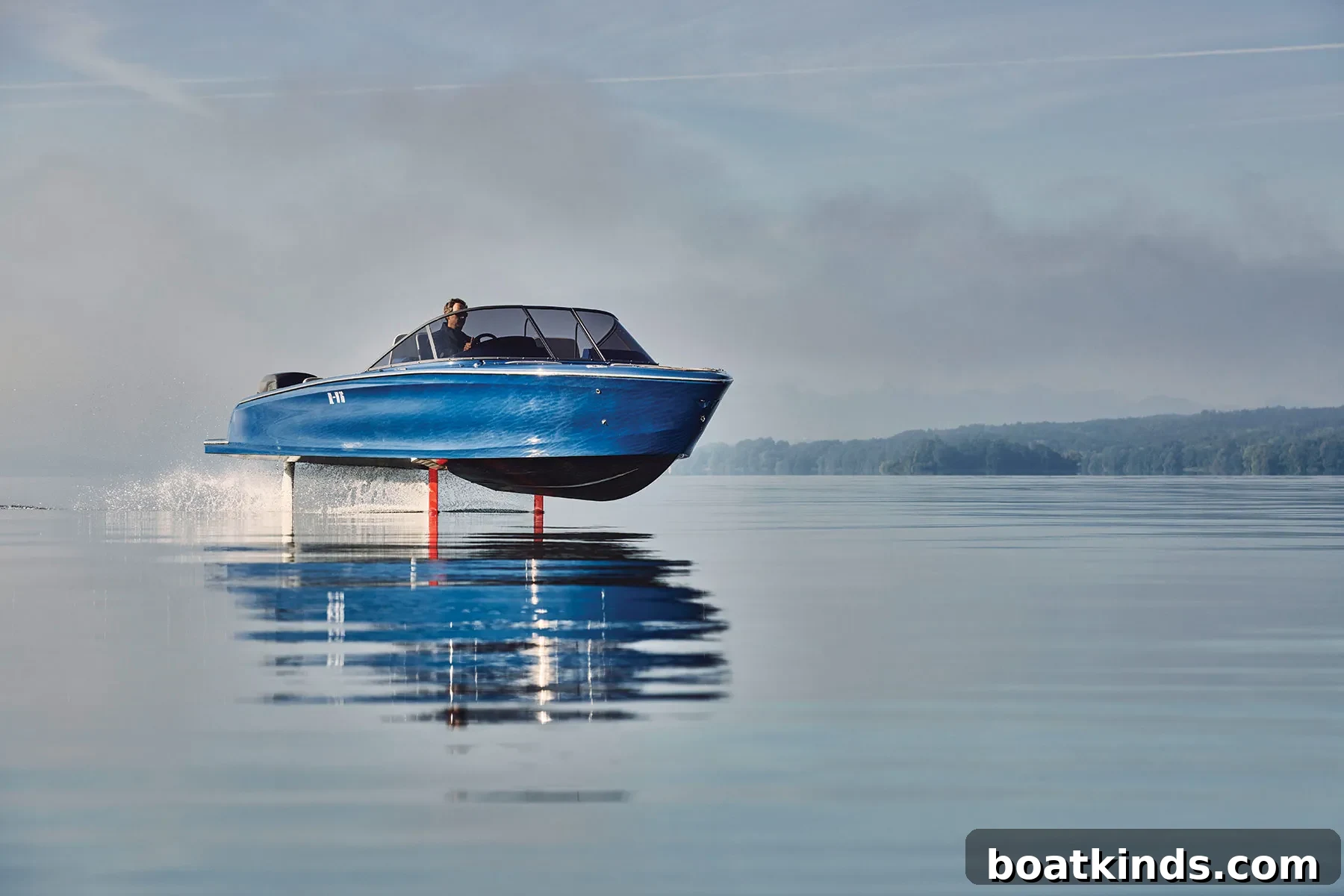
Candela Speed Boat AB in Sweden has pushed foiling electric boats into the spotlight. Its first foiling model, the C-7, launched in 2016 and used retractable foils to lift the hull clear of the water. With a carbon-fiber hull and hydrofoils, the C-7 cruises at around 20 knots and can reach 30 knots using a 55-kW motor, delivering roughly 50 nautical miles of range on a 40-kWh battery. The C-7 proved its performance credentials by beating multiple competitors at the Monaco Energy Challenge, where it reached 31 knots in sprint conditions.
For its follow-up, Candela developed the C-8, a 28.5-foot foiling model designed for higher production and broader appeal. The C-8’s propulsion system—the Candela C-Pod—was engineered in-house. Two ultra-compact electric motors sit within a torpedo-shaped pod beneath the hull, driving counter-rotating propellers. Placing the motors below the waterline takes advantage of natural cooling from surrounding water and reduces heat-management challenges.
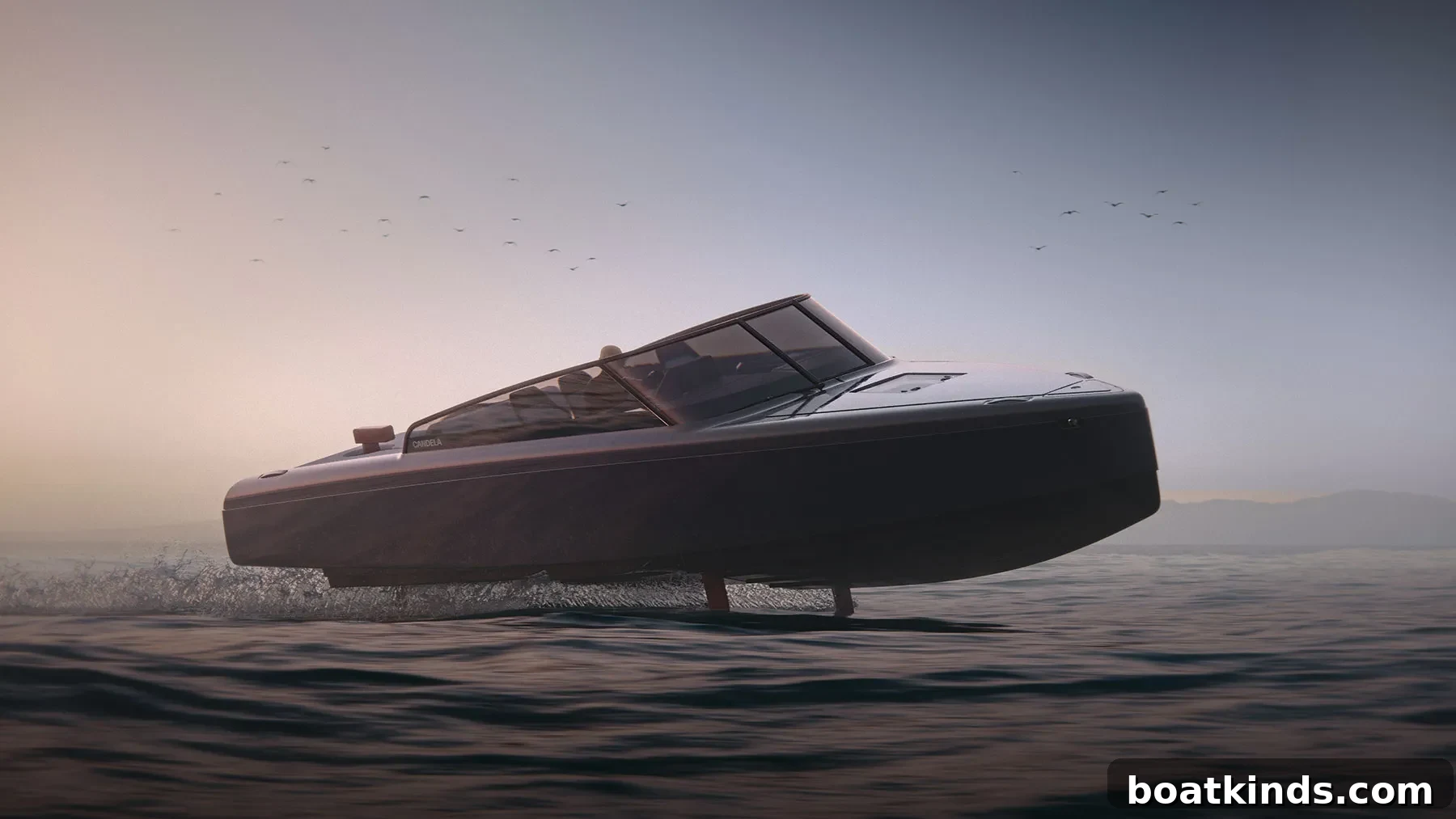
The C-Pod has few moving mechanical parts, which reduces routine maintenance; Candela estimates maintenance-free operation for thousands of hours. The C-8’s flight control adjusts hydrofoil position multiple times per second, smoothing the ride over waves and improving energy efficiency. With cruising speeds in the low-20s (knots) and a range near 50 nautical miles, Candela says the C-8 delivers a gasoline-like experience—range and speed—while eliminating noise and slamming. Early demand was strong, with Candela reporting dozens of orders shortly after announcing the model.
RAND
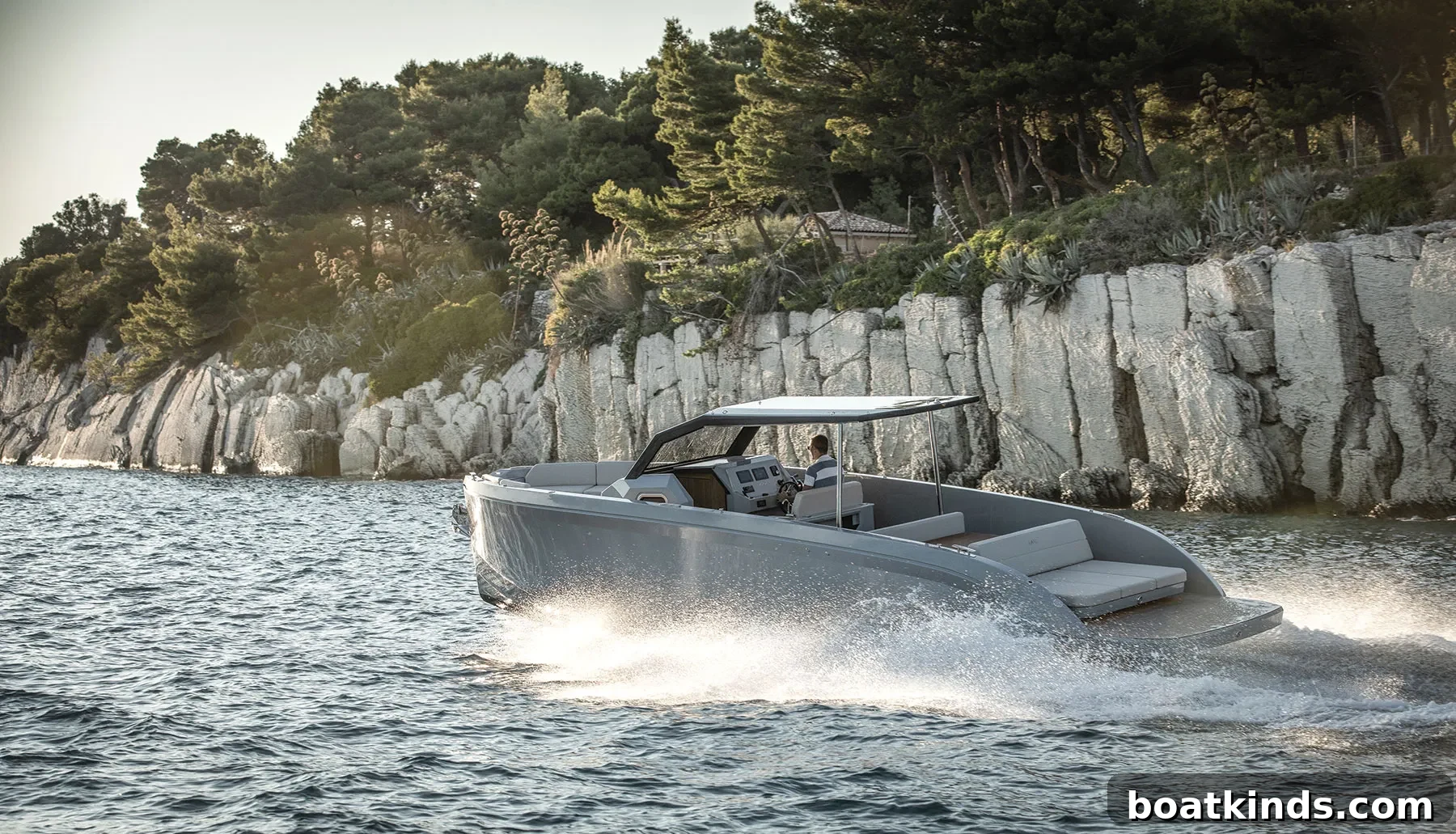
Rand Boats, founded by Danish architect Carl Kai Rand in 2014, focuses on practical electric dayboats and leisure craft. Rand’s Picnic 18 has become a familiar sight on Copenhagen’s canals, and the company now offers seven models between 18 and 30 feet. Boats can be specified with traditional gasoline or diesel power, or electric drivetrains: Torqeedo outboards for smaller models and custom inboard eDrive systems using Austrian Kräutler motors for larger boats.
Rand emphasizes sustainability in its materials and manufacturing. Foam cores in the fiberglass hulls use recycled plastic bottles, and decking and furniture are made from sustainably sourced wood. Rand Boats USA, launched in 2020, has sold more than 50 Rands in the U.S. market within its first year, reflecting rising interest in electric options. Founder partners note that battery and motor technologies continue to improve rapidly, and marinas are beginning to adopt quick-charge infrastructure to support electric boating.
MANTARAY HYDROFOIL CRAFT
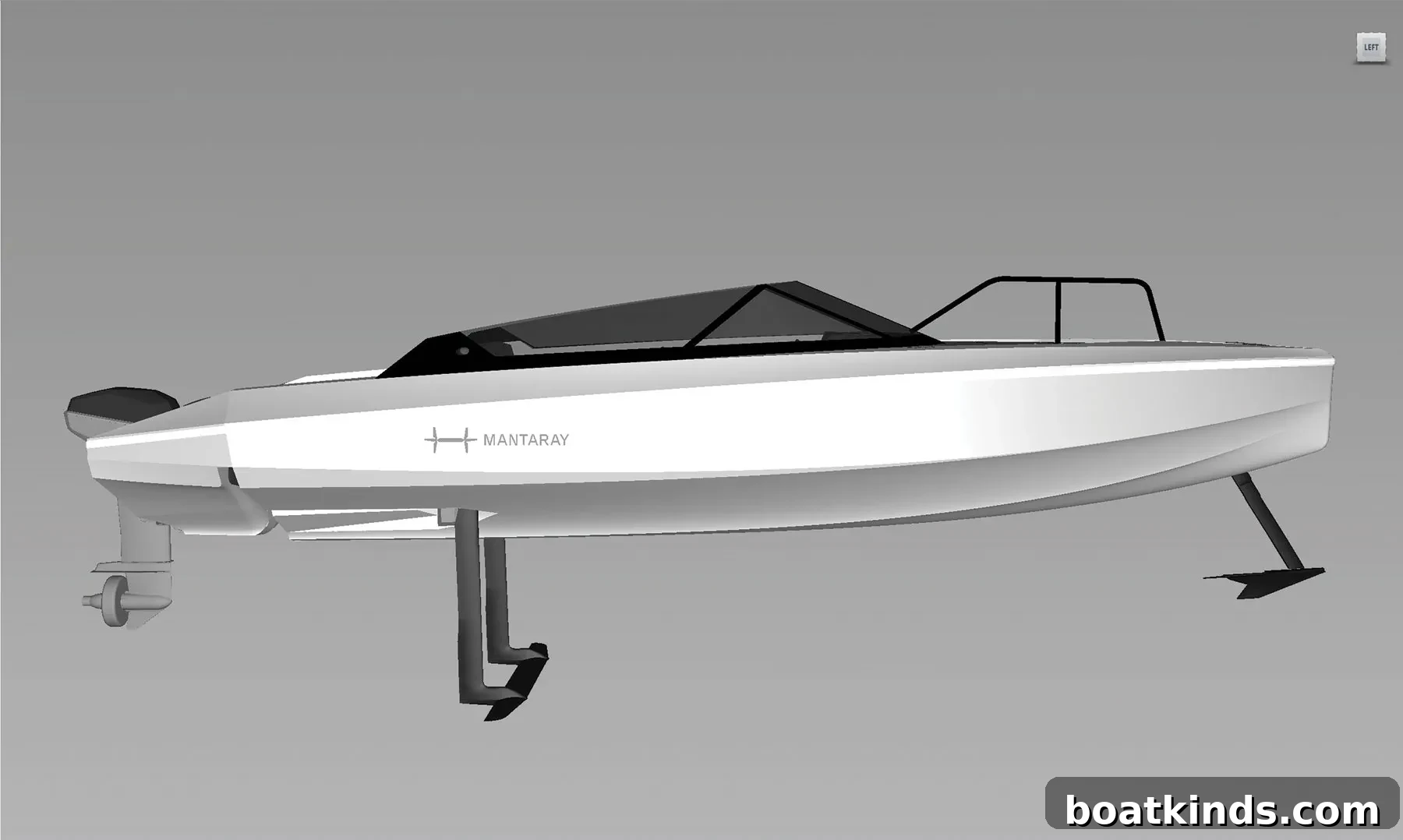
Sweden’s Mantaray Craft takes a different approach: rather than primarily selling finished boats, the company intends to license its patented Dynamic Wing Technology to other manufacturers. The self-regulating foil system does not rely on complex computer control, yet it delivers substantial benefits—Mantaray cites up to 75 percent lower energy consumption, a softer, wakeless ride, compatibility with traditional outboards or electric drives, and reduced maintenance when used with electric propulsion.
To prove the concept, Mantaray built the 16-foot one.fly and tested it with a 23-kW electric outboard, reaching speeds above 30 knots and achieving flight-range performance that demonstrated the foil’s efficiency. The company planned a larger 25-foot demonstrator named Verona to showcase the system to boatbuilders, aiming to position the Dynamic Wing Technology as a widespread platform—an “Intel Inside” for the boat industry.
Q YACHTS
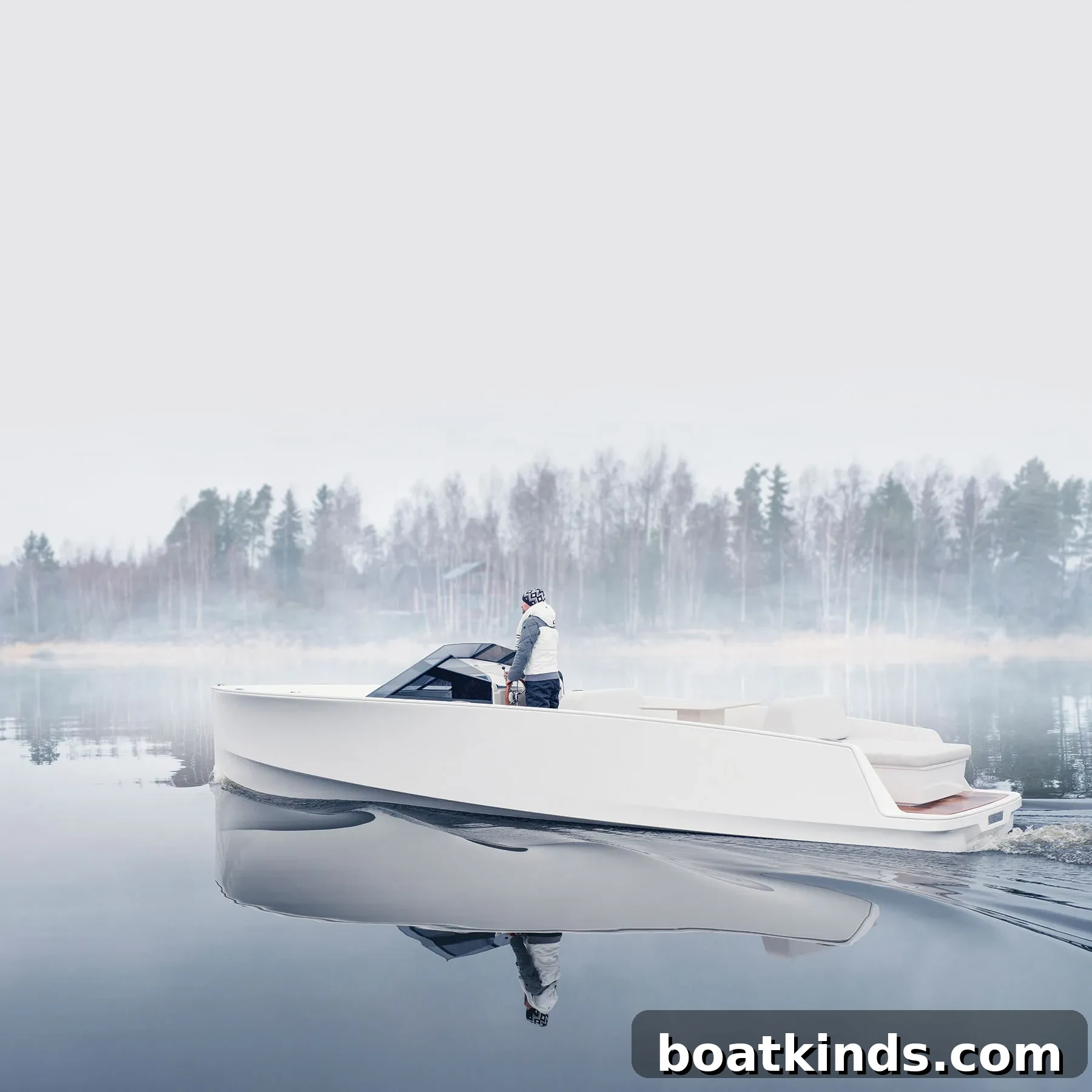
Finnish Q Yachts, founded by sailor Janne Kjellman, focuses on elegant, silent electric motorboats. The Q30, built in Finland, uses twin Torqeedo 10-kW sailpods and a Torqeedo 30-kWh battery to deliver up to 60 nautical miles of range at economical speeds. Typical performance figures include a cruising speed of 9 knots (about 42 nautical miles range) and a top speed near 14 knots (around 21 nautical miles). An optional second battery increases range, and charging can be done at standard 230-volt shore power or via faster Torqeedo charging equipment. Like other builders, Q Yachts is exploring more sustainable hull materials, including recycled plastics.
Manufacturers across Scandinavia are showing that electric boating can offer compelling performance, efficiency and lower environmental impact. With continued improvements in batteries, motors and support infrastructure, electric boats are moving from niche curiosity to practical, attractive alternatives for many boaters—especially for dayboats, commuter ferries, marina rentals and coastal cruising where short-range, low-noise and low-emission operation matter most.
This article was originally published in the December 2021 issue.