How to Repair a Hole or Gouge in a Single-Skin Fiberglass Boat
When a single-skin fiberglass hull sustains a hole or a significant gouge, the repair must restore not only the surface but also the structural properties of the original laminate. The goal is to replace the damaged fibers with laminates that match the original construction as closely as possible so the repaired area shares the same deflection, stiffness and load distribution as the surrounding structure.
Step 1 — Clean and Prepare the Surface
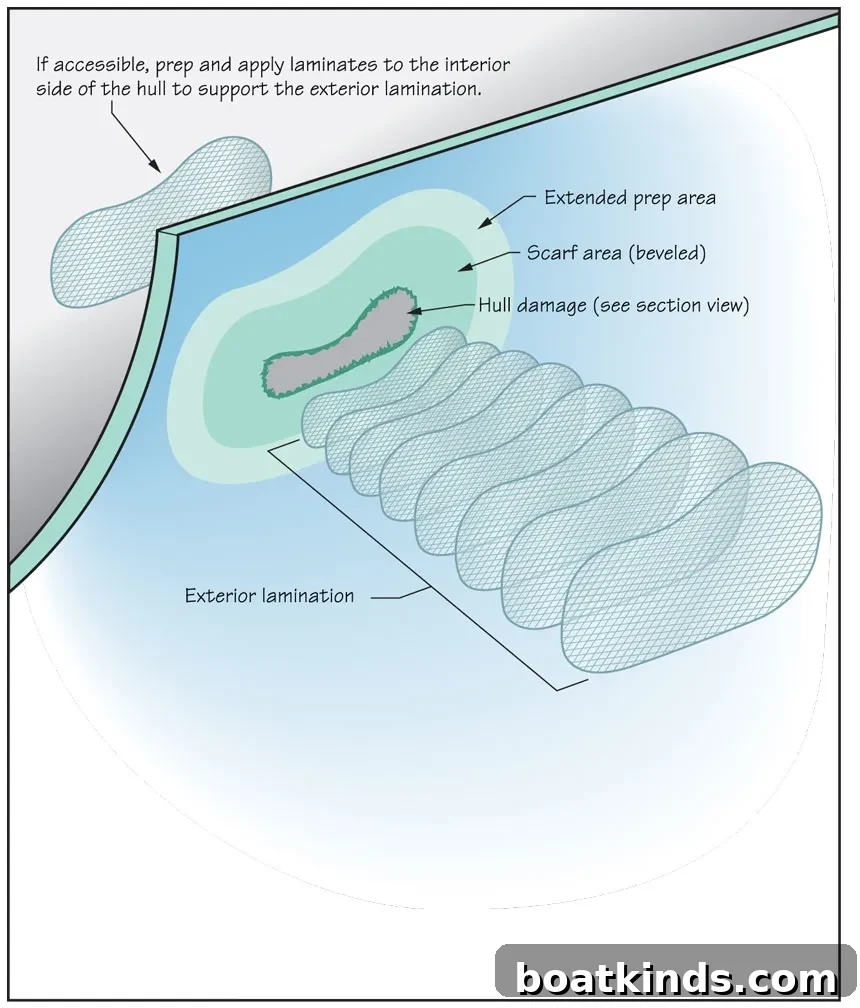
Begin by removing contaminants that will interfere with bonding. A thorough scrub with an abrasive pad and a strong kitchen cleaner will remove grease, wax and surface soils. Once cleaned, the cured laminate must be prepared for a secondary bond: provide adequate surface area for adhesion and aggressively sand the existing laminate with coarse grit to expose fresh fiber and create mechanical keying for the new layers.
Step 2 — Define and Taper the Repair Area
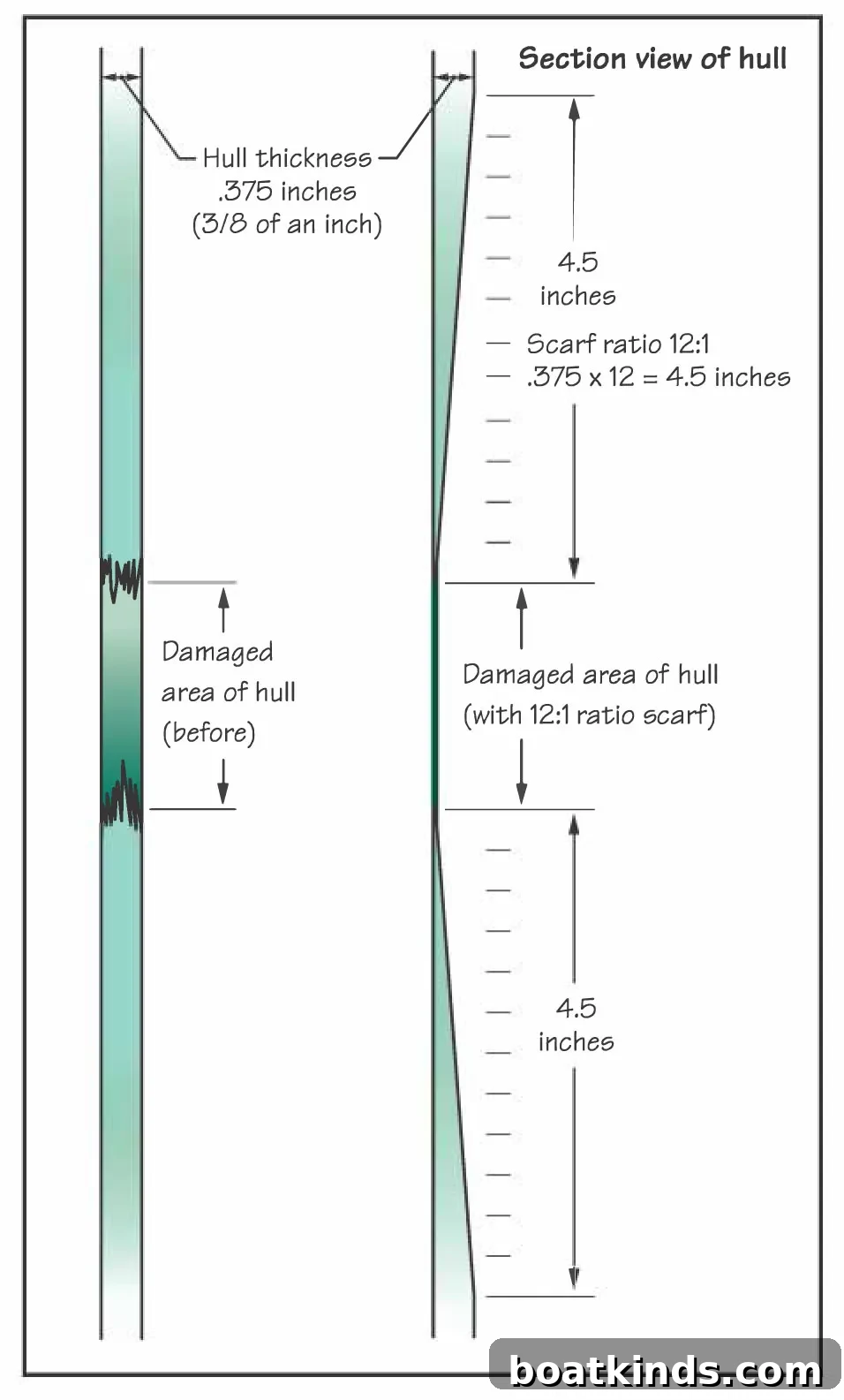
Grind out the damaged material and contour the edges to create a smooth transition between old and new laminate. A gradual taper is essential to transfer loads through the repair without creating a sharp stress riser. Aim for a minimum taper ratio of 12-to-1 (twelve units of length for each unit of thickness) so the new laminate can feather into the existing structure. Use a straightedge while shaping to check for an even taper and consistent profile.
Step 3 — Match the Laminate Stack
Reproduce the original laminate stack as closely as the repair allows. In many repairs it’s common to substitute a biaxial fabric with an integrated layer of mat for the original layers. Biaxial materials drape well over contours, distribute loads in multiple directions, and bond reliably when used correctly. Lay out a dry stack of fabrics that mirrors the original sequence, then make patterns with clear plastic or paper so each layer can be cut to shape and numbered in installation order.
Step 4 — Choose the Proper Resin
Resins differ in bonding, compatibility and finish. Epoxy resin offers excellent adhesion and can bond to a wide range of laminates, but it must be used only where epoxy is compatible with the existing structure (for example, epoxy-built hulls). Vinylester resin provides strong secondary bonding and accepts a gelcoat finish reliably, making it a common choice for many repairs. Select the resin that matches the base material and the performance requirements of the repair, and follow manufacturer guidelines for mixing, pot life and cure.
Step 5 — Install the Laminates
Work from the innermost layer outward, wetting each fabric with the chosen resin and consolidating to remove trapped air. If you are compressing the laminates, expect to re-evaluate the number of layers so the final cured thickness matches the surrounding laminate. Use the numbered patterns to keep sequence and orientation consistent with the dry stack you prepared.
Advanced Options: Vacuum Bagging and Infusion
Vacuum bagging can be used to compress and consolidate repair laminates; it improves fiber-to-resin ratio and helps remove voids, but bear in mind compression changes the stack thickness, and you may need to alter the layer count to achieve the correct finished thickness. Resin infusion is another option for larger or more advanced repairs but requires specialized equipment, tooling and expertise. Both techniques can produce high-quality, repeatable results when performed correctly.
Final Steps and Finishing
After the resin has fully cured, fair the repair to blend with the surrounding surface. Sand progressively through finer grits until the repaired area is smooth, then apply an appropriate gelcoat or paint finish if required. Allow sufficient cure time between stages and respect environmental conditions to ensure optimal adhesion and finish quality.
Repairing a single-skin fiberglass boat is a methodical process: clean and prepare the surface, establish an adequate taper, match the laminate stack, choose a compatible resin, and consolidate the new laminates with care. When in doubt, consult a qualified marine repair professional for structural repairs or if advanced techniques like infusion are needed.
This article originally appeared in the February 2018 issue.