SiriusXM Fish Mapping: Satellite Insights for Offshore Fishing
For many anglers in the Mid‑Atlantic and Northeast — regions where the productive offshore canyons lie well over 100 miles from shore — finding a good bite historically depended on word of mouth, local knowledge and a fair amount of luck. Long runs to deep water can be expensive in fuel and time, and a day spent searching for fish without results can be discouraging.
From Public SST Imagery to Integrated Fish Mapping
About a decade ago, recreational and commercial fishermen began consulting publicly available sea surface temperature (SST) imagery from the National Oceanic and Atmospheric Administration (NOAA) to identify temperature breaks, eddies and other anomalies that concentrate plankton, forage species and pelagic predators such as tuna and billfish. That move toward remote sensing spawned a market of subscription apps and services that display oceanographic data over nautical charts for desktop and mobile devices.
Those early services proved the value of satellite-derived information for anglers, but they also revealed practical limits: many apps require an Internet connection to update offshore, some presentations of the data are cryptic, and bespoke forecasting or manually prepared analyses can be costly. Against that backdrop, a satellite-driven service that integrates cleanly with onboard electronics and doesn’t depend on cellular reception represents a significant step forward.
What SiriusXM Fish Mapping Offers
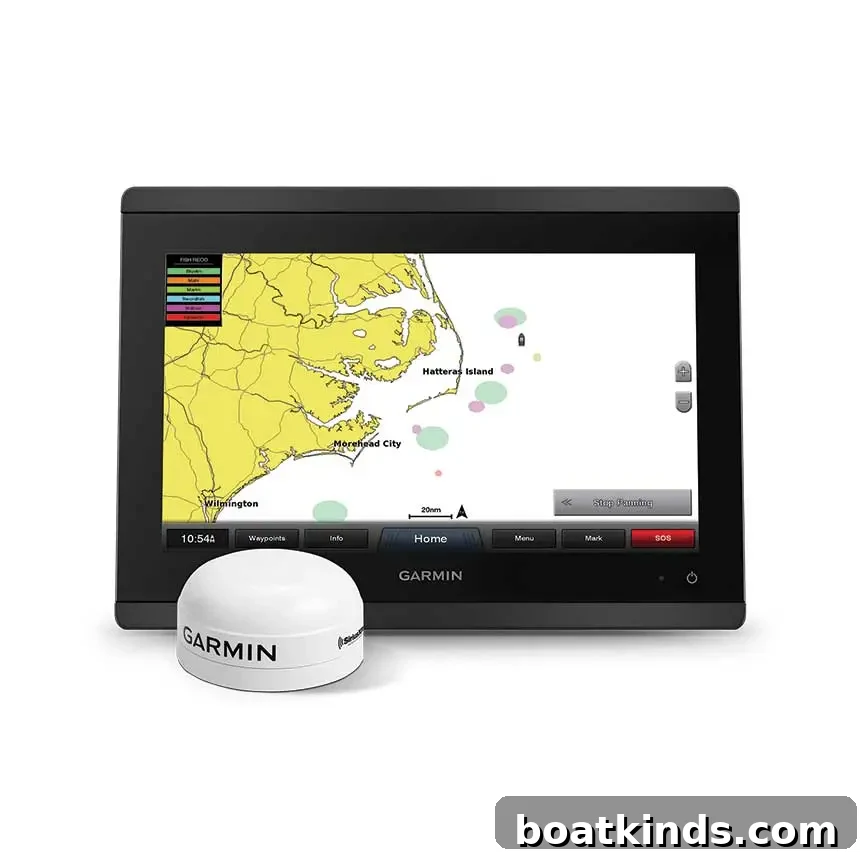
SiriusXM Marine’s Fish Mapping service packages a range of oceanographic layers derived from orbiting satellites and presents them on compatible Garmin chartplotters for a monthly fee. For $99 per month, the service overlays:
- Sea surface temperature contours and temperature front strengths
- 30‑meter subsurface temperature estimates
- Plankton concentration contours and plankton front strengths
- Locations of weed lines, which frequently attract sportfish
- Sea surface height anomalies
- Fishing recommendations prepared by oceanographers
- The SiriusXM Marine Offshore Weather package
The Fish Mapping data set is designed to be read directly on the chartplotter display. Rather than requiring interpretation of raw satellite images, the interface highlights productive features and allows anglers to combine layers — for example, overlaying SST with plankton front strength — to identify high‑probability fishing zones.
Integration, Coverage and Hardware Requirements
The service works with a variety of Garmin chartplotter and multifunction displays. To receive the Fish Mapping layers, a Garmin GXM 54 weather receiver is required. Coverage reaches offshore waters to roughly 150 miles along both the U.S. East and West coasts and Canadian waters, and it includes the Gulf of Mexico and the Pacific from Baja across to the Yucatan region. Because the data are broadcast via satellite, no cellular data connection is required while offshore, making the service practical for long runs and extended trips.
Usability and Practical Benefits
Demo material from SiriusXM shows the system to be highly intuitive. Moving the chartplotter cursor across the map triggers context‑sensitive alerts such as “Very Strong” or “Strong” that correspond to whatever layer you’re viewing. Those simple indicators reduce the learning curve and help skippers make decisions quickly — a key advantage when time on the water is limited and conditions or bait concentrations can change rapidly.
Beyond ease of use, the most tangible benefits to anglers are operational: improved decision making reduces wasted transit time and fuel by helping point boats toward areas with greater likelihood of holding fish. For captains who rely on timely oceanographic cues — temperature breaks, weed lines, plankton fronts and sea surface height anomalies — having these data directly on the multifunction display fosters faster, data‑driven choices without the need to return to shore to consult online sources.
Looking Ahead
The author plans to evaluate the Fish Mapping service during yellowfin tuna season off Ocean City, Maryland, when conditions and bait distribution will put the system through real‑world tests. Early impressions, based on demonstrations and the service description, suggest Fish Mapping is a practical tool for anglers who want satellite‑derived ocean data delivered seamlessly to their onboard Garmin electronics.
This article originally appeared in the December 2019 issue.