Designing Fuel-Efficient Boats: Lighter Builds, Smarter Engineering, and Better Propulsion
At a 2007 boatbuilders’ conference, naval architect Lou Codega argued that boats should be designed to operate more efficiently and burn less fuel. His message was straightforward: build lighter hulls, pare back unnecessary accommodations, and adopt modern propulsion systems. The presentation was well received, but at first it had little immediate impact on mainstream boatbuilding.
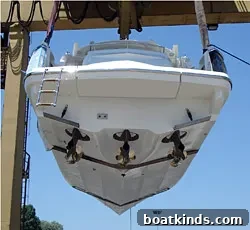
Despite the applause and polite congratulations, most manufacturers continued producing wide, heavy planing hulls loaded with berths, heads, galleys, large gensets, outriggers and very high horsepower. However, economic pressures and volatile fuel costs have gradually shifted thinking in the industry. Increasingly, designers and builders are embracing a different mindset—one that prioritizes thoughtful engineering and efficiency over raw speed and extreme horsepower.
“The days of style-driven design alone are over,” says Ken Fickett, owner of Mirage Manufacturing, which builds Great Harbour trawlers and open fishing boats. “We need to focus on the engineering that goes into a boat.” Yacht designer Doug Zurn echoes the point. Zurn, who worked on the mJm Yachts 29z, 34z and 40z models, says those efficient cruising powerboats reflect extensive engineering work—thousands of hours devoted to refining weight, balance and propulsion for real-world performance. “You can’t just drop components into a fiberglass shell and hope for the best,” he notes.
Consumer attitudes are a key variable. Michael Peters, founder of Michael Peters Yacht Design, suggests many boaters remain attached to high-horsepower, fast boats and may resist trading comfort and space for slimmer fuel bills. “It will take repeated fuel-price shocks for consumers to change behavior,” he says, and he cautions that significantly lighter, narrower boats often require compromises in accommodations that some owners won’t accept.
Still, others in the industry believe demand will follow what builders offer. Fickett is developing a lightweight 40–45-foot dayboat expected to achieve roughly 2 nautical miles per gallon using twin 300-hp Volvo Penta IPS pod drives. Salespeople on the waterfront report that fuel economy is becoming part of the conversation. “A few years ago, buyers rarely asked about fuel consumption,” says Bill Sweetland of Atlantic Boat Company. “Now it’s a real consideration.”
One clear trend is a return to lighter constructions and more efficient drive systems. Designers recommend cored composites instead of solid fiberglass and wood where appropriate, reducing weight without sacrificing structural integrity. New propulsion technologies—such as Volvo Penta IPS and diesel pod systems—offer better fuel economy in many applications, though they can add to initial purchase price.
Diesel sterndrives are another option for improved efficiency in lower-horsepower packages. Manufacturers are promoting diesel sterndrives in small-to-midrange outputs, sometimes coupled with modern joystick maneuvering systems that deliver pod-like control while keeping installation and layout benefits of sterndrives. In many ways, sterndrives and pod drives are converging on similar performance and handling goals.
Efficiency isn’t only about cost savings. Many boat owners who can afford large yachts still prefer not to squander fuel. Larry Polster of Kadey-Krogen Yachts points out that some owners are frustrated by massive hourly burn rates and prefer displacement trawlers that use far less fuel for cruising. For example, a displacement trawler will typically use dramatically less fuel to maintain modest cruising speeds than a larger motoryacht running at higher speed.
Other owners are finding improved economy simply by changing how they use their boats. Some keep planing hulls but run at lower speeds—commonly 12 to 14 knots—instead of racing to top speed. This practice, often called “chugging,” reduces fuel consumption and stretches the range, even if it requires more transit time.
Innovation in hull forms is also producing more efficient options. Designers such as Larry Graf, formerly of Glacier Bay Catamarans, have developed novel powercat concepts that prioritize lower drag and lighter weight while maintaining respectable speeds. Graf’s open 26-foot prototype uses asymmetric sponsons and a single modest diesel to achieve better fuel economy at practical cruising speeds, demonstrating how creative engineering can provide a middle ground between performance and affordability.
As fuel prices and environmental concerns remain important, expect gradual but meaningful change across the industry. More boats built with careful engineering, lighter materials and modern propulsion systems will appear, and owners will increasingly weigh fuel consumption alongside speed and comfort when choosing a new vessel.
RELATED STORY: 17 ways to save fuel