
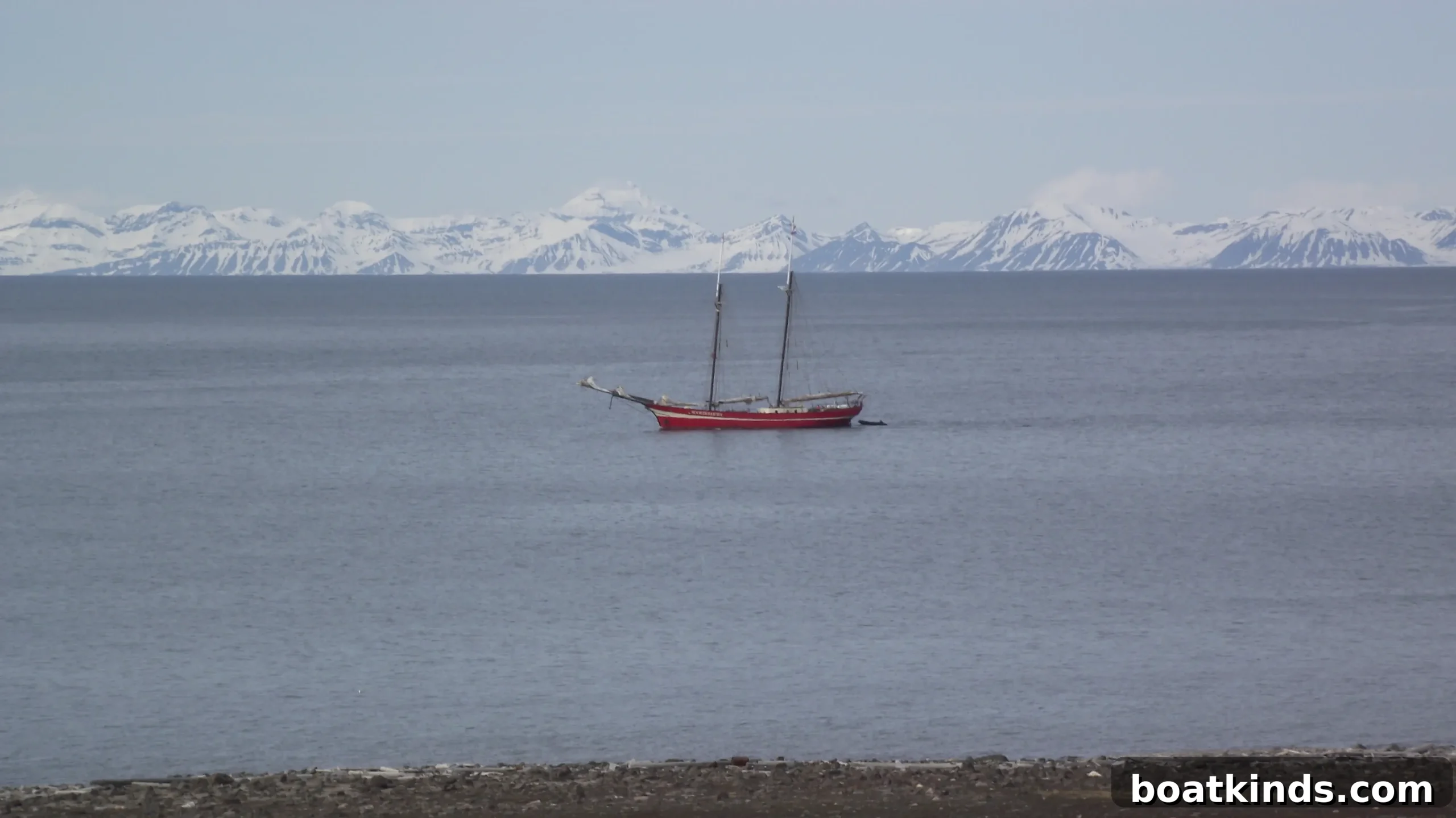
Spitsbergen, now commonly called Svalbard, lies between the Greenland Sea, the Barents Sea and the Arctic Ocean, roughly halfway between the Norwegian mainland and the North Pole. This remote Arctic archipelago is characterized by sweeping glaciers that cover about 60 percent of its land, rugged tundra, and a wildlife population that includes polar bears, Svalbard reindeer, Arctic foxes and walruses. Even in summer, temperatures are cool—often in the range of 39 to 43 °F—so snow is possible on any day of the year. Compared with other places at similar latitudes, however, Svalbard’s coastal climate can feel surprisingly mild, making it an attractive destination for adventurous travelers and expedition sailors.
One distinctive way to experience Svalbard’s dramatic scenery and wildlife is by sea aboard the historic two-masted steel schooner Noorderlicht—“Northern Light” in Dutch. Built in 1910 as a lightship schooner for the Imperial German Navy, the Noorderlicht has been converted for expedition cruising and is operated by a small Dutch crew during the sailing season. The vessel, roughly 152 feet long, typically carries up to 20 guests for voyages between April and October, taking advantage of long daylight hours in spring and summer and the shifting light that makes Arctic landscapes so compelling.
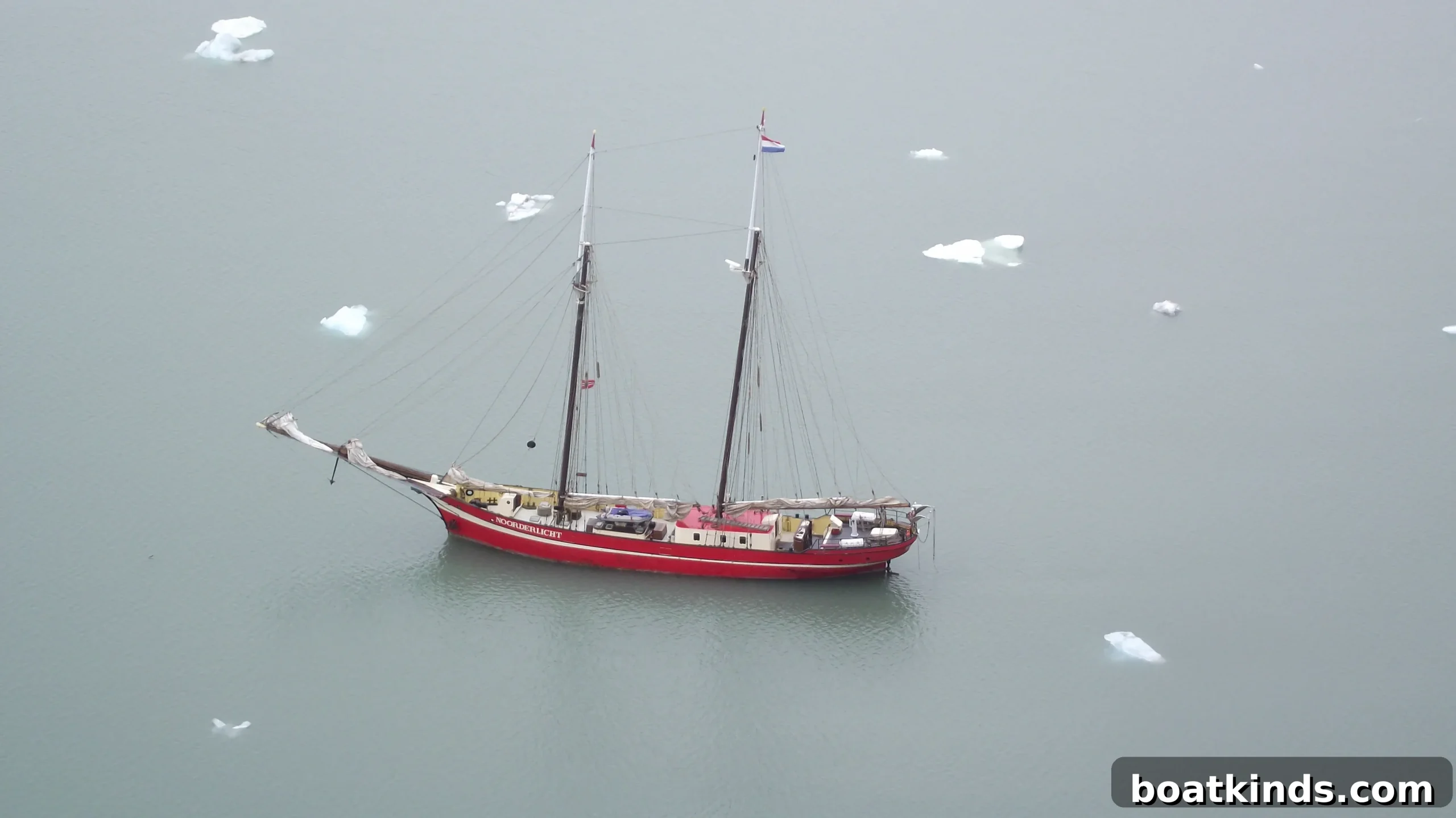
Expedition itineraries aboard Noorderlicht focus on getting guests close to pristine Arctic nature in a low-impact way. Activities often include shore landings and guided hikes where sightings of wildlife are possible—encounters with polar bears are a dramatic possibility in Svalbard, which requires careful planning, experienced guides and strict safety rules. Other common experiences include exploring ice floes and negotiating short crossings between floes to reach shore, watching for whales and seabirds, and absorbing the panoramic views created by glaciers, cliffs and sea ice. Meals aboard are typically hearty and communal, designed to keep guests warm and energized after long days outside.
One of the appealing features of sailing expeditions in Svalbard is the opportunity for guests to participate in seamanship. Under the supervision of an experienced crew, passengers are often invited to assist with sail handling and basic navigation, giving newcomers a hands-on taste of life at sea. No previous sailing experience is required to join these voyages, but a spirit of adventure and a readiness to be outdoors in variable Arctic weather are essential.
Travel to Svalbard and time spent on a vessel like Noorderlicht also mean stepping away from everyday conveniences. The islands are sparsely populated and known for very low crime rates, and mobile phone reception can be intermittent or absent in many landing sites and fjords. That remoteness is part of the appeal: you go to Svalbard to disconnect, immerse yourself in wild landscapes and observe wildlife in its natural environment.
Responsible travel practices are important in the Arctic. Expedition operators and visitors must follow strict wildlife safety guidelines, respect protected areas, and minimize disturbance to sensitive habitats. Guides are trained to balance close observation with conservation-minded distance, and routes are planned to reduce ecological impact while maximizing opportunities to see glaciers, seabird colonies and marine mammals.
For travelers planning an Arctic sailing trip: pack for cold, changeable weather; bring layered clothing, waterproof outerwear and sturdy boots for shore landings; and be prepared for simple but satisfying accommodations on board. Choosing a reputable operator with experienced guides and clear safety protocols is essential, both for enjoying the voyage and for protecting the fragile Arctic environment you’ve come to explore.