Gelcoat is a pigmented, high-quality polyester resin applied as the visible finish on fiberglass boats. Like any material, it has strengths and weaknesses. One of the key shortcomings of gelcoat is its brittleness: it shrinks during cure and has limited elongation, which makes it susceptible to cracking under certain conditions. Understanding the common types of cracks, their causes, and sensible maintenance practices helps boat owners protect their finish and address problems before they worsen.
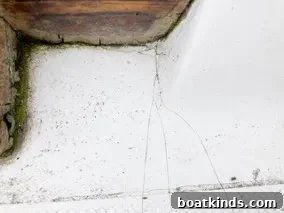
When gelcoat cures it typically shrinks several percent, and its elongation can be less than one percent. This shrinkage and limited flexibility contribute to the smooth, hard surface we expect, but they also make gelcoat brittle—particularly where it is applied too thickly. Manufacturers aim for a gelcoat thickness of roughly 20 mils when applied to a mold, but during production the material can build up at edges, corners and inside radii. Where gelcoat piles up, it becomes stiffer than adjacent areas and is far more likely to crack as the hull or deck flexes.
Single-line Cracks
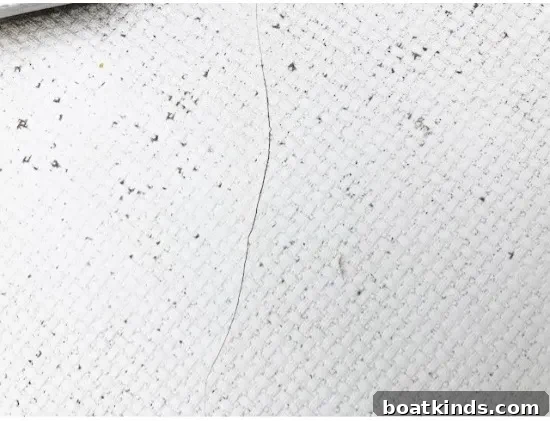
Single-line cracks are narrow, isolated splits that commonly appear where the gelcoat is thicker or where localized stress concentrates. They often show up in cabins, cockpits, around molded seats or at abrupt changes in surface contour. While unsightly, single-line cracks are a normal part of boat ownership and typically reflect the material’s limited ability to flex rather than a catastrophic structural failure. Repair and prevention focus on reducing localized stiffness and addressing the underlying laminate movement when necessary.
Screw Hole Cracks
Cracking originating from a screw hole is a frequent occurrence after hardware installation. Even when a pilot hole is used, the threads of self-tapping or sheet-metal screws can exert enough force to split the gelcoat around the hole. To minimize this risk, use appropriate fasteners, bedding compounds and, where possible, distribute loads with backing plates or reinforced mounting pads so that the gelcoat does not take the full load.
Stress Cracking
Stress cracks present as groups of parallel or similarly oriented fissures concentrated near high-load or high-flex areas—common locations include the joint where a cabin top meets the deck, at bulkheads, and near stiffeners or other hard spots within the structure. These cracks indicate the laminate and gelcoat are being subjected to repeated or excessive bending and can sometimes point to issues with the underlying fiberglass layup. Addressing stress cracking usually requires evaluating the laminate for structural damage and repairing both the gelcoat and any compromised fiberglass reinforcement.
Thermal Fatigue Cracks
Gelcoat reacts to temperature changes: heat causes expansion and cold causes contraction. Over years of seasonal cycles and daily thermal swings, this repetitive movement—often called thermal fatigue—can cause cracking. Cracks from thermal fatigue may appear as parallel or irregular patterns and can range from short hairlines to longer splits. Exposure to sun and weather can accelerate the process; waxing protects against UV fading but cannot stop expansion and contraction of the substrate.
Crazing
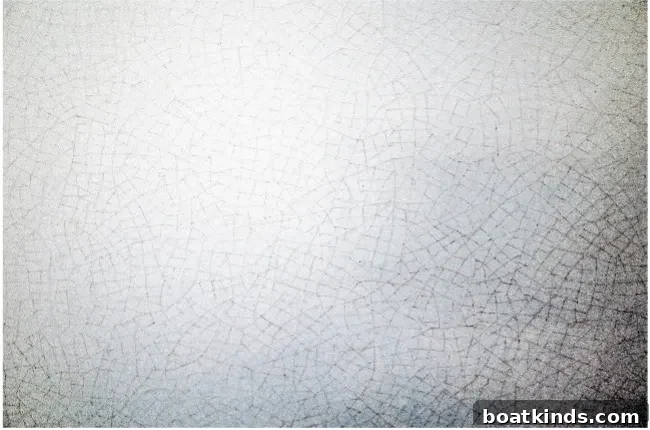
Crazing refers to numerous fine, random cracks that sometimes cover a small area and other times spread across an entire deck or cockpit sole. The pattern can resemble a spiderweb or a shattered window. Crazing results from repeated micro-movement of the laminate beneath the gelcoat and from long-term exposure to environmental stresses. While primarily cosmetic at first, extensive crazing can let moisture reach the laminate and should be assessed to prevent deeper damage.
One common question from owners is whether sanding the cracked surface and rolling epoxy over it will stop the cracks from returning. Unfortunately, simply encapsulating cracked gelcoat with epoxy does not eliminate the underlying cause. When cracks exist, the compromised gelcoat should be removed and repairs should address both the surface and any underlying laminate issues. Proper repair typically involves removing the failed gelcoat, inspecting and repairing the fiberglass and resin beneath, fairing the surface, and then applying a correct gelcoat finish so the repaired area matches the surrounding structure.
Prevention and Maintenance
Preventive maintenance reduces the rate at which gelcoat deteriorates. Regular cleaning, waxing to limit UV damage, and avoiding unnecessary over-tightening of hardware will help. When installing new fittings, use backing plates, proper sealants and fasteners sized and selected to minimize stress on the gelcoat. Address any flex or movement in the hull or deck by reinforcing the laminate where practical before cosmetic repairs.
Repair Overview
Minor, isolated hairline cracks and single-line splits can often be repaired to restore appearance, but effective repair begins with assessing whether the underlying laminate needs attention. If the fiberglass or resin is delaminated or weakened, those structural issues must be fixed first. After structural repairs, the surface is faired and a compatible gelcoat or surface finish is applied. For complex or structural repairs, consult a qualified marine technician to ensure longevity and safety.
For additional detail on identifying crack types, diagnosing the underlying causes and following recommended repair steps, consult authoritative boat repair guides and manufacturer recommendations. Many resources and manuals provide illustrations and step-by-step procedures for fiberglass boat maintenance and gelcoat repair—look for materials that explain both cosmetic and structural considerations so you can make informed decisions about upkeep and restoration.