
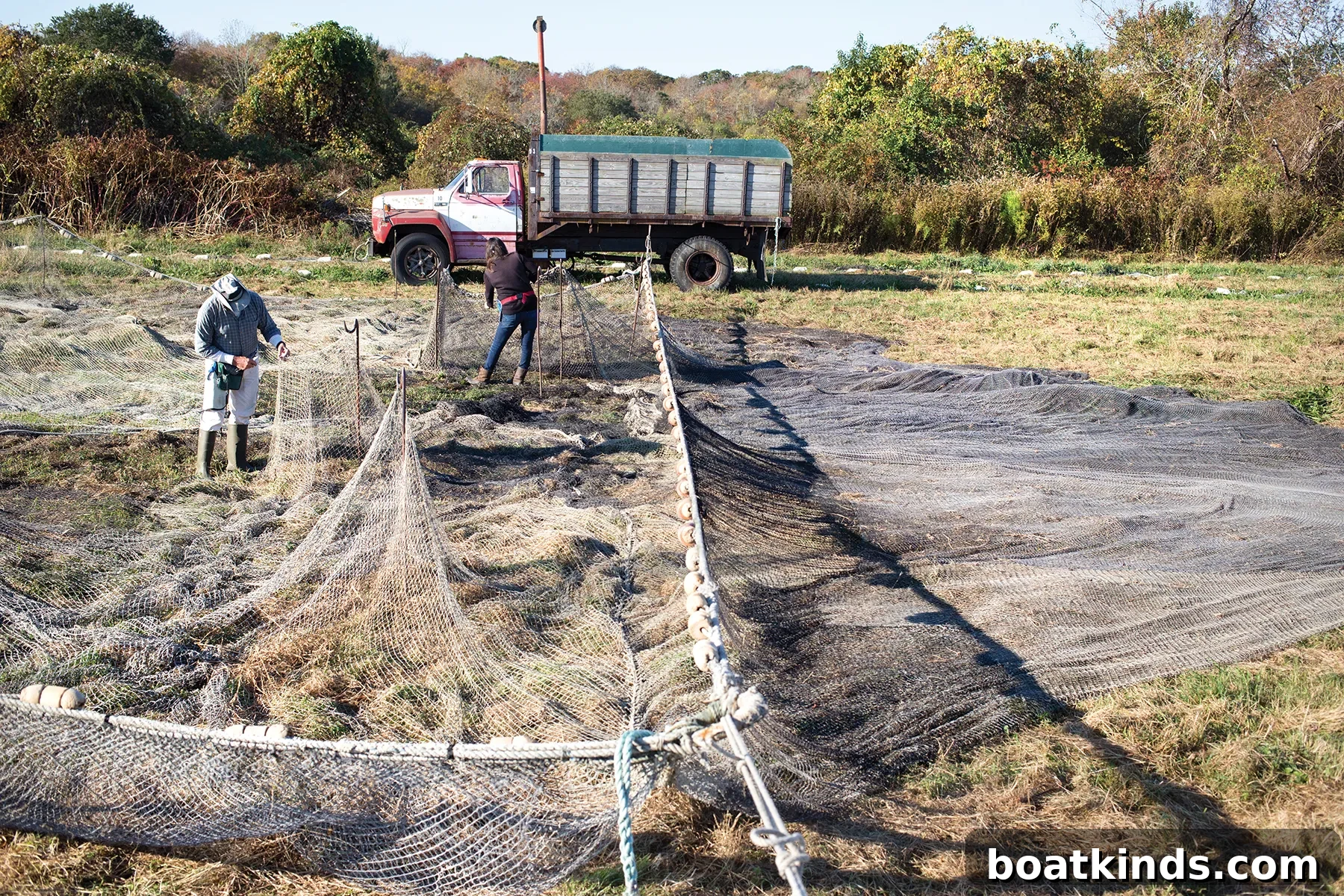
On a cold November morning in Little Compton, Rhode Island, three fishermen sit in a field, patching the worn net of a large floating trap. The season for hauling has finished weeks earlier, and the months of mending and preparing nets are nearly done. This quiet end-of-season work is part of the long seasonal rhythm of trap net fishing—one of New England’s oldest commercial fisheries, with roots reaching back to Native American practices. In the late 1800s, more than 200 traps once hugged the shores of Narragansett Bay and the state’s southern coast.
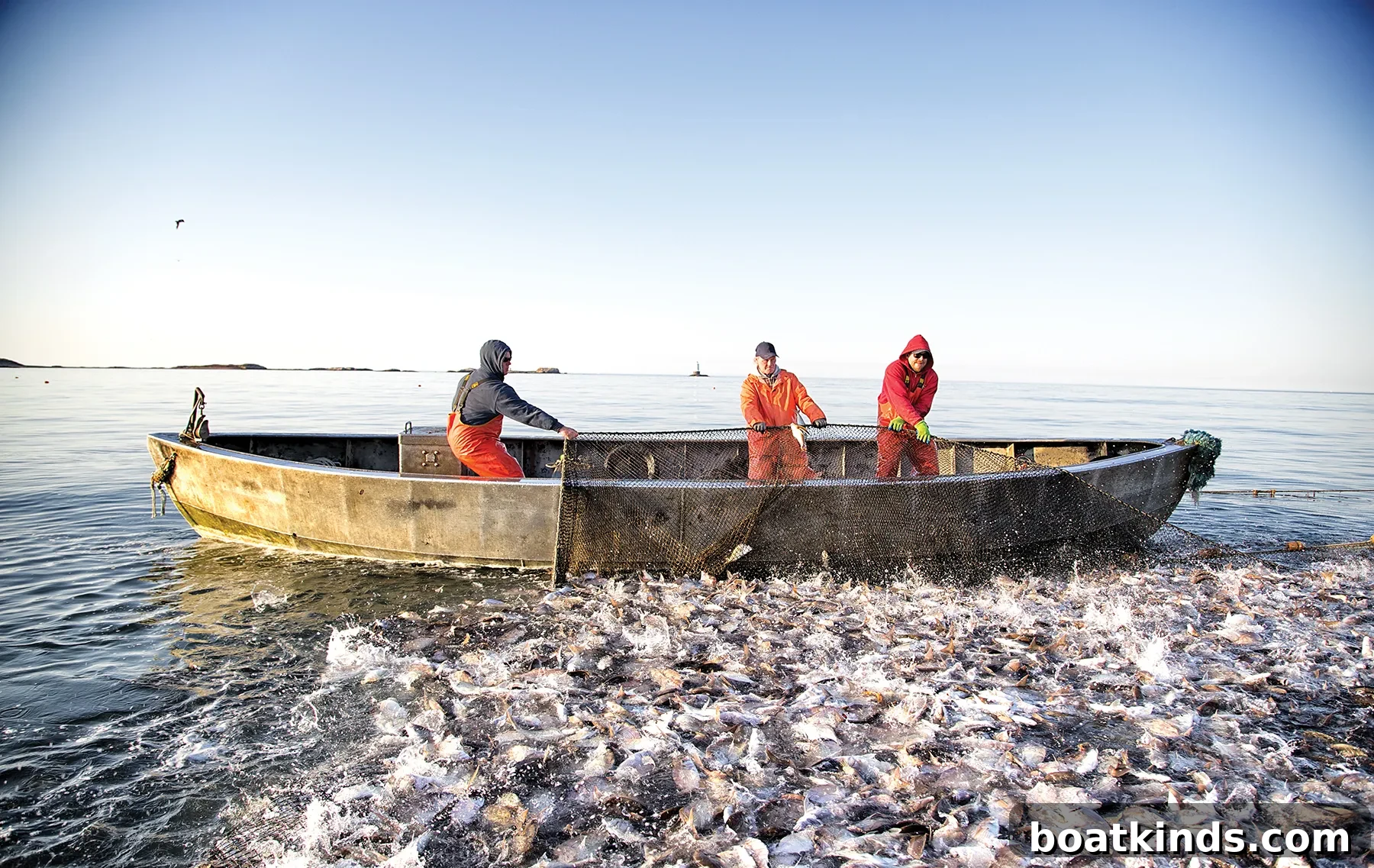
The Wheeler family operates two of the last remaining trap companies in Rhode Island. Each spring they deploy floating trap nets—one off Newport and another near Sakonnet Point—to intercept the migratory scup, commonly known as porgies. In May, these nets can funnel tens of thousands of silvery scup into the trap parlor. The fish are prized as fresh table fish: smaller quantities are sold locally and the majority of the catch heads to New York’s Fulton Fish Market. Large scup can reach nearly 20 inches and weigh up to around 4 pounds.
Over the past decade I’ve gone out on the water twice with the Wheelers, helping a crew of a dozen haul nets by hand—pulling twine, as the work is called. The catch is sorted, boxed, iced and loaded into trucks at Sakonnet Point. When the run is strong, crews often work many consecutive days—sometimes as many as 60—because during peak season it’s “scup every day,” says Corey Wheeler Forrest, 46, who manages the family business. She does everything from pulling twine and mending nets to selling the fish.
At its simplest, a floating trap functions like a giant lobster pot: a system of funnels and panels that guide fish—scup, striped bass, butterfish—into a confined net parlor from which they rarely escape. Trap netting is considered a low-impact fishery: it uses little fuel and allows non-target fish to be released alive, making it one of the cleaner commercial fishing methods practiced in the region.
Unpredictable encounters are part of the work. Last year the Wheelers legally retained a bluefin tuna that tipped the scales at more than 300 pounds; the year before, a large bluefin spooked during hauling, tore a hole in the net and escaped.
DYING ART
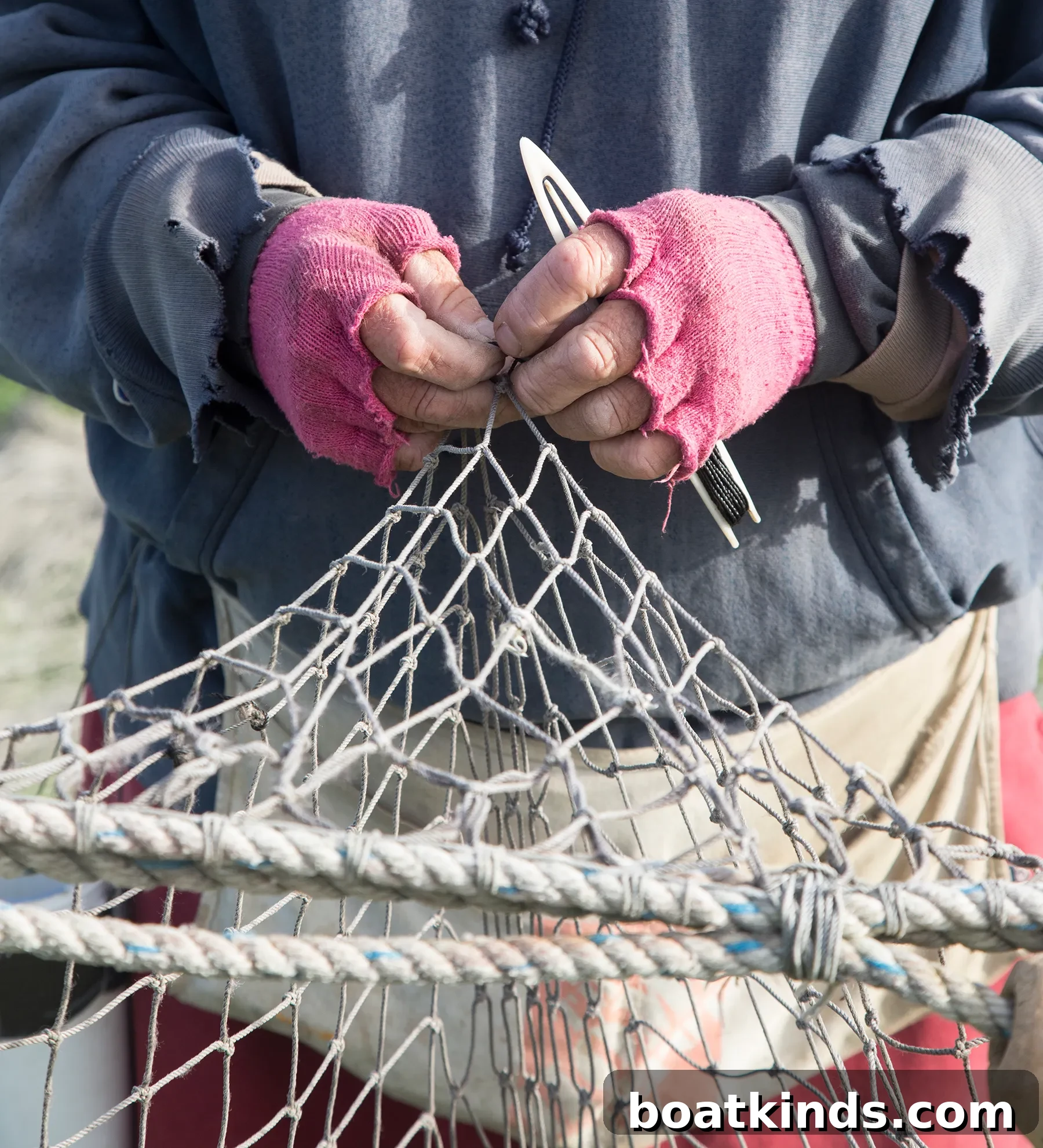
Having witnessed both the hauling and the fieldwork, I wanted to watch the crew mend their nets as the season wound down. In an age of rapid technological change, the craft of rigging and repairing trap nets feels like a vanishing art. The specialized knowledge for the trickier repairs is concentrated in the hands and memories of a handful of older fishermen.
Traditionally, moving from the deck to the mending field was a late-career shift—an inevitability connected to age and declining strength. That transfer of responsibility often meant the field was where an experienced trapper ended his working life. “That’s where you’d go to die,” Forrest says, acknowledging the old line with a smile. But for her, maintaining the nets is essential: “Mending is just as important as fishing.” She began working on nets the summer before she left for St. Michael’s College, where she earned an English degree.
The current mending field lacks the abundance of hands that once kept the industry humming. “The big problem today is finding help,” Forrest says. At the height of the spring run she once worked with 12 to 15 people; last year the crew numbered just eight. She notes that seven is the practical minimum to operate a trap safely and efficiently.
Older anglers historically guarded their rigging techniques, fearing that sharing secrets might cost them work. Today, labor shortages have forced more openness—but finding anyone who can rig an entire trap net is rare. The Wheelers are fortunate to have Bob Malone, 73, a veteran who helped build the very net being repaired on this field some 40 years ago. Malone fished commercially early in his career, left for other work for two decades, and returned in 2010. He remembers being the youngest on a build crew of six and learned his craft from far more experienced hands.
Malone recalls a “master craftsman” on that older crew who learned the trade from the father of famed Rhode Island trap fisherman George Mendonsa. Mendonsa later sold his company to Forrest’s father—a reminder of how tightly knit Rhode Island’s fishing families are. Forrest, now the third generation in her family to fish commercially, treats the net like an heirloom, stitched and repaired by many hands across decades. Her grandfather worked until he died at 87, and her father, Alan Wheeler—who will mark 65 years fishing this spring—still goes to sea each year.
When asked what makes a good net mender, Malone offers a single word: “Patience.” Repairing small holes is the everyday task, but re-rigging tapered sections and restoring the geometry of a net requires experience. Malone kept measurements and notes from the original build; when he recently replaced the bottom of a section called “the kitchen,” those notes guided the repair seamlessly.
“We’re lucky to have Bob,” says Brannon Winn, 70, who has fished for about 45 years. Winn praises the physical benefits of fishing—he once called it a “wonderful workout”—but like many long-time fishers, he feels the wear and tear: multiple joint replacements, torn rotator cuffs, spine issues and many broken fingers earned from decades of heavy work. Still, he finds satisfaction in the field: it’s quieter than hauling and offers its own rhythm.
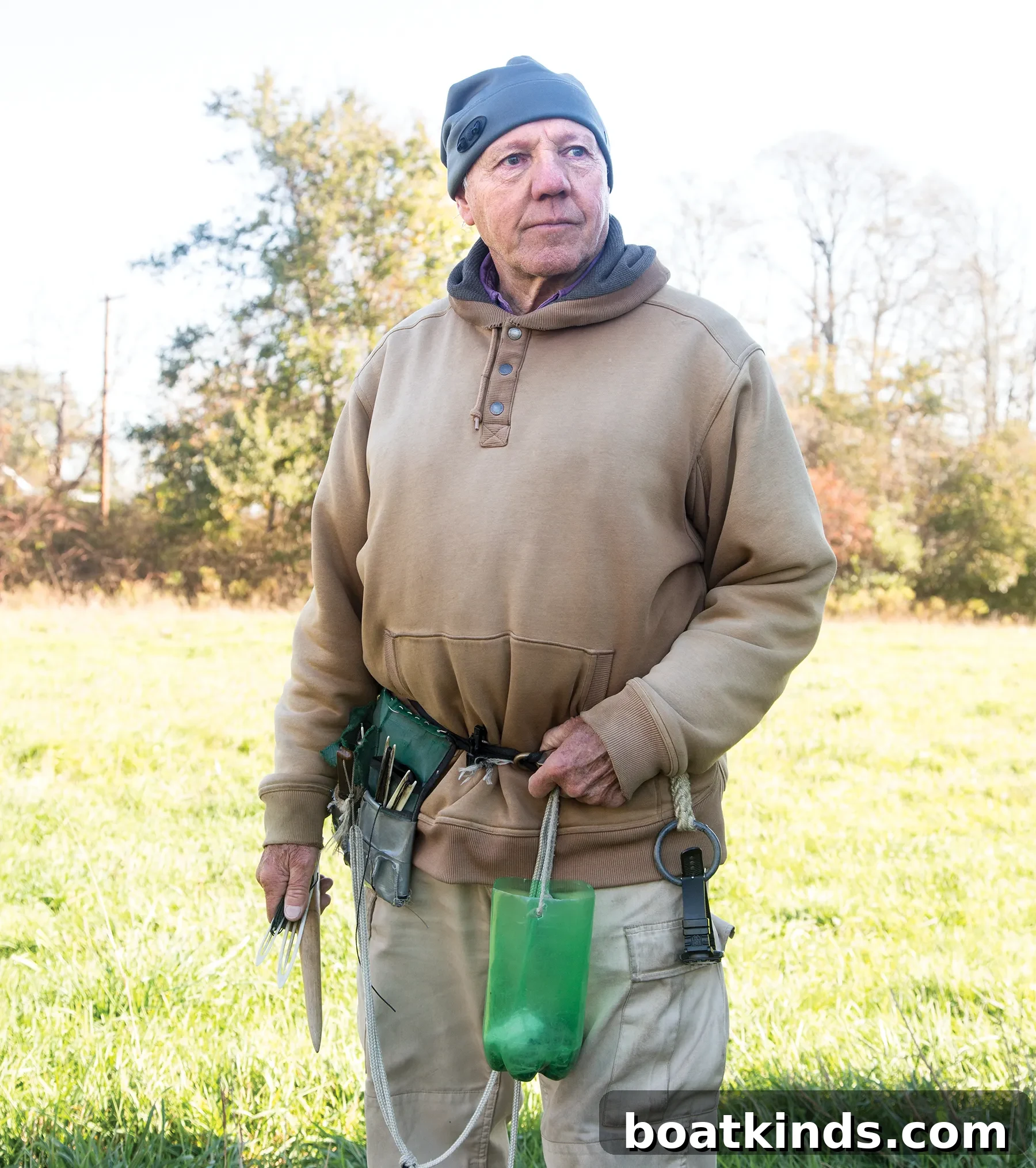
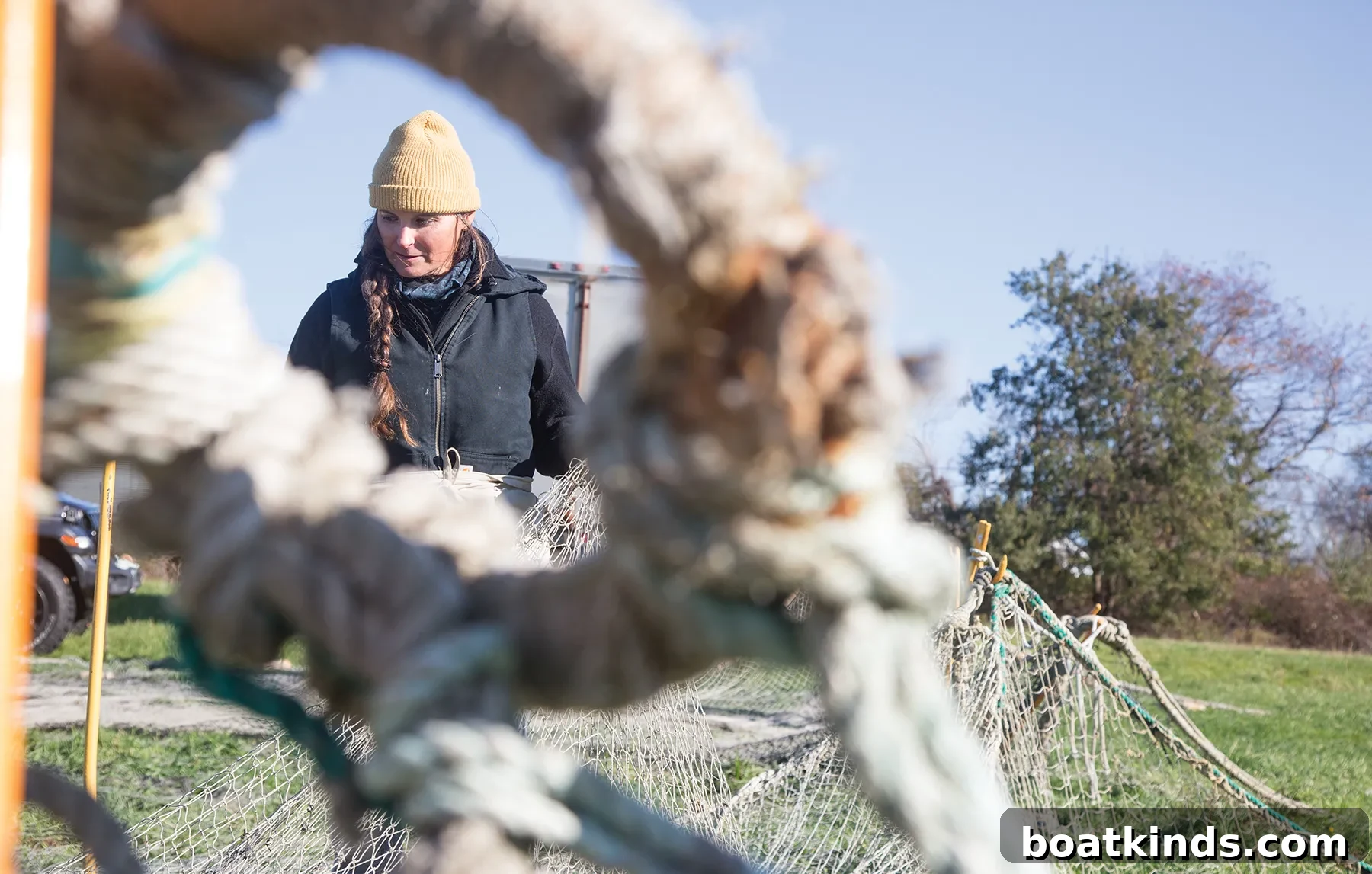
Forrest has grown to value the meditative quality of mending. Managing the business and the stress of fishing and selling can be intense; she finds net work calm and restorative. With fewer hands available, she’s taken on more field time than in previous seasons and is keenly aware of the fragile continuity: “There’s no one behind me,” she says.
In the field, Forrest, Winn and Malone work side by side, spaced so they can concentrate in silence. When conversation happens, it’s practical: Malone jokes that if it’s not windy you can “chat over 5 to 6 fathoms,” but beyond that distance, talking becomes awkward. He describes net mending as almost Zen—a place to lose yourself in steady work.
They all wear fingerless gloves and trade light banter—Winn once bought pink gloves because they were the only pair left at a dollar store—small signs of camaraderie among people who’ve spent decades tied to the tides. Despite the physical toll, most say they would choose this life again. The work is difficult and aging narrows the pool of new apprentices, yet the craft endures in patches, measurements, and the steady hands of those who will pass it on while they can.
This article was originally published in the March 2023 issue.