Nighttime Striped Bass Fishing: Anchor, Cast, and Catch
Summer evenings are some of the best times to be on the water. For many anglers in the Northeast, fishing for striped bass after dark is a seasonal highlight. The combination of big fish, comfortable weather and schedules that allow evening trips makes night striper fishing a popular pursuit for anglers balancing work and family life.

For those who work 9-to-5, dusk trips in July and August are ideal. You can leave after supper, spend a few productive hours on the water, and still be home with time to sleep. Bass are often most active at sunset and into the night, moving into rocky shorelines and structure to hunt. That nocturnal feeding pattern makes evening trips especially rewarding.
One of the simplest and most effective night strategies is anchoring near likely structure as the sun goes down, then using two rods: a conventional rod with a chunk of cut bait on the bottom, and a lighter spinning rod for casting lures along the rocks or structure. The chunk bait targets the larger, bottom-feeding stripers while the spinning rod draws in fish that are feeding closer to shore.
This approach works in bays, rivers, estuaries and offshore around rocky points, including locations along Long Island Sound and other northern waters. Be cautious of ocean surge and strong incoming tides; pick nights with light winds and calm seas for the safest, most comfortable experience.
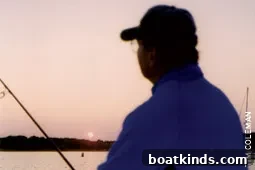
The chunk bait set in a rod holder makes night fishing accessible for guests who are new to the sport. Set the reel in free spool with the clicker on so the reel will alarm when a fish takes the bait. When the click sounds, set the hook and hand the rod to your guest to fight the fish to the boat. In many areas you’ll find stripers, but you may also hook bluefish or fluke depending on local populations.
Keep the evening lively for children and inexperienced anglers by rotating the casting rod among them. Casting plastics or plugs toward shore can quickly turn a bored passenger into an excited angler when a 28-inch bass smashes a plastic shad or other lure. Watch back casts closely and choose safe spacing to avoid accidents when multiple people are casting from the same boat.
If your first spot proves slow, or bites taper off after the last hour of daylight, raise the anchor and relocate. Full-moon nights add ambiance—moonlight on calm water enhances the experience—while warm summer air means a t-shirt or light jacket is often all you need. Anchoring also keeps boats away from rougher rips that form after dark and gives you the option to move into the lee of a river or inlet if winds pick up.
Some captains make these trips memorable by packing a hearty lunch, snacks and soft drinks. For safety, delay alcoholic beverages until after you’re off the water; remain clear-headed for the return trip to the marina or ramp.
Chumming with extra frozen bait cut into small pieces can concentrate fish near your boat and increase bites on bottom baits. Be aware this sometimes attracts dogfish instead of stripers. If dogfish become a problem, stop chumming and pull up your baits; they often move on and you can resume targeting stripers. Persistent dogfish may force you to move to a new location.
The bottom chunk is typically where the biggest bass are hooked, while spinning lures often take smaller fish that patrol the edges. Occasionally you’ll hook a large fish on a weighted lure—try a bucktail with a plastic twister tail fished out to deeper water. Let it sink to the bottom, then retrieve slowly back to the boat.
Most night-caught stripers will be smaller than the trophy class, but always be prepared for a big one. There are memorable stories of very large fish taken after dark—one 75-pound bass was landed while chunking in New Haven Harbor, and a shore angler took a 55-pounder at Harkness Memorial State Park in Waterford last summer. If you hook a huge fish, do not try to stop it abruptly; let it run and let the drag do its work. When it pauses, pump the rod and reel in steadily until you can bring it alongside for a landing net or gaff, observing local regulations for legal gear.
Anchoring and still-fishing after dark is a safe, productive method for average anglers to enjoy nighttime striped bass fishing. It takes a little trial and error, but persistence pays off—few things spark conversation like a photo of a gleaming 38-inch striper taken on an evening trip. With the right location, lighting and tackle, night fishing can become the highlight of your summer on the water.
This article originally appeared in the New England Home Waters Section of the July 2009 issue.