
Captain Keith Colburn: Championing Safety from the Deck of the Wizard
Captain Keith Colburn is quick to remind people that commercial crab fishing in the Bering Sea is inherently dangerous. Yet it is precisely the risks of that work that make him uncompromising about safety. His commitment to protecting his crew and his vessel is why the U.S. Coast Guard selected him as a national spokesperson for the Boat Responsibly campaign, an initiative that urges boaters to always wear life jackets and prioritize safety on the water.
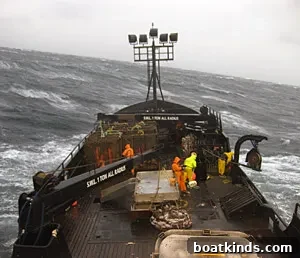
Best known to television audiences from the Discovery Channel series Deadliest Catch, Colburn understands the optics: many viewers consider crab fishing one of the most extreme and hazardous professions. “It’s kind of ironic to have someone in that profession talking about life jackets and boating responsibly,” he says, “but it makes perfect sense. If we don’t prepare and protect ourselves before we leave port, there’s a good chance we won’t come back.”
Rear Admiral James A. Watson, the Coast Guard’s director of operations for the Atlantic Area, called Colburn “an experienced and well-respected seaman who puts a premium on safety for his boat and crew.” Colburn’s reputation for disciplined procedures and a spotless safety record made him a natural partner for public outreach on Personal Flotation Devices (PFDs) and emergency preparedness.
Colburn, age 46, is the owner and captain of the 156-foot steel trawler Wizard, one of the vessels featured on Deadliest Catch. The Wizard, built in 1945 and purchased by Colburn in 2005 from longtime owner John Jorgensen, has a 30-foot beam, a 13-foot draft and a gross displacement of roughly 500 tons. Colburn notes that the ship’s lap-welded hull is a construction style rarely used today, a testament to the rugged workmanship of earlier shipbuilding.
Preparation begins long before the Wizard slips its moorings. Colburn runs exhaustive pre-departure checks and rehearses a wide variety of safety drills with his crew. These exercises range from man-overboard recovery and emergency radio communications to the practical use of marine VHF and single-sideband radios during critical situations. Maintenance, redundant system checks and a disciplined approach to seamanship are routine—Colburn insists on them.

Colburn credits his mentor, John Jorgensen, for teaching him the value of conservative decision-making in heavy weather and meticulous vessel upkeep. Jorgensen often chose to stop fishing when seas turned dangerous, even when others pressed on. That conservative approach—to never gamble with the safety of the boat and crew—remains central to how Colburn operates today.
“The most important safety lessons happen before you even leave the dock,” Colburn says. Being well-prepared, he explains, means anticipating problems, training the crew, and having the right gear and plans in place. He emphasizes not only what the boat operator must do but also the importance of training crew members to handle emergencies independently. “Always take yourself out of the equation,” he advises recreational boaters and professionals alike. “Make sure your crew can react if the operator is injured or otherwise incapacitated.”
Colburn uses his public appearances and Coast Guard service announcements to reinforce one clear message: wear a life jacket. He regularly cites statistics from the Coast Guard’s Recreational Boating Statistics to illustrate the stakes. For example, in 2008 there were 709 boating-related fatalities, more than two-thirds of which were drownings; over 90 percent of the drowning victims were not wearing a PFD.
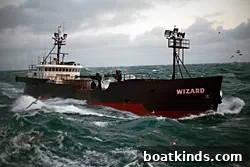
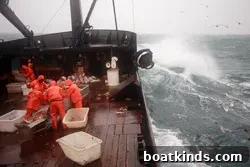
On the Wizard, every crew member on deck wears a PFD at all times—either an inflatable vest-style device or a traditional foam jacket—regardless of sea conditions. Colburn points out that modern PFDs are far more comfortable and less cumbersome than older models. “The technology has improved dramatically,” he says. “Today you can wear a PFD and barely notice it. My guys feel naked without theirs.”
Colburn is also a staunch advocate for Emergency Position Indicating Radio Beacons (EPIRBs) and filing a float plan. He stresses that even a well-planned voyage can go off course: “Even if you file a float plan and something goes wrong, the ocean is vast. If you deviate from your plan and you lose communication, you can quickly become a tiny speck waiting to be found.” The combination of a reliable EPIRB, clear communication plans, and disciplined procedures significantly improves chances of a timely rescue.
Colburn’s message is straightforward and practical: respect the sea, prepare thoroughly, wear a PFD, maintain your vessel, and train your crew. Whether you’re commercial crew working the Bering Sea or a recreational boater on a calm lake, those steps save lives. By drawing on his experience aboard the Wizard and his television platform, Colburn aims to make marine safety common sense for everyone who ventures onto the water.