
Anyone who has renovated a house before listing it knows the best returns usually come from kitchens and bathrooms. The same principle applies to production powerboats up to roughly 60 feet: some refit projects consistently deliver stronger resale value than others. Budgets vary—refits can range from modest updates to major overhauls—so owners should prioritize the work that both improves the boat’s appeal and reduces survey risks. Below are the refit priorities recommended by yards and brokers who regularly prepare boats for sale.
ENGINE REPOWER
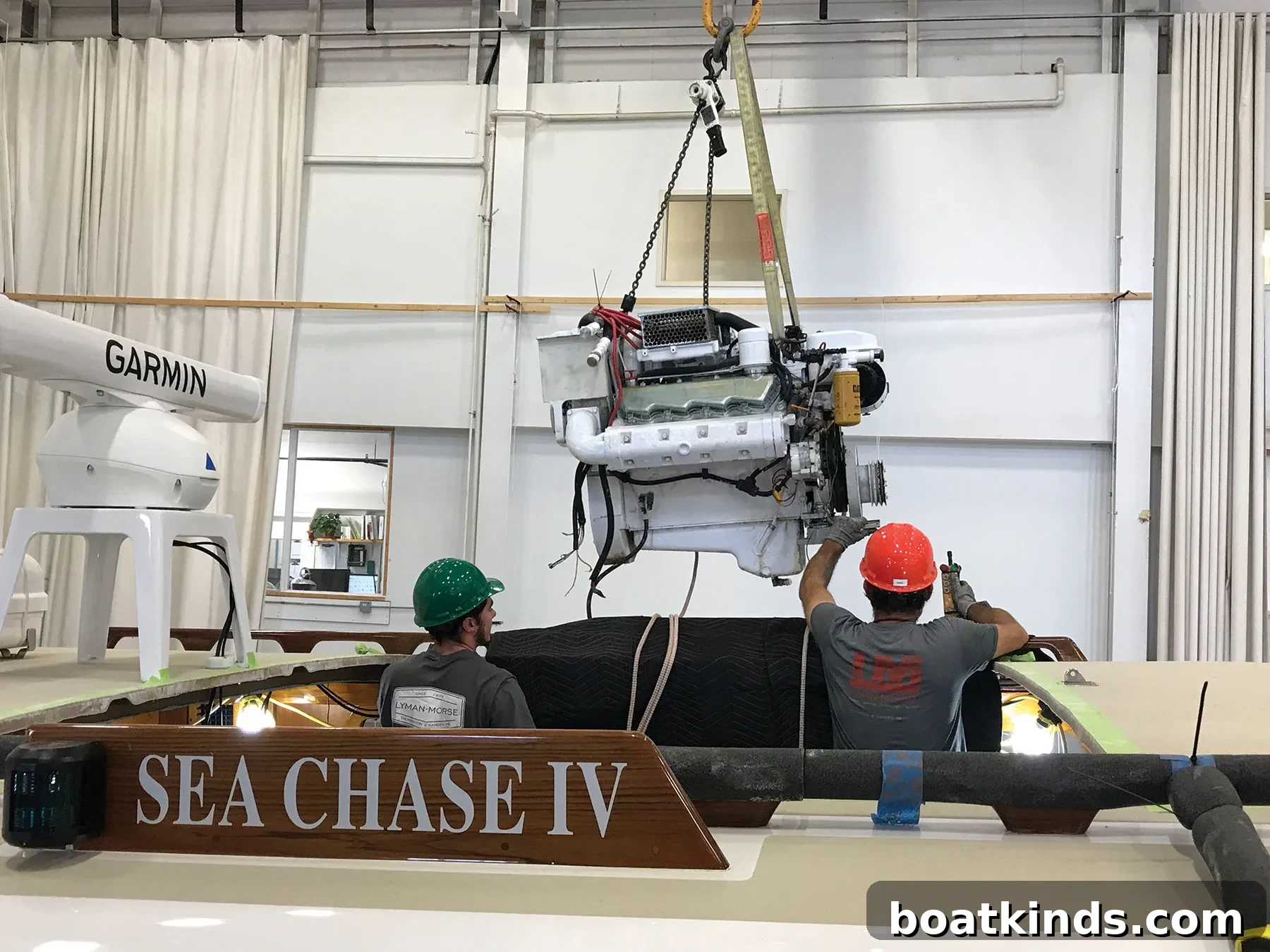
For older production powerboats—especially those originally built with gasoline engines—the top priority is often an engine repower. Many boats from the 1990s have gas engines that are near or beyond the end of their useful life. Replacing aging engines improves reliability and buyer confidence and is frequently the best way to boost resale value. As Matt Graham, COO at Lyman-Morse Boatbuilding, notes, owners who want trouble-free use or a stronger sales position typically opt to replace old powerplants.
Repowers often involve swapping old gasoline engines for modern diesel units, though the boat’s original propulsion layout can limit choices. John O’Connor of Safe Harbor New England Boatworks points out that purpose-built production boats may only accept like-kind engines because of space and mounting constraints. Even so, updated diesel engines tend to be seen as more durable and desirable by prospective buyers.
When engines are the primary selling point—such as on serious offshore or ocean-capable boats—proper maintenance and service history matter a great deal. James Knight of Yacht Tech Inc. emphasizes that buyers of long-range boats often seek well-maintained engines, especially on single-engine passages.
Repowering can also produce a marked uptick in market value. Brook Streit at Kraft Power Corp. recalls examples where a gas-to-diesel repower added six figures in perceived value to certain boats. Costs vary: a single-engine repower on a smaller boat might be in the neighborhood of $40,000, while twin engines for larger boats can push engine-only costs into the tens of thousands. Still, newer engines often offer more power for less weight and better fuel economy, improving both performance and appeal.
SOFT SPOTS IN THE CORE
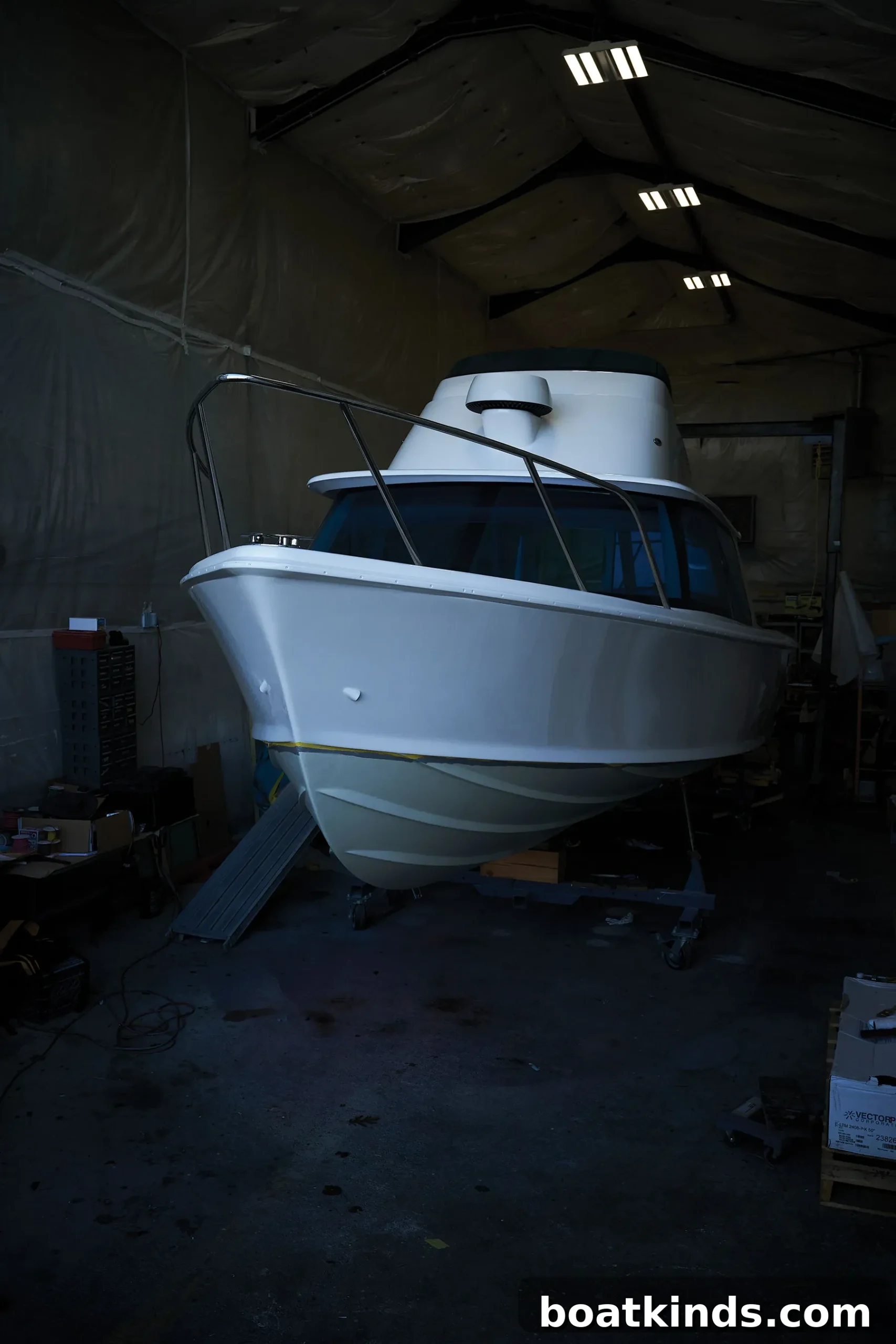
Another high-priority area is the hull and deck core—soft spots from water intrusion are a red flag on surveys and will drive buyers away or lower offers. Older powerboats can have delamination or rotten core material (balsa and other cores are vulnerable), and repairing core damage can be a substantial but necessary expense. Addressing core issues not only improves structural integrity but also avoids major surprises during survey negotiations.
Water intrusion also affects interior components: cushions, cabinetry, portlights, and hatches can show rot, staining, or mildew. While a full interior refit can be costly, owners looking to sell have options. Graham advises that, instead of committing to expensive interior construction, owners commission design plans or concept layouts. Producing professional drawings—such as alternative cabin or cockpit layouts—costs far less than doing the work and helps buyers envision possibilities without over-improving the boat for a niche buyer.
That said, in markets where a particular type of boat is in short supply—long-range cruisers, for example—an interior refresh can be a worthwhile investment. When buyers are actively competing for limited inventory, fresh upholstery, headliners and updated trim can make a listing stand out and sell faster.
CONVENIENCE FEATURES
Upgrading convenience and handling features typically delivers solid buyer appeal. Systems that make docking, maneuvering and long-term ownership easier often rank high on buyer wish lists: bow thrusters, stern thrusters and other handling aids can increase perceived value, especially among newer boaters who prioritize ease of use.
Remote monitoring and integrated electronics are increasingly important in resale decisions. Buyers like the ability to monitor bilges, batteries, security and engine parameters remotely. Installing or integrating an NMEA 2000 backbone or other networked systems supports modern navigation and monitoring equipment and adds peace of mind for seasonal owners or those who leave boats unattended for periods.
Because convenience features can directly affect day-to-day usability, they are often a cost-effective way to increase interest without the scale and expense of a full interior refit.
ALL THE REST
Beyond engines, core repairs and convenience upgrades, many other refit projects are more subjective and depend on the specific market and buyer preferences. Upgrades such as refrigeration, air conditioning or updated HVAC units can be important for comfort and can factor into offers, particularly in warmer climates or on boats intended for liveaboard use.
Helm electronics are often lower on the priority list for sellers. Technology evolves rapidly, and buyers frequently prefer to install their preferred brands and configurations. As James Knight points out, functional legacy systems—like older Furuno gear on long-range cruisers—can still perform admirably, and buyers may choose to upgrade electronics themselves after purchase. Because of this, investing heavily in top-tier helm electronics can be less cost-effective than improving core systems and ease-of-use features.
Ultimately, the best refit strategy balances the owner’s budget, the boat’s intended resale market and the work that most directly addresses survey risk and everyday usability. Engine condition, structural integrity of the hull and deck, and convenience systems that simplify ownership tend to provide the strongest return on investment when preparing a production powerboat for sale.
This article was originally published in the January 2023 issue.