
Actisense EMU-1 Engine Monitoring Unit — Overview
The Actisense EMU-1 is a compact, digital engine monitoring module designed to convert traditional analog engine signals into digital data compatible with NMEA 2000 displays. This unit enables boat owners and technicians to view critical engine information on any NMEA 2000-compatible multi-function display, providing a cleaner, centralized dashboard for monitoring performance and alarms.
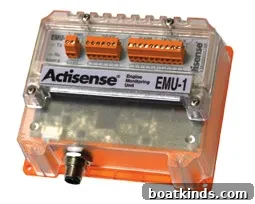
The EMU-1 supports a flexible mix of inputs to suit different installations. It can digitize up to six analog parameters or gauge inputs in parallel, or it can be configured to accept four alarm inputs alongside dedicated tachometer and auxiliary channels. Specifically, the unit accommodates two tachometer inputs and two auxiliary inputs, allowing for a versatile array of engine data to be transmitted over the vessel’s NMEA 2000 network.
One of the primary strengths of the EMU-1 is its configurability. Each module can be programmed to work with a variety of engine makes and models, making it suitable for boats with diverse propulsion systems. This configurability simplifies integration during installation and helps ensure that the data presented on displays aligns correctly with the originating sensors and gauge types. For installers and boat owners alike, this reduces the time spent adapting legacy analog gauges to modern digital networks.
By converting analog signals to NMEA 2000 messages, the EMU-1 enables consistent presentation of engine parameters such as temperature, oil pressure, fuel level, and RPM (when tachometer inputs are used) across compatible displays and multifunction systems. Centralized digital monitoring improves situational awareness, allows for easier troubleshooting, and supports safer operation by ensuring alarms and warnings are visible at the helm or on linked displays.
Typical applications include repowering projects, refits where older analog instrumentation is being upgraded, and new builds that require flexible input options for multiple sensors. The EMU-1’s ability to handle multiple channels in parallel is particularly useful on vessels with several engines or complex monitoring needs, where relaying all engine data into the NMEA 2000 backbone simplifies wiring and display management.
When planning an installation, consider the existing sensors and gauge outputs you intend to digitize. The EMU-1’s multiple analog and alarm inputs mean you can prioritize the most critical engine signals for display and alerting. Because the unit is configurable for different engine models, consult installation documentation or a qualified marine electronics technician to ensure correct mapping and calibration of inputs to your chosen display’s gauge pages.
Price and availability: Actisense EMU-1 was listed at $455. For product availability, accessory options, and support, contact Gemeco Marine Accessories in Lake City, South Carolina. Phone: (803) 693 0777. Website: www.gemeco.com
Packaging and support typically include the EMU-1 module and documentation to guide configuration for common engine types. Professional installation is recommended if you are unfamiliar with NMEA 2000 networks or marine electrical systems, as correct network termination and proper sensor wiring are essential for reliable operation.
Benefits at a glance:
- Converts analog engine signals to NMEA 2000 digital messages
- Supports up to six analog parameters or a combination of alarms and tachometer/auxiliary inputs
- Configurable for multiple engine makes and models to ensure accurate data mapping
- Improves centralized monitoring, alarm visibility, and troubleshooting capability
This product was featured in the April 2014 issue.