
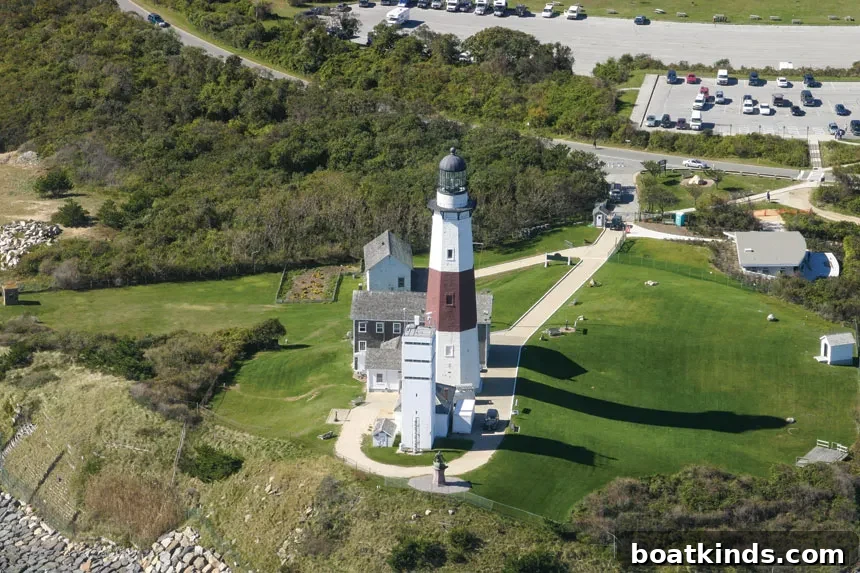
Montauk Point Lighthouse: New York’s Oldest Beacon and a Magnet for Anglers
Montauk Point Lighthouse holds the distinction of being the oldest lighthouse in New York and ranks among the earliest continuously operating beacons in the United States. Authorized by the second U.S. Congress during the presidency of George Washington in 1792, the lighthouse’s construction began on June 7, 1796, and was completed on November 5 of that year. Perched at the easternmost tip of Long Island, the tower’s classic Fresnel lens stands 168 feet above the meeting point of Long Island Sound and the Atlantic Ocean, marking a critical navigation point and commanding sweeping coastal views.
Historic Significance and Maritime Presence
For more than two centuries, Montauk Point Lighthouse has guided ships and shaped the maritime identity of the region. Its presence at the confluence of two major bodies of water—Long Island Sound and the Atlantic—has made it a critical landmark for vessels entering and leaving Long Island waters. The sturdy, timeworn silhouette of the tower remains a tangible reminder of early American coastal navigation, serving both practical and symbolic roles in the story of New York’s seafaring heritage.
Natural Setting and Scenic Appeal
The lighthouse crowns a landscape where tidal currents and open ocean meet, creating dramatic scenery and varied coastal ecosystems. From the bluff surrounding the tower, visitors can take in broad expanses of ocean, watch the ebb and flow of tides, and observe seabirds that ride the coastal winds. The site is especially notable for its panoramic vantage points that showcase sunrise and sunset over the water—popular moments for photographers, sightseers, and anyone seeking an immersive coastal experience.
Fishing at Montauk Point: Autumn Runs and Exciting Angling
Montauk Point is internationally recognized as a premier fishing destination, particularly in the fall. Seasonal shifts in water temperature and currents push baitfish from the protected waters of Long Island Sound out into the Atlantic, creating a striking feeding event that draws larger predatory fish. Anglers converge on the point to take advantage of these migrations, when striped bass, false albacore, and bonito frequently blitz schools of baitfish along the shoreline. These seasonal runs produce fast-paced, electrifying fishing action that has made Montauk a magnet for recreational fishermen from across the country and abroad.
Visitor Experience and Cultural Value
Beyond its navigational function and fishing fame, the lighthouse is a place where history, nature, and local culture intersect. Visitors often come for a mix of reasons: to appreciate the architecture and the historic significance of an 18th-century beacon, to enjoy coastal walks and lookout points, to photograph dramatic ocean scenes, or to join in the seasonal excitement when fish move through the area. The landscape around the tower lends itself to contemplative walks and active outdoor pursuits alike, making it a versatile destination for families, anglers, naturalists, and history enthusiasts.
Preservation and Continued Relevance
Although the lighthouse was built in the 1790s, its relevance endures. It continues to symbolize maritime safety and the long-standing relationship between coastal communities and the sea. The tower and its grounds are part of the region’s collective memory and ongoing stewardship efforts, ensuring that future generations can witness both the historic structure and the dynamic coastal processes that make Montauk Point so distinctive.
This article originally appeared in the May 2018 issue.