
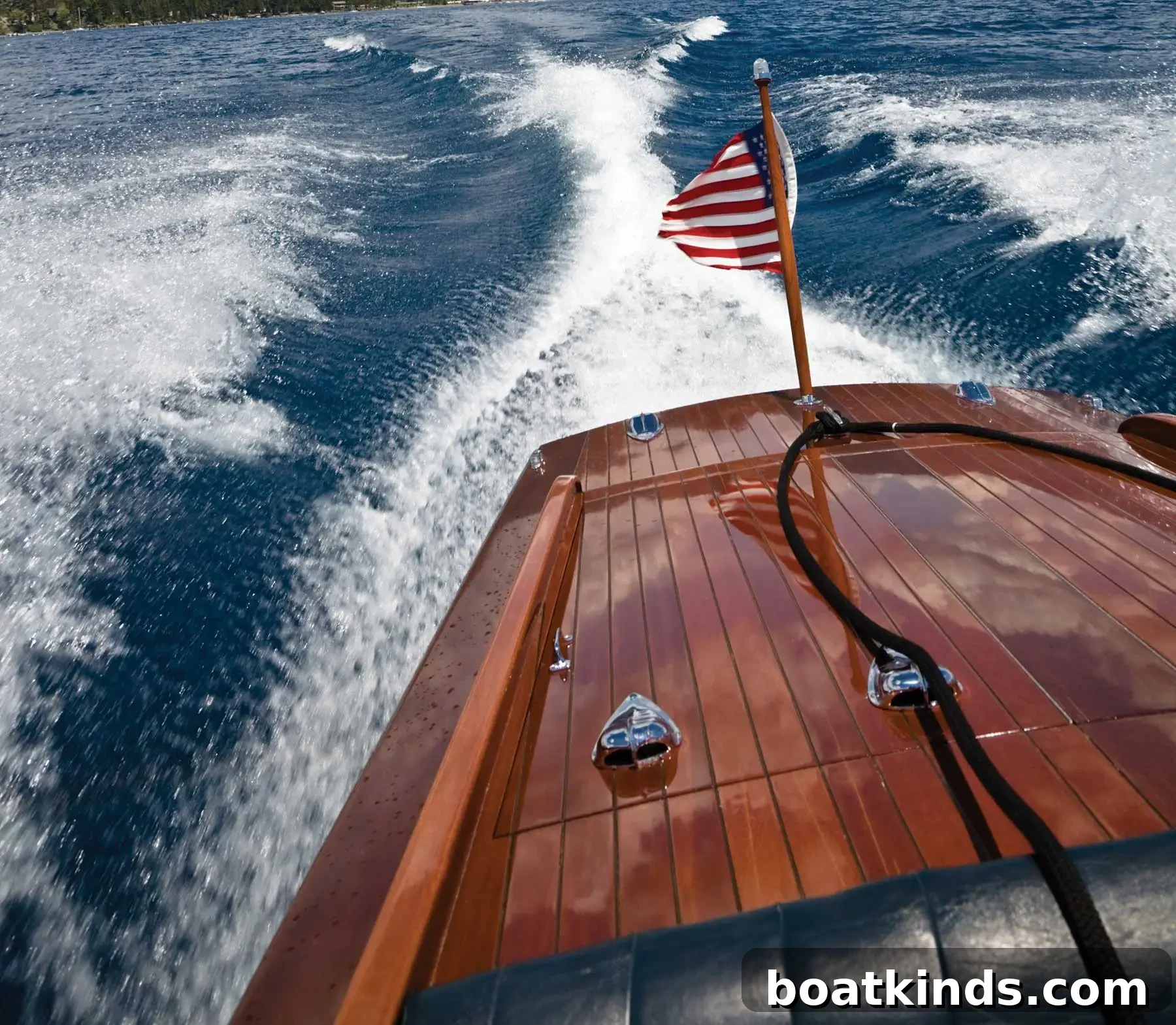
It’s basic physics: a moving boat displaces water and creates waves behind it — that wake is the operator’s responsibility. Good wake etiquette is part of safe seamanship. Most boaters aren’t wakeboarders or surfers, so inconsiderate wakes are more than an annoyance: they can be dangerous to people, damaging to vessels and docks, and harmful to fragile shorelines and wildlife. Always slow down in confined waters and check astern. Be polite when passing other boats and be ready to lessen the effects of wakes from passing vessels to protect your crew and nearby water users.
Wake size depends on hull design, speed, weight and power. Different speeds change how a hull displaces water. Generally, the slowest speeds create the smallest wakes. As you accelerate, the bow lifts and the stern squats, often increasing wake size at transition speeds. At higher planing speeds many powerboats produce less wake because the hull rides on top of the water. Small planing boats at speed may barely displace water at all. Learn how your boat behaves at various speeds, and when near others always give a wide berth to vulnerable craft.
Harbors, marinas and shorelines are especially sensitive, which is why no-wake zones protect docked vessels, marina infrastructure and waterfront property. These zones also safeguard delicate ecosystems and marine life such as manatees. When you see a “No Wake” or “Slow Minimum Wake” sign or buoy, reduce speed to the minimum required to remain steerable. A “No Wake” zone means travel at the slowest speed that still allows steering and produces essentially no wake. A “Minimum Wake” zone means proceed slowly enough to be off-plane and settled, creating only a minimal wake.
Shallow water intensifies wake effects, so monitor your depth sounder. Kayaks, canoes, stand-up paddleboards, small sailboats and skiffs, swimmers, divers, racing crews, working vessels and boats in distress are all vulnerable to wake damage. If you pass fishermen or watermen in small skiffs or people working from a float, slow down to avoid capsizing or throwing them overboard. Courtesy reduces risk and prevents angry exchanges.
Ultimately, you are accountable for your wake. In narrow passages, inlets or channel bottlenecks there may be no posted speed limits, but that does not remove your duty to be considerate. When passing vulnerable craft, consider altering course to increase separation and reduce your wake’s impact.
I know an elderly couple who sail a large, engine-less sloop. It’s slow and can be awkward when the wind dies, making it very susceptible to passing wakes. They’ve developed a unique set of signals to persuade thoughtless powerboat operators to slow down: a polite VHF request, a two-handed palms-down slow-down gesture, and — as a last resort — the skipper’s wife rocking a baby doll on deck while giving the passerby a withering look. Whether the doll is persuasive or just theatrical, it’s effective at getting some operators to reduce speed and pass with care.
Responsible seamanship is also a legal obligation. Recreational operators must manage speed and operate prudently so they do not endanger others. Rule 46 CFR Section 2302 allows civil penalties — up to $5,000 — for operating negligently or interfering with the safe operation of another vessel in a way that threatens life, limb or property.
A serious example illustrates the danger. A pair of inexperienced boaters left a dock in a new center console and were enjoying speed when a 100-foot motoryacht crossed too close in the fairway. A steep, fast-moving wake hit the smaller boat. In panic the novice operators throttled back without changing heading; the smaller boat was left broadside, rolled onto her beam ends and came ashore damaged — with broken bones and other injuries. This incident shows how both poor passing technique and incorrect reactions by the smaller vessel can cause severe consequences.
Who Is to Blame Here?
In that case I would fault both vessels. The large yacht should have given more separation; the smaller boat’s operators could have mitigated the danger with better technique. When faced with an unavoidable large wake, warn your crew with a clear shout — “wake” — so everyone can brace or sit down. Reduce speed and take the waves head-on at a diagonal, roughly 30 to 45 degrees, to reduce impact. Larger boats may choose to let the wake pass under the quarter. If crossing aft wakes, do so before you get too close, where wave size increases. Keep weight evenly distributed so your trim remains correct.
On rivers, canals and other narrow waterways a damaging wake often happens during passing maneuvers. Communication helps: an overtaken vessel can slow to bare steerageway to let the overtaking boat pass without accelerating and creating a larger wake. Plan your passes with thought for the traffic patterns — on weekends and holidays expect more personal watercraft, tow-sports and high-speed runs and avoid their lanes when anchoring or fishing. Anchor behind a sandbar or point of land when possible to shield yourself from passing wakes.
Both local and national maritime regulations encourage good conduct; you can be held civilly responsible for damages your wake causes. The simplest, safest strategy is to be courteous: stay alert, slow down in sensitive areas, give other boats space, and watch astern for your wake’s effect. If someone else throws an inconsiderate wake your way, take proactive measures to lessen the impact rather than escalating the situation. Most violations are accidental; a calm corrective response is often the best one.
This article originally appeared in the July 2020 issue.