
National Coast Guard Museum: Preserving Heroism, History and Innovation at Sea
On Feb. 18, 1952, a brutal nor’easter split two oil tankers, Fort Mercer and Pendleton, off Cape Cod, Massachusetts. The dramatic rescue of 70 men from both ships — and, in particular, the daring 32-person rescue led by Boatswain’s Mate First Class Bernard Webber — remains one of the Coast Guard’s most iconic maritime rescues. Webber and his three-man crew launched the 36-foot Motor Lifeboat CG-36500 from the Chatham Lifeboat Station and battled 60-foot seas and 70-knot winds to reach the stern section of the 503-foot Pendleton.
As they crossed the Chatham bar, Webber, Engineman Andrew Fitzgerald, Seaman Richard Livesey and Seaman Irving Maske sang hymns like “Rock of Ages” and sea songs like “Harbor Lights” to steel themselves against the roar of towering waves. A massive wave slammed the lifeboat, tossing it high and leaving it momentarily on its side before the self-righting hull recovered. Another crushing wave flattened Webber and shattered the windshield, but the crew pressed on through driving snow to find the Pendleton’s stern 10 miles offshore.
They found a “black mass of twisted metal” pitching on the seas. The crew climbed down a Jacob’s ladder and brought 32 survivors aboard; they pulled men from the water and righted the boat amid relentless conditions. Minutes after the final crewmember was rescued, the Pendleton rolled and sank. That extraordinary mission, re-created in the 2016 film The Finest Hours, exemplifies the courage and seamanship the National Coast Guard Museum aims to celebrate.
Why a National Coast Guard Museum?
The museum association’s goal is to honor the service’s legacy, explain its modern missions and inspire wider recognition of the Coast Guard’s role in national security and maritime safety. Retired Capt. Wes Pulver, executive director of the nonprofit National Coast Guard Museum Association, says the idea has gained momentum in recent years. A 28-year Coast Guard veteran who commanded the tall ship Eagle, Pulver notes that while the Coast Guard has fought in every major U.S. conflict, it remains the only armed service without a national museum dedicated to its history.
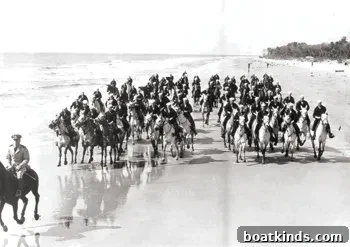
Created in 1915 when the Revenue Cutter Service and U.S. Life-Saving Service merged, the Coast Guard traces its continuous seagoing lineage back further — incorporating 125 years of cutter service — and is one of the nation’s oldest maritime services. Revenue cutters enforced law and excise in the early Republic, and Coast Guard personnel have served in every major conflict since.
Exhibits, Architecture and Visitor Experience
The planned museum will be a 21st-century facility combining interactive exhibits, artifacts, documents, paintings of dramatic rescues and immersive simulators. Gallagher & Associates, a museum design firm with experience on major national museums, is designing the exhibit space to convey both historical depth and contemporary technology. Visitors will experience air and sea navigation systems, simulated helicopter rescues in Force 10 storms and rescue-boat scenarios that replicate pounding seas.
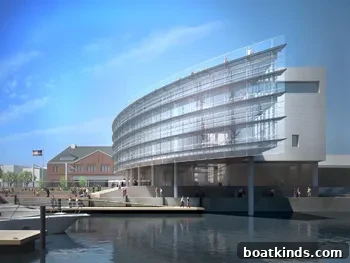
Architectural firm Payette envisions a waterfront building with a sweeping glass curve that faces the Thames River in New London, Connecticut, suggesting the hull of a ship cutting through water while offering panoramic river views. The site sits adjacent to City Pier, the homeport for the Coast Guard barque Eagle, and near New London’s Union Station and ferry terminal. The museum’s location reinforces the Coast Guard’s historic presence on both banks of the Thames River since the late 18th century and the city’s long-standing ties to Coast Guard training and research.
Interpreting the Coast Guard’s Missions
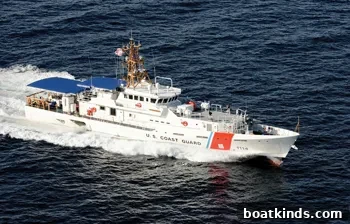
The museum will highlight how the Coast Guard evolved from a Treasury Department customs service into an armed service conducting a wide range of missions: ports and waterways security; drug interdiction; aids to navigation; search and rescue; living marine resources protection; marine safety; defense readiness; migrant interdiction; marine environmental protection; ice operations; and other law enforcement activities. The exhibits aim to convey the service’s resourcefulness, technological innovation and adaptability.
Funding, Timeline and Community Support
The museum project, first envisioned in the late 1990s, was delayed by legal proceedings and economic downturns but has advanced to the design and fundraising stages. New London has deeded 0.37 acre on the Thames River for the museum. State and local commitments include funding for infrastructure such as a pedestrian overpass, ferry terminal improvements and parking. The association continues to raise private funds and has launched grassroots initiatives to build donor support.
One grassroots initiative is the museum’s “plankowner” program, borrowing a naval tradition that honors original crewmembers. Supporters can become plankowners by committing to recurring monthly donations through the museum’s commissioning. Donors who maintain that support through the museum’s opening will receive a signed and stamped plankowner certificate upon transfer of the facility to the Coast Guard.
Leadership and Legacy
Pulver and other veterans involved with the museum bring firsthand experience to the project. Pulver led migrant interdiction operations during the 1994 mass migration across the Straits of Florida and commanded the cutter Bear during large narcotics interdictions. Retired master chief Jeff Creighton emphasizes the museum’s purpose: to deepen public understanding and respect for the Coast Guard’s work while inspiring future service.
Pulver notes that the Coast Guard regularly seizes more illicit drugs at sea than domestic law enforcement seizes on land, but many of these stories remain little known. The museum hopes to reveal these hidden histories and contemporary missions in a compelling, educational setting that honors service members and informs the public.
This article originally appeared in the December 2016 issue.