A thorough dockside inspection and sea trial will put you on the right course to find the boat that fits your needs
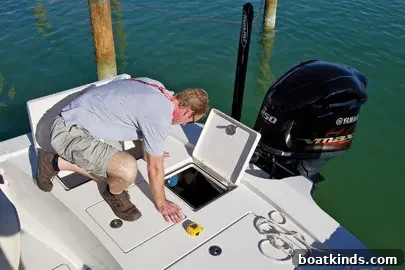
If you’ve just spent a significant sum on your dream boat, the last thing you want is to discover major flaws early in ownership. Perhaps the boat struggles to get on plane with a full load and feels underpowered, or a “self-bailing” cockpit floods when several people move to the stern. Whether new or used, such surprises can quickly turn excitement into frustration.
Reading reviews and talking to experienced boaters is a helpful start, but nothing replaces a careful dockside inspection and a thorough sea trial. Be your own toughest critic: trust your eyes, instincts and experience. When something doesn’t feel right, ask questions, investigate further and don’t leave important issues to chance.
I’ve tested boats for more than a decade and have learned the value of a systematic walk-through and on-water evaluation. Below are practical pointers — what to look for at the bow and stern, how to assess engine and systems access, what to check at the helm and in consoles and cabins, and how to run a meaningful sea trial. Bring a small flashlight, a tape measure and a way to record observations (notebook, camera, or phone). Boats with newer engines should provide fuel-burn or MPG readouts at the helm; corroborating those figures with an auxiliary meter is a good idea when possible.
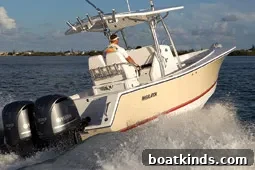
Bow inspection: anchor locker, rails and deck layout
Start at the bow and move aft. The anchor locker should be large enough for the correct-sized anchor and adequate rode, and the lid must not obstruct access when open. Hinged lids that lie flat and resist being blown shut are far better than flimsy lids that swing in the wind.
Check gunwale height, toekick and handrails. Toekick — the recessed area at the base of the hull side — lets you plant your feet close to the coaming for balance. Secure handrails, high bow rails and recessed bow rail placement (inside the rubrail) improve safety and protect the rail from dock damage. On boats with raised foredecks, note any steps or level changes that could be tripping hazards and point them out to guests.
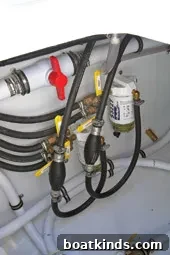
Stern: cockpit drainage, swim platforms and boarding
Check cockpit depth relative to the boat’s intended use. Lower coamings make hauling in fish easier; higher ones are safer for preventing falls overboard. Confirm that the cockpit truly self-bails when the stern is loaded — bring a few people aboard to test drainage under weight. Scuppers should be large and properly located; horizontally mounted scuppers flush with the draining surface are less likely to leave puddles.
Inspect transom doors, hatch gaskets and hardware for positive-locking latches and durable gasketing. Swim and boarding platforms should be free of protruding cleats and extend beyond drives or props on sterndrive boats. Look for ladders that can be deployed from the water, are positioned well away from the prop, are wide enough to climb comfortably, and have non-skid surfaces and a nearby handrail.
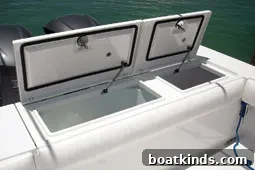
Engine and systems access
Engine and equipment hatches must be watertight and large enough to access fuel/water separators, filters, bilge pumps, seacocks and batteries. Batteries should be mounted high, secured, ventilated and have covered positive terminals. Look for clear labeling on hoses, valves and seacocks, and a white-painted bilge for better visibility.
On larger inboards, make sure items such as raw-water strainers, inverters or generators, and oil fill points are reachable, and that there is a safe, well-lit platform or ladder in the engine room. Ask how accessible the fuel tank fittings are and whether the deck or hull would need cutting to remove a tank for service or replacement.
Helm ergonomics and visibility
The helm should allow comfortable operation whether seated or standing. Test both positions during the sea trial. Confirm clear sightlines, readable gauges and displays, a glare-minimizing helm background, functional windshield wipers, and quick, separate access to important controls like the horn. Adjustable helm seating and adequate space between seat and wheel are also important.
Inspect helm wiring access: large service hatches that permit two hands into the compartment are preferable. Wiring should be neat, tinned or tin-coated to resist corrosion, and terminals covered. Check for wiring chases that can accommodate future electronics or accessories.
Console and cabin usability
Consoles on open boats often double as storage or contain a head. Doors and hatch lids should remain open while you stow gear (gas lifts or latches help). In a head, verify handholds, ventilation and headroom. In cabins, imagine daily use: is the galley laid out for your cooking style? Are counter space, storage, positive-locking latches and gimbaled stoves adequate? Check berth size and access, headroom, handrails on companionways, portlights with screens and sufficient natural light.
Ensure the electrical distribution panel is enclosed and accessible from both helm and cabin, and assess overall joinery and craftsmanship if there is extensive interior woodwork.
Construction and materials
Ask about hull and deck construction: solid fiberglass or cored composites, coring material type, and whether advanced processes like resin infusion or vacuum bagging were used. Confirm whether cores are backed away at through-hull penetrations and replaced with solid laminate to avoid water intrusion. Inquire about resin types — vinylester resins reduce blistering risk, with epoxy typical on higher-end boats — and whether hull-to-deck joints and hardware are through-bolted or bonded for strength.
Sea trial: what to test on the water
Once the dockside inspection is complete, run the boat. Check for excessive bow rise during acceleration — the horizon should remain visible from your seated position. If the boat needs significant trim-tab input just to get on plane or run well in calm conditions, that may indicate design compromises.
Test the boat through a variety of conditions and headings at a comfortable cruising speed. Run at different RPMs to establish economical speeds and note wind and wave handling. Try a range of sea conditions if possible — the goal is to evaluate how the boat trims, how effective the tabs are, when the hull begins to pound, and whether the boat can hold a practical low-planing speed in a seaway.
While drifting, evaluate stability and whether moving around the deck feels safe. Count wheel turns from lock to lock to gauge steering responsiveness; three to four turns is typically a quick, responsive system. Use engine readouts or fuel burn calculations to estimate mileage and fuel economy.
Final thoughts on buying and inspecting a boat
No boat will meet every ideal criterion. Some features are preferences rather than deal-breakers. Instead, focus on envisioning how you and your family will use the boat and whether its design, equipment and performance meet those needs. After your inspection and sea trial, hire a qualified surveyor to perform a detailed evaluation of structural integrity, electrical systems and compliance with industry and Coast Guard standards. For used boats, also consider a technician’s engine inspection and compression check before finalizing the purchase.
This article originally appeared in the October 2010 issue.