
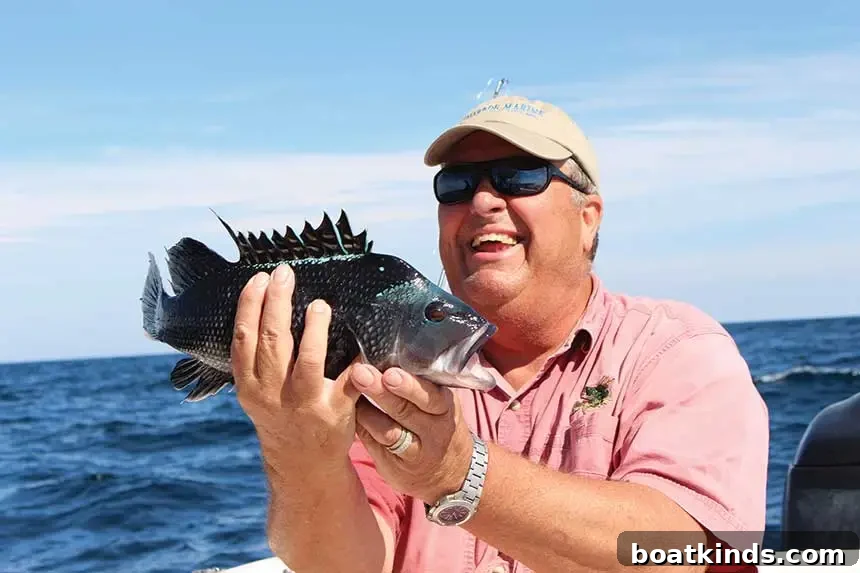
Black sea bass are often underestimated among smaller bottom-dwelling species, yet they have earned a loyal following along the U.S. East Coast. Anglers prize them not only because they congregate near docks and artificial reefs or because they eagerly take a variety of baits, but most of all for their table quality. The firm, white flesh of black sea bass is sweet and versatile—comparable to grouper—and freezes exceptionally well, making them a favorite for keeping a freezer stocked through the colder months.
1. Fish baited jigs, not bottom rigs
While traditional bottom rigs can be productive, they tend to tangle or get snagged on wreckage and reef structure, costing time and gear. More importantly, chunk-bait rigs often bring in smaller fish on average. For better quality catches, use a 4- to 8-ounce jigging spoon and add bait such as squid strips, clam chunks, or fish strips. The combination of weight, flash and scent creates a larger, more attractive presentation that draws bigger sea bass.
Unbaited jigs work when fish are highly aggressive, but baited jigs typically boost bite rates and average size. In extra-snaggy areas, favor a jig with a single top hook and durable bait so missed strikes don’t force constant re-rigging. Where snags are less of an issue, a jig with both a top single hook and a bottom treble allows you to present multiple bait options at once and increase your chances.
2. Don’t stick to one spot — spot-hop
Sea bass behavior can vary dramatically from one wreck or reef to another, even just a few miles apart. One structure may hold fish that are quiet while another nearby is producing fast action. Spot-hopping—moving between likely holding areas—is usually more productive than staying put unless you’re on an active school. Keep your electronics and map handy so you can quickly locate and move to the next target until you find consistent feeding fish.
3. Make longer runs for bigger fish
Fishing spots close to shore or popular wrecks are often pressured and can hold smaller fish. Running farther out or to less-visited reefs and live-bottom areas often produces a higher quality of fish. You don’t need to limit yourself to marked wrecks or artificial reefs; natural live-bottom patches in remote areas can hold large sea bass that avoid heavy fishing pressure. If you want trophies, expanding your range and exploring quieter areas is a proven approach.
4. Carry a wide assortment of bait
Although squid strips and clam chunks are standard and effective, sea bass can be selective. Carry a variety of baits—peeler or soft crab, different fish strips, and even bait-specific options that are common locally. Sea bass often key in on the prey that’s abundant in their area, so having multiple bait types lets you quickly test and adapt when fish show a clear preference.
5. Use the right mainline and leader
Use braided mainline paired with a 4- to 5-foot monofilament leader (40-pound test or heavier). Braid’s low stretch makes it easier to detect subtle strikes and to set hooks quickly. At the same time, monofilament offers better abrasion resistance against sharp edges and barnacled structure, and it provides a more forgiving shock absorption during hard fights. This combination balances sensitivity, durability and abrasion protection when fishing around structure.
Bonus tip: if you’re fishing with a baited bottom rig and feel small, tentative pecks, resist the urge to immediately set the hook. Lift the rig off the bottom, hold it suspended a few seconds, then lower it back down. Sea bass typically engulf prey whole and don’t nibble in short, careful ways—those tiny tugs are often caused by smaller bottom species. By briefly lifting and re-presenting the bait, you can discourage the smaller fish and give larger sea bass a chance to take over the presentation and strike decisively.
Follow these practical strategies—baited jigs, spot-hopping, longer runs to less-pressured spots, varied bait selection and a braid-plus-mono rig—and you’ll increase your chances of filling the cooler with quality black sea bass ready to enjoy at the table or stored in the freezer for winter.
This article originally appeared in the December 2019 issue.