
In early July of the previous summer, our crew aboard the schooner Heritage eased into Rockland Harbor, Maine, and dropped anchor. Close by, another three-masted schooner worked her way to a berth. “That’s the Victory Chimes,” said Capt. Doug Lee, skipper of Heritage. “She’s the only Chesapeake ram schooner left. They hauled lumber, grain, coal—anything you name.” Although Victory Chimes was an attractive vessel with clear ties to Chesapeake Bay maritime history, I didn’t think much more about her at that moment.
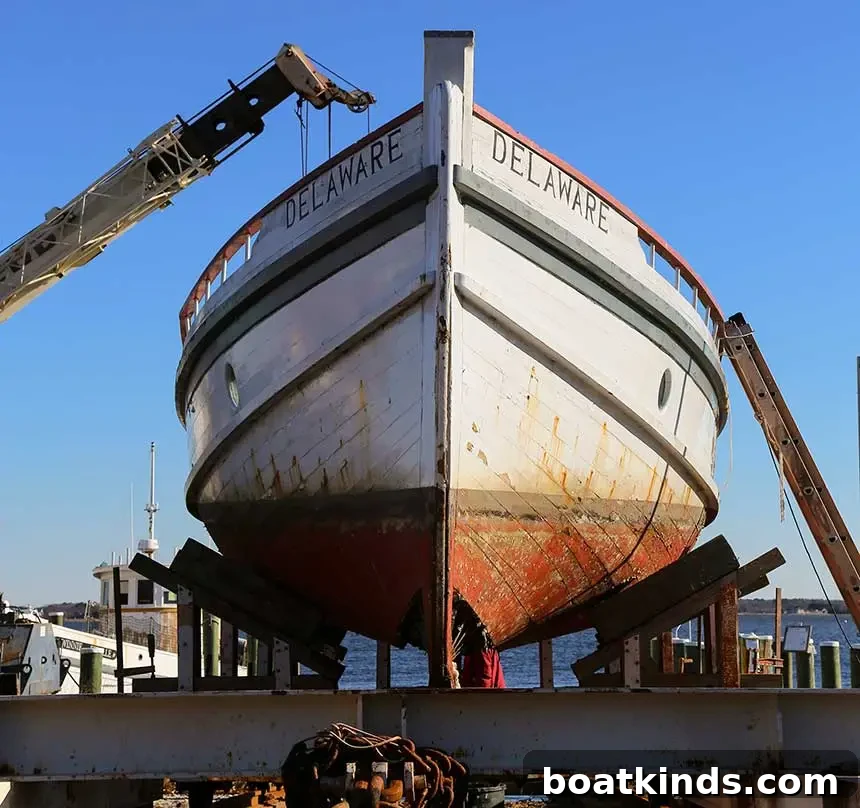
Five months later, in December, I was walking the grounds of the Chesapeake Bay Maritime Museum in St. Michaels, Maryland, with shipwright Duncan MacFarlane, who is leading a two-year restoration of the museum’s 107-year-old Chesapeake-built tug, Delaware. MacFarlane pointed out that Delaware was constructed in 1912 by William H. Smith in Bethel, Delaware, using white oak frames and pine planks. Then he asked, “Have you ever seen or heard of the ram schooner Victory Chimes?”
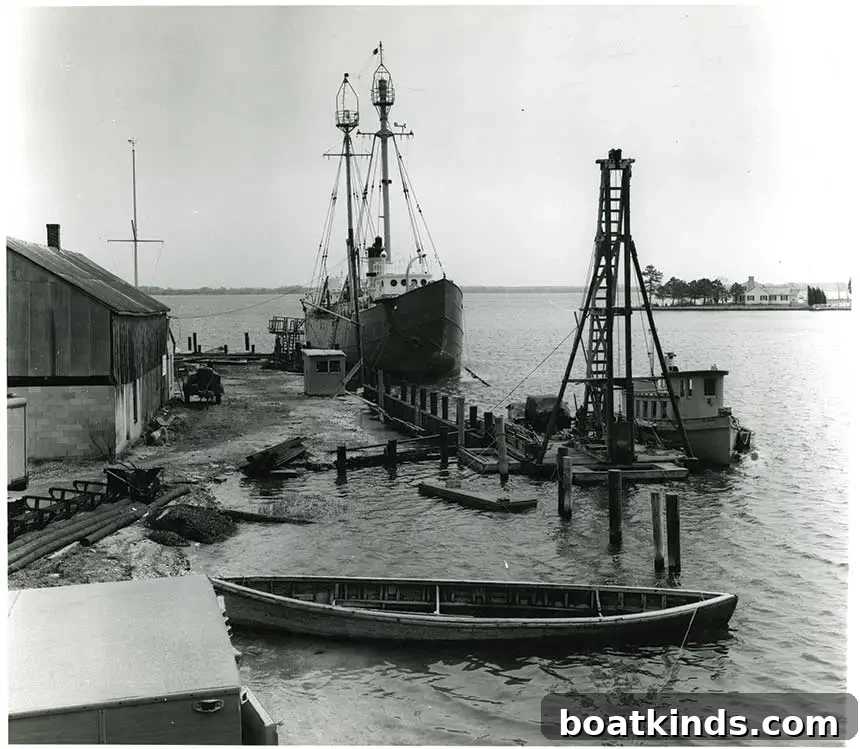
Working in the marine field for nearly three decades, I’m often struck by how interconnected the boating community is. It’s common to meet someone in a far-off harbor or at a maritime event and later discover close ties to vessels or shipbuilders from home waters. The conversation at the museum underscored that small-world feeling: according to MacFarlane, Delaware and Victory Chimes both worked the Nanticoke River and are the last two survivors from Smith’s Bethel Shipyard.
Given that both boats operated in the same waterways for many years, it’s likely Delaware towed or assisted Victory Chimes on multiple occasions. Historic tugs of the Chesapeake were essential to daily commerce, supporting sailing schooners and cargo carriers that moved lumber, produce, grain, canned goods, and other commodities through the Bay’s winding tributaries. MacFarlane explains that Delaware was designed specifically for towing rather than pushing or running alongside other vessels, and over the years she carried a succession of engines: a 25-horsepower Moco, a Sterling, a Standard, a 125-horsepower Buda diesel, and most recently a GM 6-71 diesel that has now been removed for rebuilding as part of the restoration project.
The last time I’d seen Delaware before this project she was hauled out on the museum railway for structural work on the cabin and hull. That earlier effort was the last major maintenance on the nearly 40-foot tug. Eight years later, much of Delaware’s hull, deck, and cabin house had fallen prey to rot, metal degradation, and the inevitable wear of age.
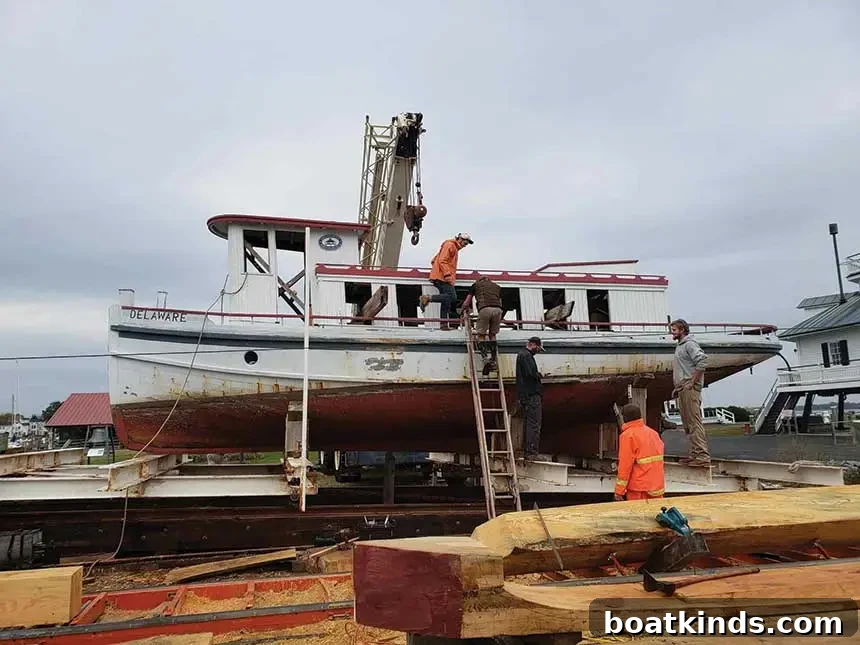
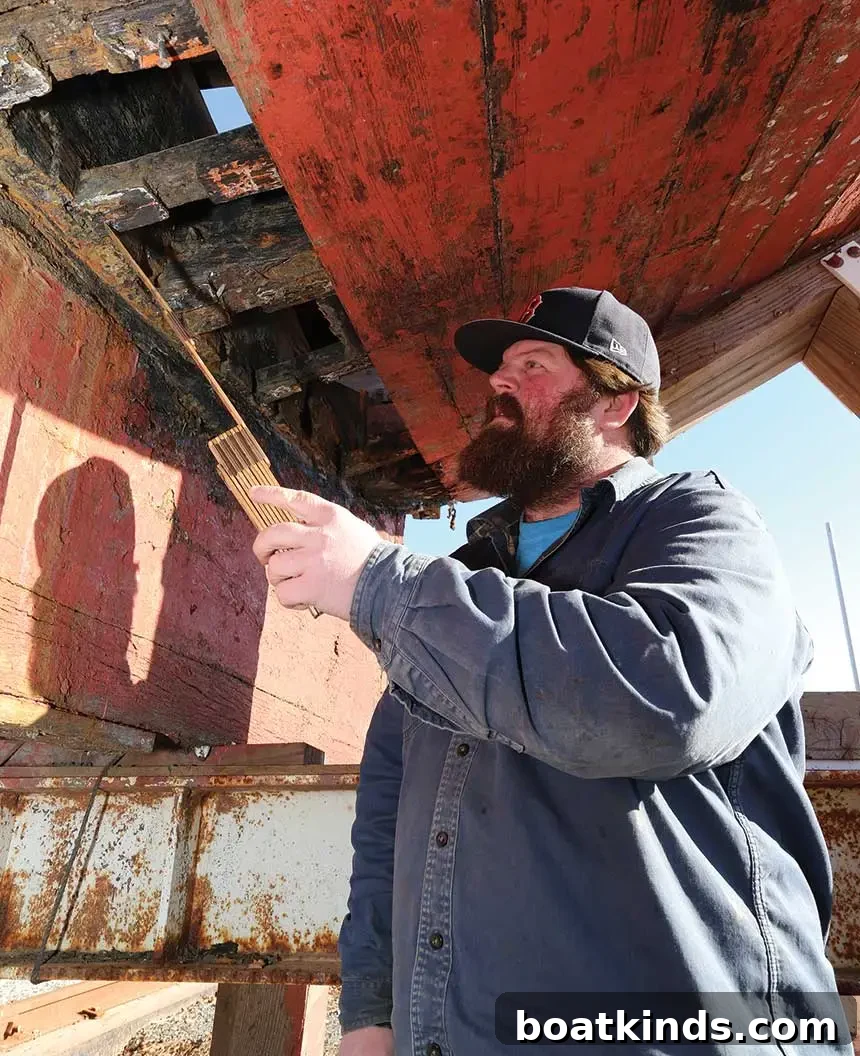
“By the time we finish, we’ll likely have replaced 95 percent of her,” MacFarlane said, probing a deep rotten pocket where a frame met the keel. The tug shows significant hogging at both stern and bow, and galvanized fasteners used in past repairs contributed to deterioration. Despite the extensive work required, the project offers significant educational value. The restoration is being carried out in full public view at the museum boatyard and incorporates the museum’s Apprentice for a Day volunteers alongside shipwright apprentices, giving visitors and trainees hands-on exposure to traditional boatbuilding and classic wooden hull repair techniques.
Even in her decay, Delaware reveals elegant, purposeful lines that are more refined than those typically expected of a workaday tug. “There are clues that she may originally have been built as a pleasure craft,” MacFarlane observed. “She’s relatively lightly built for a tug, and some interior moldings show ornamental detail unusual for a working boat.” The restoration team faces practical challenges as well: sourcing appropriate lumber for the rebuild is critical. The original construction used white oak frames and locally hewn pine planks. The keel replacement presents a particular difficulty, since it requires a single continuous timber approximately 32 feet long that can be milled down to the needed dimensions.
MacFarlane and the museum team remain optimistic. They’ve developed a network for locating suitable lumber and materials and expect the two-year rebuild to proceed as planned, with much of the work visible to museum visitors. For anyone interested in traditional boatbuilding, maritime history, or Chesapeake Bay vessels, watching Delaware’s restoration offers a rare opportunity to see shipwright techniques, period construction methods, and conservation decisions that preserve regional maritime heritage.
This restoration illustrates both the fragility and resilience of historic wooden vessels: while time and previous repairs had compromised much of Delaware, careful shipwrighting and community-supported conservation can return a century-old tug back to structural and interpretive life. If you visit St. Michaels and the Chesapeake Bay Maritime Museum during the project, you’ll witness a working boatyard where history, craft, and education come together in the ongoing preservation of Chesapeake Bay’s nautical legacy.
This article originally appeared in the May 2019 issue.