
Memories at the Herreshoff Marine Museum and a Classic Yacht Regatta
When the Herreshoff Marine Museum opened in Bristol, Rhode Island, I was a rough-around-the-edges teenager from Montauk, New York. I didn’t yet understand the subtle beauty or engineering that make classic yachts exceptional. Still, my love of boats took me to an old yard in Three Mile Harbor, where a small fin-keeled sloop named Jilt caught my eye. A yard worker muttered a new name to me—“Herreshoff.” I photographed Jilt and sent the picture to the newly opened museum. Halsey C. Herreshoff wrote back with a handwritten note, telling me I had an eye for fast boats. It turned out Jilt had been designed in 1899 by Nathanael G. Herreshoff, the inventor of the fin keel. That letter—and the museum itself—set me on a lifelong course of appreciation for classic yachts and their histories.
Over the years I’ve returned to the museum many times. The stories of the Herreshoff Manufacturing Company (1878–1945) and the way founders John B. and Nathanael G. Herreshoff blended art and engineering never cease to inspire. The Hall of Boats displays more than 60 significant designs, and the Model Room holds an iconic collection of roughly 500 ship models—each a clear expression of design thinking and craftsmanship.
One of those museum visits led me to the Herreshoff Classic Yacht Regatta in August, part of the museum’s golden jubilee celebration. The regatta was open to all classics, and the fleet included designs from Crowninshield, Sparkman & Stephens, Rhodes, Luders, Mylne and L. Francis Herreshoff, in addition to those by Nathanael. Every winning America’s Cup yacht from 1893 through 1934 was a Herreshoff build, so it felt appropriate that four 12-Meter yachts joined the event: Weatherly, Columbia, Nefertiti and the 1928 Starling Burgess-designed Onawa.
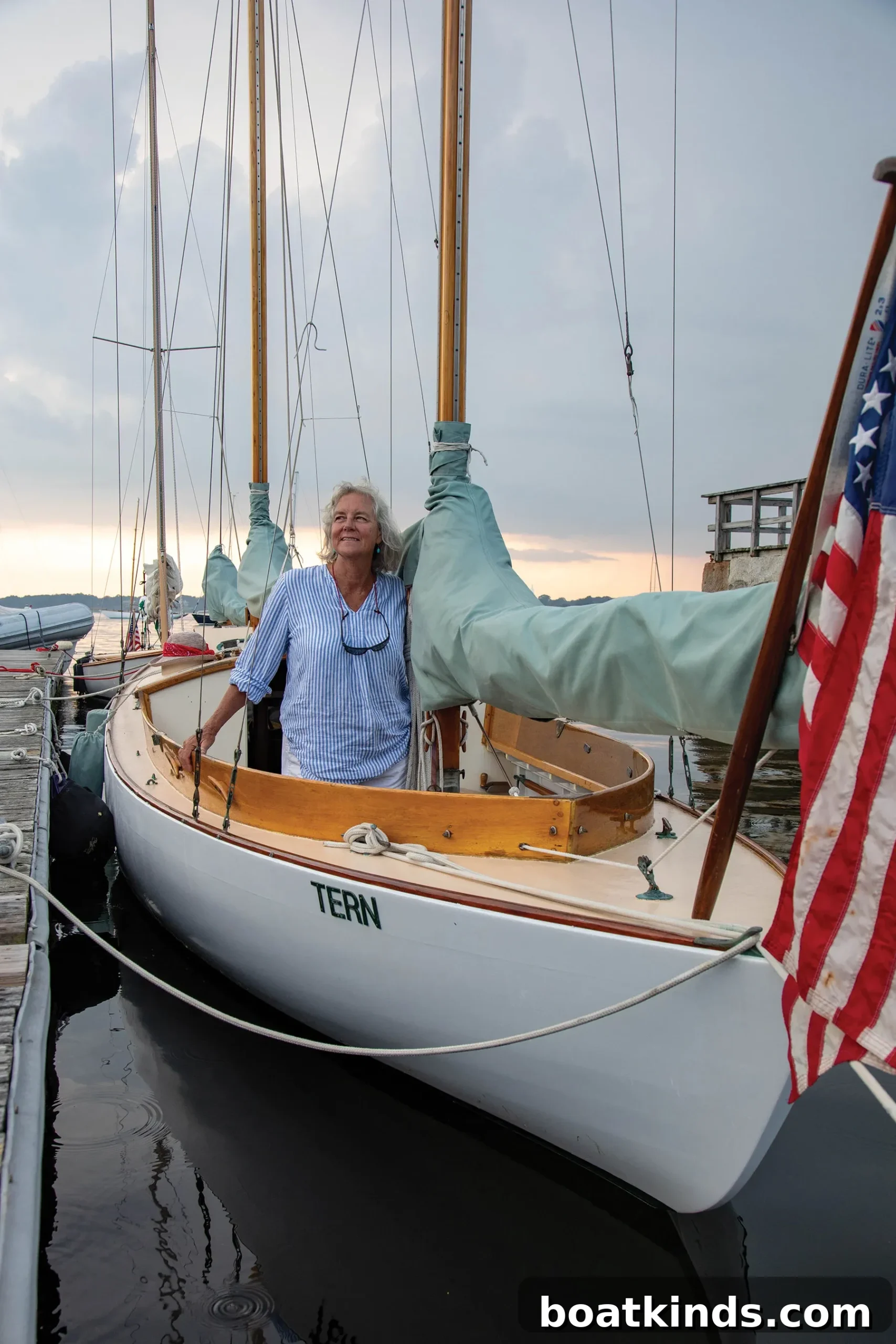
The oldest Herreshoff entries were the 53-foot 1907 daysailer Neith and the 1914 Buzzard’s Bay 25 Bagatelle. Other highlights included the 1926 NY 40 Marilee, a striking blend of power and elegance. Three L. Francis Herreshoff designs also raced: the schooner Narwal, the Stuart Knockabout Blackwing, and my own Rozinante ketch, Tern, which I campaign with my partner Steve Lubitz of Wooden Boatworks in New York.
My favorite among the fleet was the venerable Sparkman & Stephens yacht Dorade, then 91 years old. Launched in 1930, Dorade shocked the yachting world with a narrow beam, balanced ends and a tall Marconi rig. By any reasonable definition of “classic”—a design admired and tested over time—Dorade qualifies. After two meticulous restorations, her owners set out to repeat the major ocean races she originally won: the Transatlantic, Newport–Bermuda, Fastnet and Transpacific. She matched or bettered her earlier times and even won the 2013 Transpacific Race, 77 years after her first victory—finishing a full day faster than she did in the 1930s.
I’ve learned an enormous amount from sailing the many Herreshoff yachts I’ve encountered since that first letter from Halsey. During the jubilee weekend I caught up with Halsey again in his Burnside Street loft, a remarkable space whose walls are covered with photographs of famous yachts and sailors. We talked about the strong respect for yachting history we see in Europe and about classic yacht preservation. I told him how proud I was to fly the only American ensign in classic regattas in Spain while sailing Dolphin, a 1914 Newport 29. He was clearly pleased that I continue to celebrate his grandfather’s designs.
We also discussed choosing the right boat for different periods of life. I had recently traded a reliable 57-foot cruising boat for a more personal small ketch designed by L. Francis Herreshoff. Halsey, ever practical, was sailing a performance Alerion 26 based on his grandfather’s hull form. He showed me his workshop on the other end of the loft and pointed out a finely turned pond boat Captain Nat had made—its machined brass steering gear looked like the workings of a precision timepiece. “Everything my grandfather made was like that,” Halsey said, equal parts nostalgia and technical admiration.
At 88, Halsey remains energetic and deeply involved. A former museum president with degrees from Webb Institute and MIT, he has spent his life designing both custom and production yachts. He established the site’s America’s Cup Hall of Fame and has served as bowman, tactician and navigator on 12-Meters during four successful America’s Cup defenses. As he put it plainly, “The essential thing is the crew.”
When Halsey invited me to sail and race with him, I was honored. My partner Steve and I had brought our own Herreshoff to the event, so I faced a choice: sail with Halsey aboard his Alerion or sail my own Tern. With apologies to Steve, I chose to sail with Halsey and his design assistant Nick Barron, a 22-year-old Webb Institute alumnus Halsey cheerfully noted is “exactly one-fourth my age.”
On race day we boarded Halsey’s 75-year-old launch Bubble, a WWII-era design by his grandfather with chain-and-sprocket steering and vintage character. From Bubble we stepped alongside Dazzler, Halsey’s reinterpretation of Capt. Nat’s 1914 “improved” Alerion Sadie. Halsey’s version is an open boat without a stern deck or cabin, updated with swept spreaders, winches at the mast, and an efficient arrangement of clutches aft of the breakwater so halyards and foredeck lines are within easy reach. The jib furling system combines a headstay roller-furler with a sliding outhaul on a vertical-articulating jib boom—details that Halsey credited to his father, A. Sidney DeWolf Herreshoff.

The regatta featured five classes racing two triangular courses. A northeast breeze started around 12 knots and built steadily through the afternoon. The best part of a classic regatta is seeing these yachts underway: the larger boats demonstrating remarkable power and poise, the 12-Meters in tightly fought tacking duels. Because Tern and Dazzler started in the same group, it felt like my boat was stuck to Halsey’s—my heart split between two cockpits. When I mentioned how stiff Tern looked in the building breeze, Halsey, terse at the tiller, said only, “I’m not going to talk about any other boat except the one we’re sailing.” Still, he noticed we were keeping pace and deadpanned, “Is that double-ender your boat?”
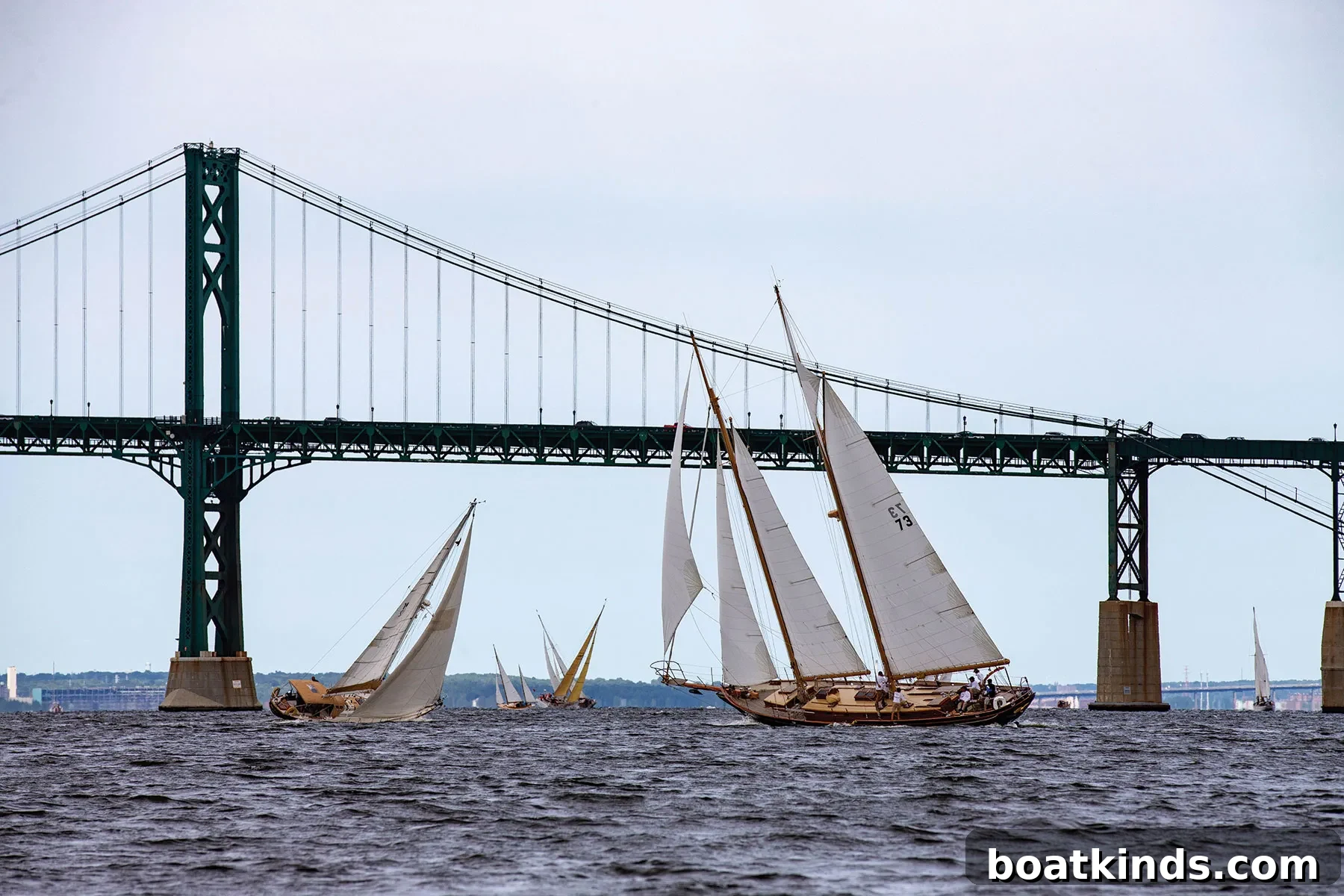
We tacked up the eastern shore as the breeze built, threading between rocks and taking shelter from the strong ebb current under Bristol’s Mount Hope Bridge. Many competitors stayed in deeper water and lost ground quickly; Halsey’s judgment—and a handheld GPS—helped us slip inside the current and maintain our advantage. The tactic worked, but it was wet and demanding: steep, short chop, constant tacking, and the shoreline closing in only yards away. Each tack away from the beach brought relief. At one point Halsey muttered as he pushed the tiller over, “I guess we shouldn’t get selfish and hang on too long.”
This article was originally published in the November 2021 issue.